Inflation in Greece slowed to 3.1% in August from 3.7% in July, according to preliminary estimates released by Eurostat. Across the eurozone, inflation edged up slightly to 2.1%, from 2% the previous month.
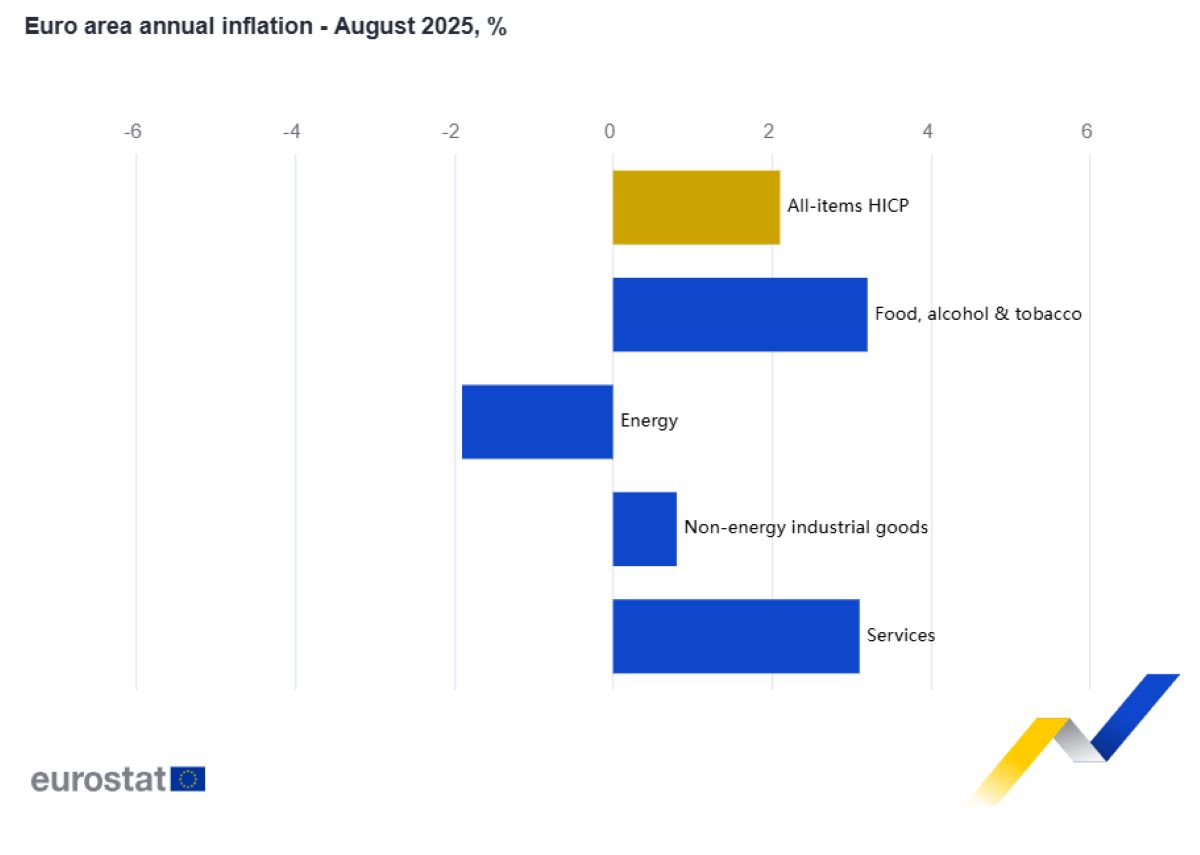
Breaking down the main components of eurozone inflation, food, alcohol and tobacco are expected to post the highest annual rate in August at 3.2% (down from 3.3% in July). Services followed at 3.1% (from 3.2%), while non-energy industrial goods held steady at 0.8%. Energy prices, meanwhile, fell by 1.9%, compared with a 2.4% drop in July.
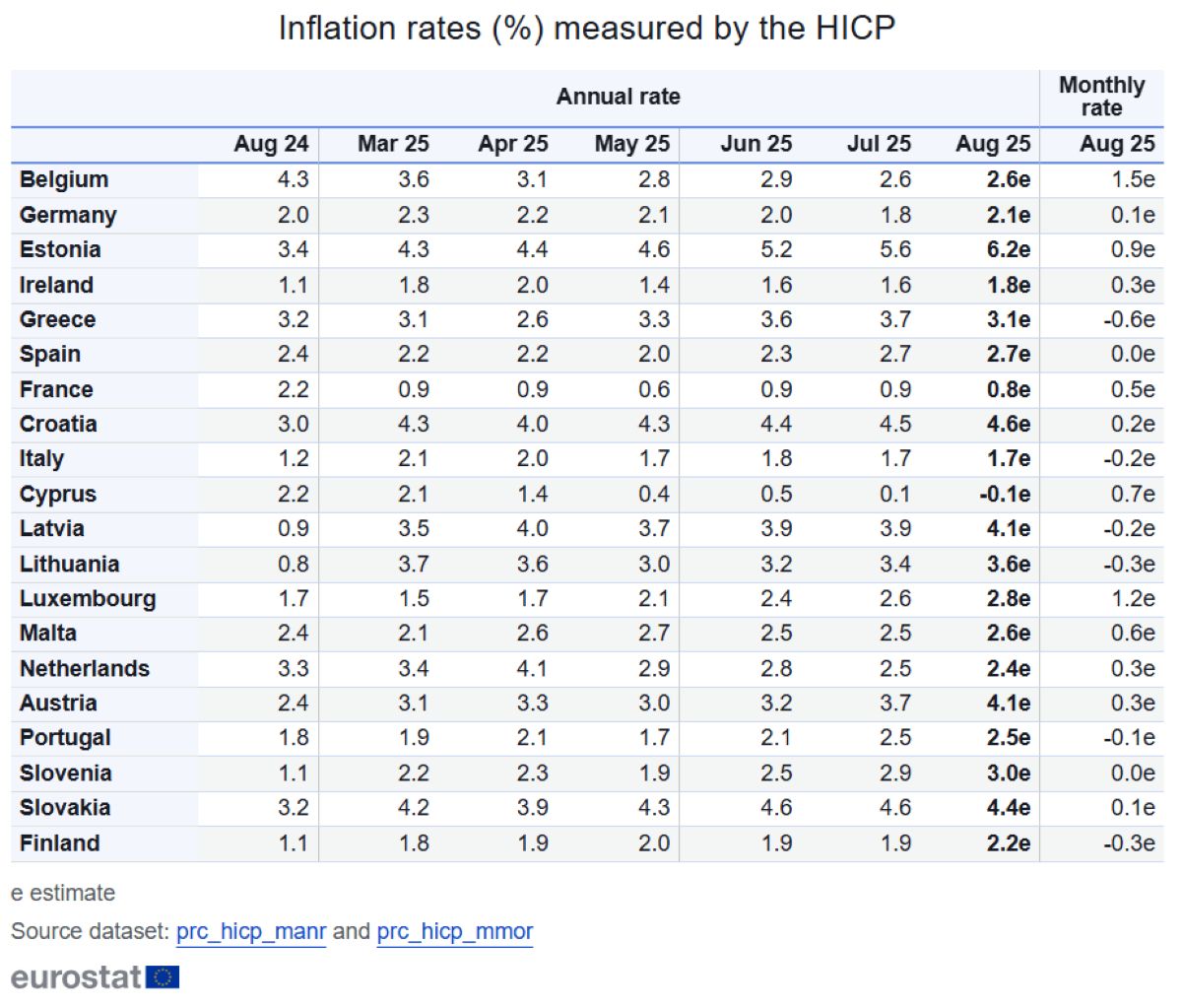
Core inflation, which excludes volatile energy and unprocessed food prices, eased slightly to 2.3% year-on-year, from 2.4% in July. Greece, which has remained above the eurozone average since last October, registered the sharpest monthly decline in August at 0.6%. Belgium, by contrast, saw the steepest increase, with a 1.5% rise.
The Picture in Major Economies
In Germany, inflation rose to 2.1% in August, slightly above expectations and up from 1.8% in July. France posted a far lower rate of 0.8%, with slowing services offsetting stable food prices and a milder energy decline; prices there rose 0.5% month-on-month.
Spain’s EU-harmonized index increased 2.7% year-on-year but was flat on a monthly basis, while Italy recorded 1.7% annual inflation, with energy easing and food prices accelerating; monthly growth was just 0.1%.
ECB Holds Steady
The European Central Bank left its key interest rate at 2% and is expected to maintain that stance next month before reopening talks on possible cuts in the autumn, especially if U.S. tariffs weigh on growth.