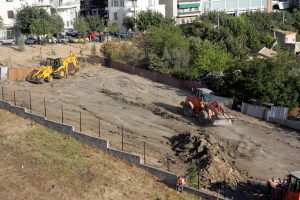
Vast stretches of state-owned land in Greece have been held for decades by private individuals without legal titles, creating a regime of silent arbitrariness. Greece is continuing its efforts to encourage squatters to normalize the situation and purchase the land via valide titles, but few are taking advantage of the opportunity, citing bureaucracy and costs.
Low Participation Despite “Generous Terms”
The government has considers that it has introduced a favorable framework which allows squatters to purchase the land at steep discounts—up to 80% off, repayment in 60 interest-free installments, and an additional 10% discount for lump-sum payments.
Yet, response has been minimal. To date, only 5,000 applications have been submitted—about 5.6% of an estimated 90,000 cases, or fewer than one in 18 squatters.
The Finance Ministry has now extended the deadline for applications nationwide until September 11, 2026, stressing this is the final extension.
Barriers to Applications
Despite the incentives, many potential applicants say they face obstacles:
- Inability to afford even the discounted price, despite installment options.
- Inheritance disputes and unclear land transfers.
- Complicated procedures and heavy documentation requirements.
- Mandatory online submission, which poses difficulties for some residents.
Framework at a Glance
- Application fee: €300.
- Price: based on official property values, with up to 80% discounts.
- Payment: up to 60 monthly interest-free installments (minimum €100 each). Lump-sum: additional 10% discount.
- Requirement: property declared in tax form E9 for the past five years.
- Restriction: properties with illegal buildings are excluded.
- After payment: registration in the Land Registry.
Silent Transformation of Public Land
The issue is not a mere bureaucratic backlog- thousands of acres of public land have been turned into ‘private holdings’, with residents cultivating, building and passing down land across generations as if it was their own. According to data the islands of Oinousses and Syros, have the greatest issues, along with central Greece region of Karditsa.
With only 5.6% of squatters entering the process, the picture reveals a deeper problem: Greece tolerance with illegality.
Source: OT