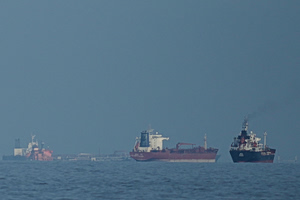
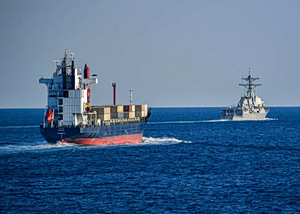
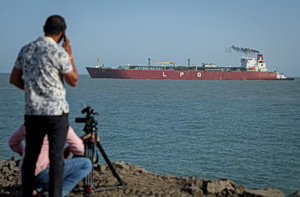
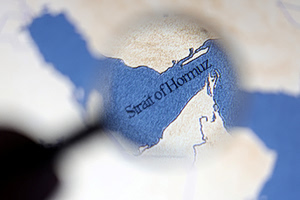
A Greek-managed oil tanker has successfully transited the Strait of Hormuz, according to a report by Bloomberg. The Marathi, a 900-foot crude tanker carrying about 1 million barrels of Saudi Arabian oil, was tracked near India’s port of Sikka on Thursday after crossing the strait, according to the american news agency, citing vessel tracking and port data.
The vessel, built in 2018 and sailing under the Maltese flag, is managed by Athens-based Dynacom Tankers Management Ltd and owned by Lufer Shipping Ltd.
Traffic Collapses Despite Ongoing Transits
The voyage comes as shipping through the Strait of Hormuz has dropped sharply since the start of the conflict involving Iran.
Fewer than 100 ships have crossed the strait since the beginning of March, according to data analyzed by BBC Verify, down from roughly 138 vessels per day before the war, based on Joint Maritime Information Centre data cited by the BBC.
Even so, some ships continue to pass. Iran has said that “non-hostile vessels” may transit the strait if they coordinate with its authorities. A Lloyd’s List Intelligence report, cited by CNN, said at least 16 vessels have successfully made the passage, though CNN noted it could not independently verify the report.
The Strait of Hormuz remains a vital chokepoint, carrying roughly one-fifth of global oil and liquefied natural gas flows, meaning even reduced traffic continues to carry global significance.
Attacks and Uncertainty Reshape Shipping
The drop in traffic reflects mounting security risks across the region. At least 19 vessels have been attacked in or near the Strait of Hormuz, the Persian Gulf and the Gulf of Oman since the conflict began, according to CNN.
Some of those incidents have involved ships linked to Greek shipping, including the tanker Zefyros, and the bulk carrier Star Gwyneth, operated by Star Bulk Carriers.
Even when ships do transit, conditions remain uncertain. CNN reported that some vessels may have paid a $2 million fee to pass, while others used false identities, including so-called “zombie” tankers posing as dismantled ships.
The disruption is also creating a growing backlog. Nearly 2,000 vessels are now stranded inside the Persian Gulf, according to the International Maritime Organization, as cited by CNN.