What would Trump do if his military operation followed the rules of spectacle and brought Iran down quickly and impressively?
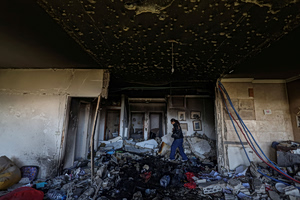
One is, by most accounts, the most powerful army in the world. The other is powerful by its own declaration. Yet neither has lived up to the expectations of those who command them. In Iran, “Uncle Sam” is already facing the deadlock of the Strait of Hormuz. In Ukraine, the Russian army is stained again and again with the blood shed by its soldiers over the past four years.
One can observe the parallel even when watching wars not with the focus of an expert, but from the couch, with a pair of slippers on their feet and a packet of biscuits in their hands. One also sees the imbalance between planning and execution. Or perhaps it is not exactly planning?
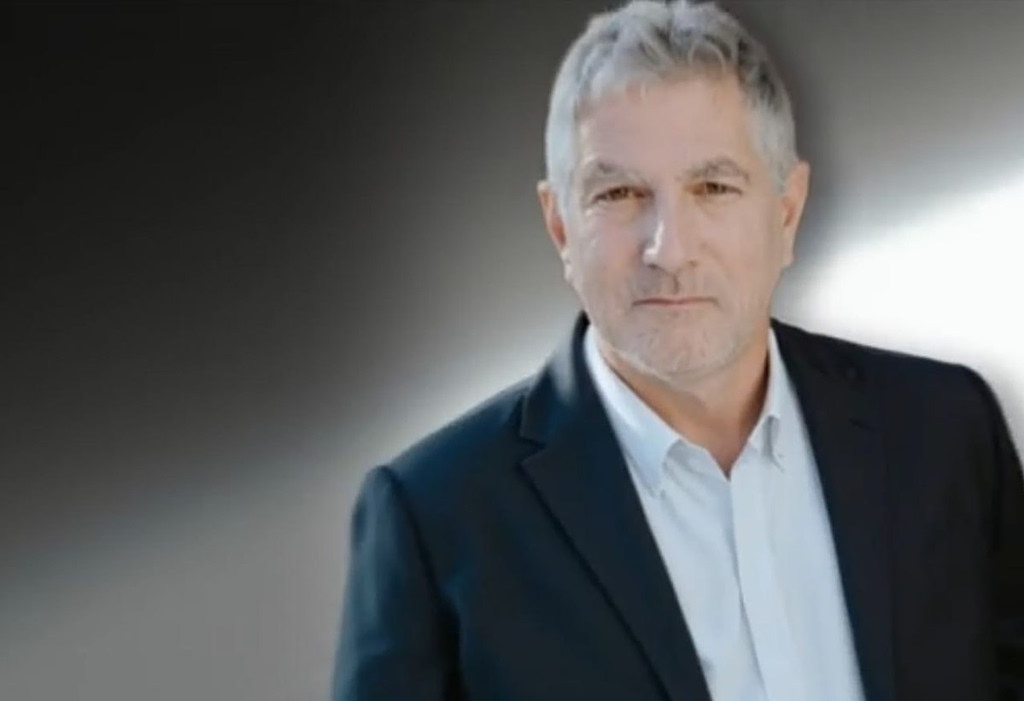
In the interview she gave to Manos Karatarakis, published in today’s edition of To Vima, Tanna Krewson, a NATO expert in the field of “cognitive warfare,” explains that the dilemma “war or peace” is never answered by logic alone. Often, decisions are not the product of any “military processing.” Entirely “human factors” such as ego, a leader’s self-image, or their perception of the world become the driving force. Charge!
This “human factor,” whether biological or psychological, is fully evident both in the White House and in the Kremlin. We often seek an almost superior wisdom behind an act of war, a devilishly crafted plan based on data available to formidable military staffs and even more formidable intelligence services.
We assume that they know what we will never learn. The failure of such plans reveals a reality that is as inconceivable as it is mundane. It is not human wisdom that reigns in the closed meetings of the White House and the heavy halls of the Kremlin. If it is not stupidity, it is certainly madness—or a fatal combination of the two. It is the war of the “idea one has of oneself,” as Tanna Krewson would say. Or, translated into the language of our couch, the war of “do you know who I am?”
Equally evident is how the main actors in these wars perceive the world. Donald Trump sees a world he can shape however he wants. Vladimir Putin sees a world of which he would like to subjugate one part and erase another. And there are other “human factors” that one will never find in classified reports of military staffs and intelligence services: megalomania, hatred, narcissism, obsessions, complexes.
In such a “human” environment, one cannot help but wonder whether the mind becomes even more clouded by the sense of success or by the revelation of failure. What would Trump do if his military operation followed the rules of spectacle and toppled Iran quickly and impressively? Would he show even greater contempt for his Western allies and demand Greenland on a platter? And Putin? Having conquered Ukraine with a “walk in the park,” would he charge into the Baltic states?
Most likely. Except what we are actually witnessing is a military failure in slow motion. And since no military failure can be erased with an eraser, one can only wonder how the White House and the Kremlin will manage a deadlock that stretches over time and amounts to defeat. Here, the “human factor” becomes erratic and, as such, may turn uncontrollable. With what “victory” can a defeat be offset? Charge—and charge again.