History often shows us that difficult times for some can become moments of opportunity for others. During the early 19th century, Europe was shaken by the Napoleonic Wars—a period of continental conflict, trade embargoes, and economic uncertainty. Yet, for many Greek merchants, this era became a springboard for prosperity. Today, as France faces its own set of economic challenges, could Greece once again turn external turbulence into a pathway for wealth, investment, and growth?
In the early 1800s, Napoleon Bonaparte attempted to strangle Britain economically through the Continental System—a series of embargoes designed to block British goods from reaching European markets. This trade war disrupted traditional routes and created shortages across the continent. Greek merchants, many operating from the islands of Hydra, Spetses, Psara, and the Ionian Sea, seized the moment.
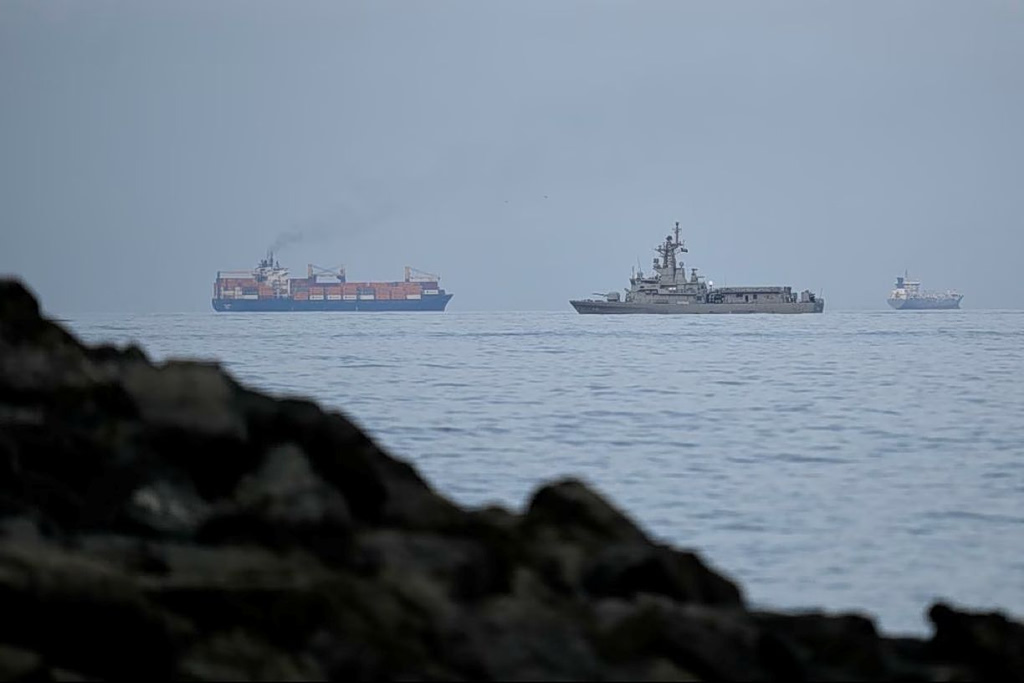
Thanks to their maritime expertise and their ability to sail under neutral flags—Ottoman, Russian, or Austrian—they became masters of blockade-running and smuggling. They transported vital goods such as grain, timber, olive oil, and notably Corinthian currants (raisins) to markets desperate for supply.
But there was a catch: the wealth generated during the Napoleonic era was short-lived, often concentrated in a few shipping families, and rarely channelled into long-term structural transformation.
Fast-forward to today. The parallel is striking—though, of course, no one is suggesting Greek ships start smuggling again. Even if they wanted to, there is no modern equivalent of Napoleon’s blockade—though, as the Russian “shadow fleet” suggests, there are always alternative markets and unconventional opportunities. But that’s a discussion for another time.
Back to the present: France, the European Union’s second-largest economy, is now mired in malaise. Growth limps along at around 0.8% for 2025. Public debt exceeds 110% of GDP. Political tempests come in waves—France has just lost its fourth prime minister in less than two years—and Emmanuel Macron’s reform agenda is fast becoming a casualty of exhaustion.
Meanwhile, Greece—Europe’s onetime economic pariah—has staged a quiet comeback. After a decade of austerity and humiliation, its economy is expanding at roughly 2–2.5%. Public debt, once an existential threat at over 200% of GDP, has fallen to around 140%. Foreign direct investment is inching upward. For the first time in years, investors are not laughing when Athens is mentioned in the same breath as “stability.”
This is not to say Greece is now a haven of stability—but in a Europe where core economies are stumbling, relative momentum matters. Just as French overreach during the Napoleonic era opened corridors of trade for bold Greek merchants, today’s French malaise offers a window of opportunity. The question is: will Greece seize the moment—or repeat the pattern of short-lived enrichment?
The answer lies in one word: reforms.
If Greece hopes to do more than catch the falling coins of French misfortune, it must finally confront its chronic impediments, it takes almost 1,200 days in Greece to reach a decision for civil and commercial cases — compared to around two years in France—discouraging serious investors. Bank lending to SMEs remains constrained, and while non-performing loans have declined, they still make up around 3.8% of total assets in 2024, roughly double the EU average.
Corruption perceptions remain stubbornly middling: as the recent OPEKEPE scandal reminded us, Transparency International ranked Greece 59th globally in 2024—far behind France at 25th. These are not trivialities; they are the difference between a fleeting boom and a sustained renaissance.
So, is everything doom and gloom for Greece? Not at all.
In the Napoleonic era, the “black gold” of the Peloponnese was the raisin—a small, sweet fruit that financed fleets and fortunes. Today, Greece’s comparative advantages lie elsewhere: renewable energy corridors from the Aegean, green shipping initiatives, logistics hubs bridging Europe and Asia, and a nascent but promising tech ecosystem. These are the cards Greece can play to attract investors and chart a path toward durable growth.
But opportunity without reform is mere opportunism. France’s difficulties will tempt speculative capital to look south and east. To retain it, Greece must prove that this story will not end as it did in 1815—with a brief harvest followed by decay.
As the French falter, the Greeks must ask themselves: Do we want another raisin rush—or a genuine economic revolution?
*Grigoris Patsakis is a project manager at ELIAMEP’s Turkey program
This op-ed is part of To BHMA International Edition’s NextGen Corner, a platform for fresh voices on the defining issues of our time