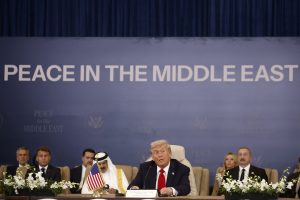
In the past, when an American president announced the definitive end of a war, everyone accepted it as such. In Donald Trump’s case, the Israel–Hamas agreement is met with public praise but private concern. Reports refer to Trump’s “unorthodox diplomacy” and his decision to first announce the successful conclusion of negotiations, and only afterwards to pressure the parties involved to turn his wish into reality.
International media and analysts are raising questions about a peace that appears extremely fragile. How will Hamas be disarmed, and in what environment will the multinational stabilization force operate? How long will the Israeli army remain in the Gaza Strip? How durable can an agreement be that both sides signed reluctantly, while their extremist factions have yet to show their intentions — and likely won’t do so in words? And then, who can guarantee that the war will not resume?
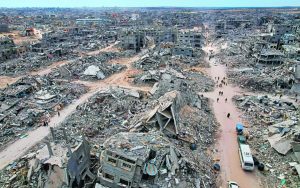
Even as the agreement was being signed, the Israeli army continued to bomb Gaza. The return of hostages proved more difficult in practice, as Hamas may no longer know the locations of all 28 deceased hostages’ remains. Meanwhile, the list of Palestinians to be released from Israeli prisons faced obstacles in its finalization.
If all these hurdles are overcome, Trump could claim a major achievement. If not, the intense pressure he applied — bypassing all conventional diplomatic channels — may ultimately prove ineffective. The counterargument, of course, is that had he followed the traditional path, the process might have stalled, as it has in the past. It is this very “unorthodox Trump diplomacy” that Ukrainian President Volodymyr Zelensky is also counting on, hoping for a Trump-inspired ceasefire in Ukraine.
In any case, we are living in a time when power no longer automatically ensures stability. Fluidity and uncertainty are now part of the game. The Gaza agreement lacks a clear completion timeline — it’s a matter of improvisation and adjustment. Uncertainty also afflicts countries engaged in another kind of war — not militarily bloody, but equally ruthless politically — such as France. Emmanuel Macron is facing an unprecedented domestic political crisis, and while both allies and opponents are calling for his resignation, he has offered to assist in the stabilization of post-war Gaza.
Gaza is becoming a kind of trophy for world leaders. Even German Chancellor Friedrich Merz, who disagrees with those who believe it is time for the creation of a Palestinian state, has urged all sides to uphold their commitments toward a sustainable peace and has stated that Germany will support this process.
And something that concerns us directly: Turkey is participating among the allied guarantor powers responsible for implementing the ceasefire — with Greece absent from all these proceedings. We watch, but what can we do?