Never since the return to democracy in 1974 has Greece experienced institutional and—perhaps more distressingly—moral decay on such a scale, with the wielders of power revealing such brazen cynicism and the citizenry such fatalistic apathy.
The creeping consensus that constitutional rights and freedoms are secondary, and that only economic prosperity truly matters is just one manifestation of a morbid and dangerous decline. The same is true of the public’s tolerance of political corruption, just as long as they get their share of the spoils. Social solidarity and collective action now seem like relics of a bygone era, virtues long since discarded.
Intolerance and contempt for foreigners, the vulnerable and those viewed as different are steadily gaining ground. Without wishing to view the past through rose-tinted spectacles, I fear we are dangerously close to authoritarianism and “illiberal” democracy. Nor, of course, should the presence of similar symptoms in other Western countries—to varying degrees—serve as an excuse.
Let us take two specific examples.
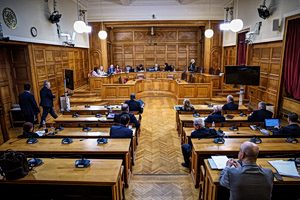
First, the judiciary. The rock-bottom levels of public trust revealed by every poll without exception, are a worrying sign: they indicate a crisis of faith in perhaps the most fundamental institution of our democratic governance, and consequently in democracy itself. Despite some recent exceptions, the judiciary as a whole—and its highest echelons in particular—has failed to convince the public it supposedly serves that justice in Greece is timely, relevant, or blind.
Through its handling of cases of immense import for the constitutional order and others that have struck a profound chord with the public—such as the wiretapping scandal and the tragic Tempi disaster—the judiciary has struggled to prove that it treats ordinary citizens and powerful figures alike, or that it pursues full transparency by leaving no key aspects of its investigations unexamined.
There is nothing to be gained from closing one’s eyes to this reality or attributing the public dissatisfaction to “immaturity” or “populism”—superficial and convenient interpretations that serve only to protect those in power. It would be a grave error for the Greek state and the leadership of its Supreme Courts to ignore the clear message of these polls instead of reflecting on it—hard. Continuing to respond with indignation and ire to legitimate criticism can only deepen the crisis of trust.
However, it isn’t just the judiciary that is problematic. The Independent Authorities, conceived by the framers of our constitution as vital checks and balances, have suffered—I fear—a catastrophic blow. This stems from the State’s treatment of the Hellenic Authority for Communication Security and Privacy (ADAE) when the latter sought to exercise its constitutional mandate and audit the National Intelligence Service (EYP) in order to determine the facts behind those cases in which the confidentiality of communications was lifted “lawfully” for reasons of national security. Those in power need to acknowledge and accept that, if they are to perform their vital function, the Independent Authorities cannot be purely decorative.
Christos Rammos is vice-president of the Council of State (retired), and former head of the Hellenic Authority for Communication Security and Privacy.