If anyone had doubts about the further escalation of the war in Iran, these should have been dispelled both by President Trump’s televised address on Wednesday evening (1/4), broadcast at prime time, and by the dramatic developments on the ground, with relentless bombardments on both sides. Now in the second month of hostilities between the US–Israel side and Iran, the balance on the energy front is particularly negative.
What we are watching with alarm—and whose consequences we will soon feel—is the simultaneous evolution of two crises.
The first concerns the reduction in the production of crude oil, petroleum products, and LNG due to extensive damage to production facilities in nearly all countries of the Persian Gulf.
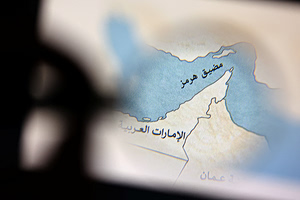
The second has to do with the trapping of hundreds of tankers in the Gulf, unable to pass through the Strait of Hormuz.
Insurance premiums have surged to unprecedented levels, with many insurers unable to cover war risks in what has effectively become an active war zone in the Persian Gulf. At the same time, the Revolutionary Guards are threatening with ballistic missiles any passing vessel that does not receive their approval. The result of all this is that a serious supply deficit in the global energy market is now evident.
This deficit in oil is estimated by the International Energy Agency (IEA) at 12 million barrels per day—within a global market of 105 million barrels—and at 20% in LNG supply, in a global market of 360 MTPA.
These quantities are difficult to replace through production from other countries. For this reason, the IEA has proceeded with the release of 400 million barrels from strategic reserves in order to cover the shortfall.
However, as the deficit appears to be widening, the IEA has already alerted member-state governments to the likelihood of another release before the end of April.
There is, however, a problem: (a) part of the strategic reserves of certain countries is currently in transit, which complicates handling, and (b) under the present conditions of restricted crude supply, replenishing these reserves becomes nearly impossible.
All of the above inevitably constrains oil flows and increases uncertainty in supply. Therefore, if hostilities continue and the Strait remains blocked, the impact on oil and natural gas prices will be dramatic.
As for crude prices, in March we witnessed the largest increase in Brent, the international benchmark, which rose by 63%, closing at $118.35 per barrel on 31/3.
A comparable increase was seen in gas prices at the Dutch TTF hub, the benchmark for the European gas market, which rose by 61% in March to €50.55/MWh.
Europe, which depends on imports for nearly 60% of its energy—mainly oil and natural gas—is in a very difficult position, both because of high international prices, which are already beginning to affect retail markets and consumers, and because of supply shortages in imports.
Although the EU’s exposure to gas imports from the Gulf is relatively limited—around 10% of total consumption, and about 15% for oil—the abnormal conditions prevailing in the international market make stable supply problematic. It should be noted that, according to data from DESFA, Greece’s exposure to LNG imports from Qatar is zero—Greece sources mainly from the US and other countries—while in oil, Greece’s dependence on supplies from Iraq and Saudi Arabia reaches 44% of total crude imports.
With Iraqi exports effectively reduced to zero due to damage, and Saudi exports cut in half, Greek refineries are searching for alternative suppliers—something far from easy amid a global crisis.
As the IEA warns, and as confirmed by oil market participants, the supply situation is expected to worsen as long as the war continues.
The real impact on the market will begin to be felt immediately after Easter, which is likely to lead the government—along with others in Europe—to adopt horizontal measures to restrict consumption (such as fuel rationing, further price increases, etc.).
According to economic analysts, the government’s current policy of addressing high prices through fuel subsidies (fuel pass) is moving in the wrong direction, as the goal should be to reduce consumption, not to financially support consumers in a way that keeps their consumption at roughly pre-crisis levels.
By contrast, reducing excise taxes for the duration of the crisis would help keep prices under control and largely avoid the creation of inflationary pressures.
As both the IMF and the ECB warn, the major risk of the current negative energy environment is the emergence of stagflation, exactly as happened after the second oil crisis in 1979.
Costis Stambolis is Chairman and Executive Director of the Institute of Energy for Southeast Europe (IENE).