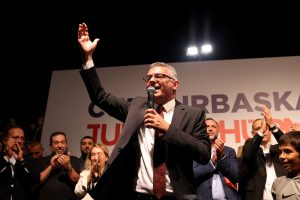
Tufan Erhurman, a 55-year-old lawyer and academic, has been elected “president” of the Turkish-occupied north of Cyprus , winning 62.76% of the vote against incumbent Ersin Tatar’s 35.81% in Sunday’s election.
Born in Nicosia in 1970, he graduated from Ankara University where he studied law. He later completed a doctorate on non-judicial oversight and the Ombudsman system and he went on to play a key role in drafting Turkey’s Ombudsman Institution Law, helping establish the country’s framework for citizen oversight of public administration. After returning to Cyprus, Erhürman joined the law faculties of the Eastern Mediterranean University and Near East University, serving as deputy dean and contributing to the development of legal education in the north. In 2005, he was part of the negotiation team that created the Immovable Property Commission, designed to address Greek Cypriot property claims following the island’s division.
As leader of the center-left Republican Turkish Party (CTP) and a former prime minister (2018–2019), Erhurman has built his political identity around dialogue, federalism, and reform. His supporters were drawn to his rhetoric of forging a “healthier relationship with Turkey”, one that allows Turkish Cypriots to retain their distinct identity, reclaim greater control over domestic and foreign policy, and preserve democratic traditions such as free speech and an independent judiciary.
A Fresh Opportunity for the Cyprus Peace Process
The results sparked cautious optimism in Greece and the Republic of Cyprus, both of which expressed hope that Erhurman’s election could revive stalled reunification talks.
Cyprus President Nikos Christodoulides congratulated Erhurman and reaffirmed his government’s readiness to resume negotiations “as soon as possible,” based on UN resolutions and European Union principles.
“The solution of the Cyprus issue must be founded on the UN framework and the values of the European Union,” Christodoulides said, adding that an upcoming informal UN meeting offers “a critical opportunity” to restart the peace process.
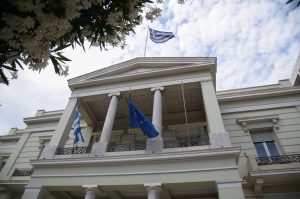
The Greek Minister of Foreign Affairs, George Gerapetritis’, welcomed the outcome, calling it “a new chapter of hope”. In his statement he reiterated the tireless work undertaken by the ministry in coordination with the Republic of Cyprus, to “return the Cyprus issue to the UN Secretary-General’s agenda and to resume formal discussions”. “Reunification within the European family will guarantee peace and prosperity for both Greek Cypriots and Turkish Cypriots,” Gerapetritis underlined.
Turkish Cypriot Voices of Hope
Among Turkish Cypriots, Erhurman’s victory was greeted as a turning point after years of political stagnation. Former MEP Niyazi Kızılyürek, who was elected with Cyprus’s left-wing AKEL party, told The Guardian the result “offers hope for peace,” saying many expect Erhurman to quickly move toward confidence-building measures and UN-based negotiations.
“The outcome will be a test for Greek Cypriots,” Kızılyürek said. “It’s easy when the other side doesn’t want to talk. Now they will have to respond to a charismatic Turkish Cypriot leader who does.”
Sami Özuslu, a CTP lawmaker, said that reunification talks must return to the top of the agenda:
“We don’t have another five years to waste. Mr. Tatar never sat at the negotiating table — and look where that got us. We need hope, and only Mr. Erhurman can offer that.”
Renewed Hopes Amid Uncertainty
Although deep divisions remain, Erhurman’s win has injected new energy into the stalled negotiation process. For the first time in years, both Athens and Nicosia see a window of opportunity for diplomacy, even as Ankara’s next steps will be crucial in determining whether that hope can translate into progress.