Greece’s recent move to suspend the right to apply for asylum for three months has ignited strong debate, drawing sharp criticism from international organizations, legal experts, and opposition parties. The measure, which targets arrivals from North Africa via sea, was presented by the Greek government as an emergency response to what it describes as a surge in migration. Yet, many question whether this decision marks a temporary safeguard or a dangerous shift in migration policy.
Government Defends Temporary Suspension as Necessary
The proposed amendment, brought forward in the Greek Parliament, allows the government to suspend asylum application rights for a specific geographic route—namely maritime entries from North Africa—for a limited period. Foreign Minister Giorgos Gerapetritis defended the measure, calling it “absolutely necessary” due to a reported 350% increase in arrivals. He argued that two-thirds of those arriving do not qualify for humanitarian protection and that the suspension is intended to reduce pressure on the system and safeguard lives.

Greece Foreign Minister Georgios Gerapetritis addresses the UN Security Council, Monday, Feb. 24, 2025, at the United Nations headquarters. (AP Photo/Richard Drew)
Critics Warn of Legal and Human Rights Violations
On the other side, the United Nations High Commissioner for Refugees (UNHCR), former Deputy Prime Minister Evangelos Venizelos, and several opposition parties have raised significant concerns. The UNHCR warned that such a measure risks violating the principle of non-refoulement—a core tenet of international refugee law which prohibits returning individuals to countries where they may face harm. While acknowledging that states have the right to control their borders, the UN agency emphasized that this must be done in full compliance with international and European law.
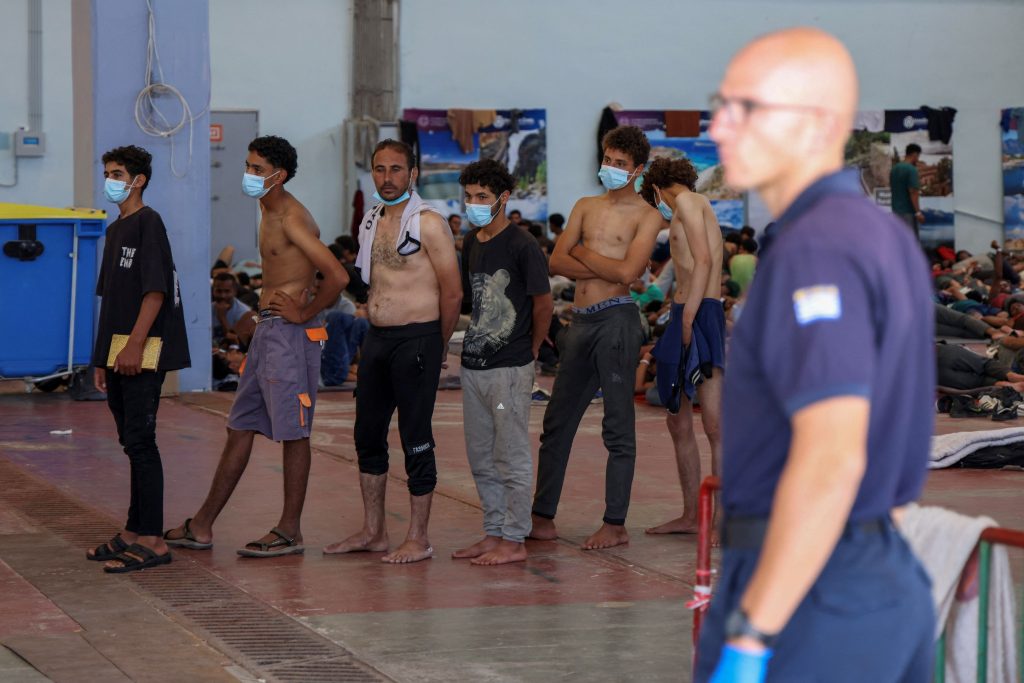
A police officer stands next to newly-arrived migrants that are sheltered in a municipal hall in the town of Agyia, on the island of Crete, Greece, July 10, 2025. REUTERS/Nicolas Economou
In a formal statement, the UNHCR underscored the need to preserve the right to seek asylum and avoid penalizing individuals for irregular entry—especially those in urgent need of protection, such as refugees from Sudan.
The organization reminded Greece of its obligations, stating that while border control is legitimate, it must never undermine the legal right to asylum.

A Greek Coast Guard vessel transfers migrants to the port of Agia Galini, after Greece rescued hundreds of migrants off the islands of Gavdos and Crete in separate incidents, according to the Greek Coast Guard, in Greece, July 6, 2025. REUTERS/Stefanos Rapanis
Ministers Respond to Constitutional Challenges
Responding to Venizelos’ claim of potential unconstitutionality, Gerapetritis insisted that the move aligns with the Greek Constitution and international legal frameworks. He emphasized that the suspension is both temporary and geographically limited. Challenging critics, he asked, “What is your alternative? Open borders for everyone? Evaluate asylum claims only after people nearly drown at sea?”

Swearing-in of a new Minister and new Deputy Ministers of the Government, at the Presidential Palace, Athens, on June 30, 2025 / Ορκωμοσία νέου Υπουργού και νέων Υφυπουργών της Κυβέρνησης, στο Προεδρικό Μέγαρο, Αθήνα, στις 30 Ιουνίου, 2025
The debate was further inflamed by the hardline stance of Migration Minister Thanos Plevris, who declared, “You are not welcome. Either you leave or you will be imprisoned.” Describing the current situation as a “mass invasion,” Plevris referred to migrants as “illegal” and suggested that without strict deterrence, Europe would face population “replacement.” These comments provoked strong backlash from human rights advocates and political figures alike.
The rhetoric escalated as Marios Logothetis, Secretary General for Migration Policy, suggested that the food provided to migrants in reception centers be cut to meet only the “minimum European caloric threshold.” He referred to the current menu as “hotel-like” and proposed replacing meat with legumes. This prompted further outcry, with rights organizations accusing the government of “criminalizing the very existence of migrants.”
Calls for Respect of Asylum Rights

Policy Statements of the new Greek Government (Day 3), at the Greek Parliament, in Athens, July 7, 2023. / Προγραμματικές Δηλώσεις της νέας Κυβέρνησης (Μέρα 3η), στη Βουλή, Αθήνα, 8 Ιουλίου, 2023.
Opposition parties reacted strongly. SYRIZA, the Communist Party (KKE), New Left, and Course of Freedom demanded the immediate withdrawal of the amendment. Zoi Konstantopoulou likened the measure to the authoritarian approaches of Viktor Orbán and Donald Trump. SYRIZA’s Giorgos Psychogios called it “criminal,” while KKE described it as “blatant inhumanity.”
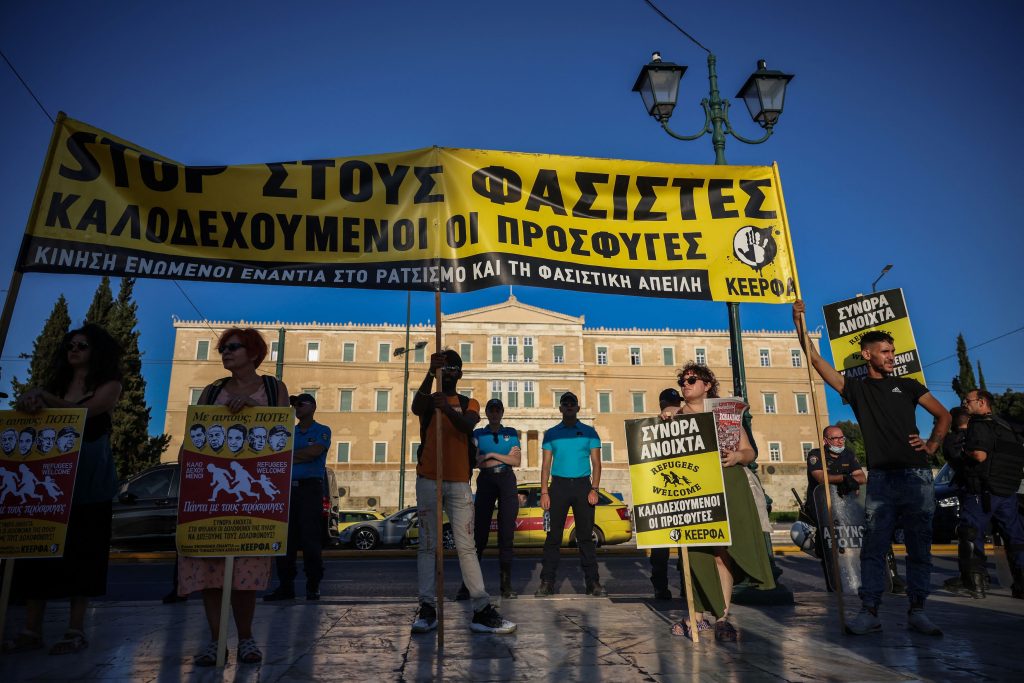
Human rights activists hold pro-refugees placards and banners in front of the Greek parliament, ahead of the vote on legislation which would temporarily halt the asylum process for North African migrants, following a surge of migrant arrivals from Libya, in Athens, Greece, July 10, 2025. REUTERS/Louisa Gouliamaki
Even centrist voices raised concerns. PASOK leader Nikos Androulakis abstained from voting and criticized the government for managing the issue with populist messaging. He called instead for faster processing of rejections and repatriations rather than blanket bans on asylum.
This is not the first time Greece has resorted to such a measure. According to Gerapetritis, a similar policy was implemented in 2020 at the Evros land border. However, critics argue that normalizing such “emergency” responses risks permanently eroding asylum protections.
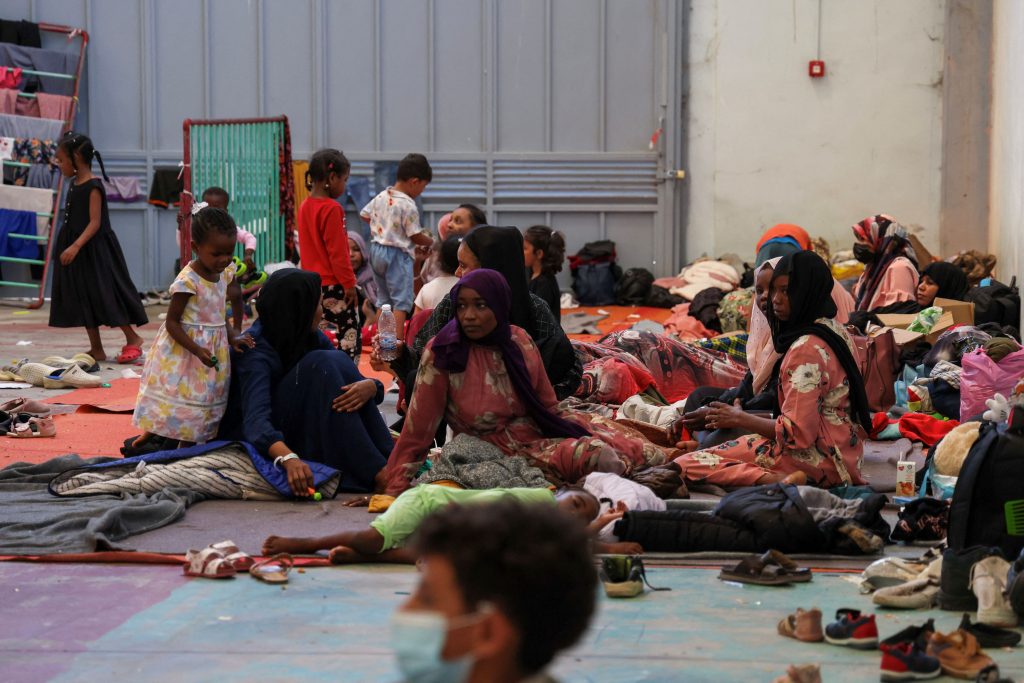
Newly-arrived migrants are sheltered in a municipal hall, in the town of Agyia, on the island of Crete, Greece, July 10, 2025. REUTERS/Nicolas Economou
The government insists it cannot bear the brunt of a global humanitarian crisis. “Greek citizens are our priority,” said Gerapetritis. Yet the debate highlights a deeper question: when does migration management stop being defensive policy and become institutionalized exclusion? Can Greece defend its borders without sacrificing its humanitarian values?