Greece’s volition to reinforce ties with Libya – at least with the administration that controls the eastern and central parts of the massive North African country – was prominently on display on Monday, as Greek Prime Minister Kyriakos Mitsotakis himself received the visiting son of Gen. Khalifa Haftar, the de facto leader of the latter entity.
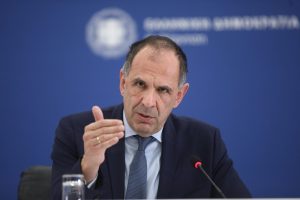
The younger Haftar, Belgacem, in his capacity of director-general of the Libyan Fund for Development and Reconstruction, a day earlier was received by Greek Foreign Minister George Gerapetritis.
On the surface, at least, talked revolved around ways that bilateral economic and trade relations can be boosted, while “historic ties” were reconfirmed – a “catchphrase” buoyed by subsequent comments by government sources.
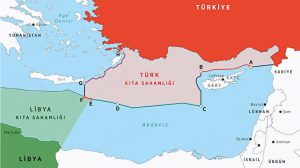
At the same time, Athens has two major outstanding issues on its foreign policy “radar” involving Libya, namely, a controversial 2019 Turkey-Libya maritime zone delimitation deal that Greece deems as illegal and baseless, and, secondly, a surge over the past year in the number of irregular migrants being ferried from eastern Libya to the large island of Crete.
In terms of the first issue, although the agreement with Turkey was signed, in the name of Libya, by the internationally recognized but interim government in Tripoli, recent signs out of Benghazi show a warming of relations with Ankara and a possible ratification by the Tobruk-based and Haftar-controled Libyan House of Representatives.
Belgacem Haftar has recently visited Turkey and met with Turkish leadership. At the same time, Athens considers that he and the other Haftar family members realize the importance of maintaining good relations with a close EU member-state and UNSC member for the current two-year term.
In terms of the maritime deal with Ankara, Greek leadership has been clear and unwavering from the start, emphasizing that the only issue it can discuss is delimitating an Exclusive Economic Zone (EEZ) with Libya based on international law. The EU has also backed up Athens, with the EU Council considering the deal as baseless.
Moreover, although the GNU government in Tripoli signed the controversial deal, in practice it has accepted the “median line” between the North African coast and Crete in designating maritime blocks offered up for hydrocarbon exploration.
In a statement afterwards, foreign ministry spokeswoman Lana Zochiou said the two sides referred to the historical relations between Greece and Libya and “their mutual desire to promote and build a sincere dialogue”. She also referred to preparations for an upcoming Greek business mission to Benghazi in the autumn.
Foreign ministry announcement
The spokeswoman said Gerapetritis expressed satisfaction with the sharp decline in migrant flows from Tobruk to Crete, following his visit to Benghazi. Zochiou said both sides also confirmed that the training of Libyan coast guard personnel in Greece would continue, with a focus on maritime deterrence and control of irregular migration.
The spokeswoman said the Greek minister also reiterated the position expressed by both Athens and the EU on the issue of the invalid and unfounded Turkey-Libya memorandum.
Coming Visit by GNU’s FM
While continuing to cultivate relations with the Government of National Stability controlling eastern Libya, Athens will also receive the acting Foreign Minister Taher Salem Al Baour, representing the GNU, this month on Sept. 15.