A single fish, caught in shallow waters off southern Crete, is offering scientists a glimpse into a much larger transformation unfolding beneath the surface of the Mediterranean.
In October 2025, researchers confirmed the first-ever recorded presence in Greek waters of the yellowbar angelfish, scientifically known as Pomacanthus maculosus. The species, native to the western Indian Ocean, had never before been documented in the Hellenic seas.
The discovery was based on a single adult specimen collected by spearfishing at a depth of around eight metres near Mavronisi, on Crete’s southern coast. The fish was identified through its distinctive appearance a light blue body marked by a large yellow patch, as well as detailed morphological measurements.
While the finding may appear isolated, scientists say it carries broader significance. The presence of the species in Greek waters extends its known range in the Mediterranean and fills what had been an apparent gap between earlier sightings in the eastern and central parts of the basin.
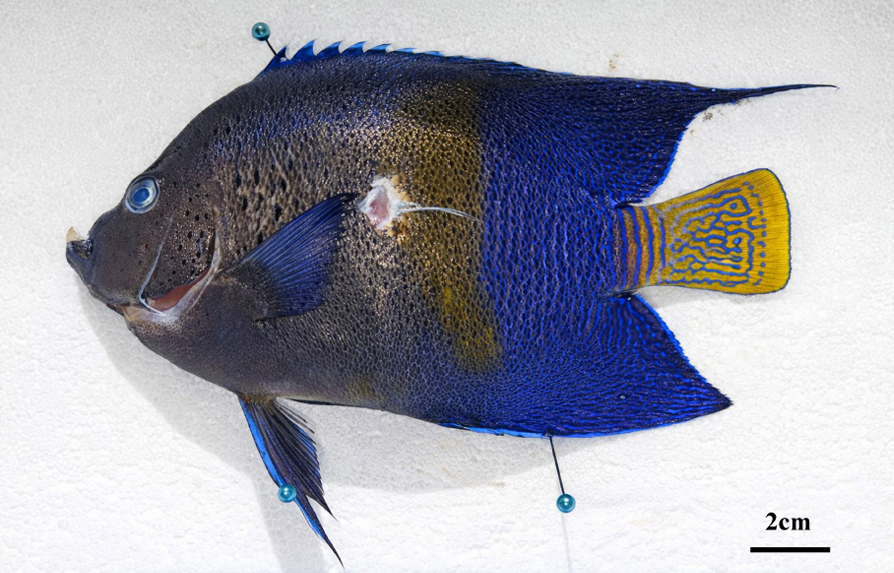
Fig. 1. Pomacanthus maculosus (Forsskål, 1775) specimen collected at Mavronisi, southern Crete (34° 55’ 58.80’’ N, 24° 48’ 36.72’’ E) on 15 October 2025. Photo credit: Chrysa Doxa. Acta Adriatica 67 (2026): https://doi.org/10.32582/aa.67.1.3
The yellowbar angelfish is not native to the Mediterranean. It is considered a non-indigenous species, originally distributed from the Red Sea and Persian Gulf down to East Africa, and there is currently no evidence that it has established a population or is causing ecological harm. That being said, in recent decades, it has been recorded in multiple parts of the Mediterranean, as well as in the Atlantic and Pacific oceans.
How it reached Crete remains uncertain. Researchers outline two main and not mutually exclusive explanations. One possibility is natural westward expansion from populations already established in the eastern Mediterranean, following its earlier introduction through the Suez Canal. Another is human-mediated introduction, such as release or escape from the aquarium trade, where the species is highly valued for its striking coloration.
Neither explanation can be definitively confirmed. However, the study notes that the remote nature of the collection site and the limited presence of aquarium trade activity in the surrounding area may weigh against the aquarium-release scenario, without ruling it out entirely.
The fish itself had been observed repeatedly in the same location from early May 2025 until its capture in October, suggesting that local environmental conditions were suitable for its survival. Its habitat, which is comprised of steep rocky substrates adjacent to sandy plains, matches the species’ known ecological preferences.
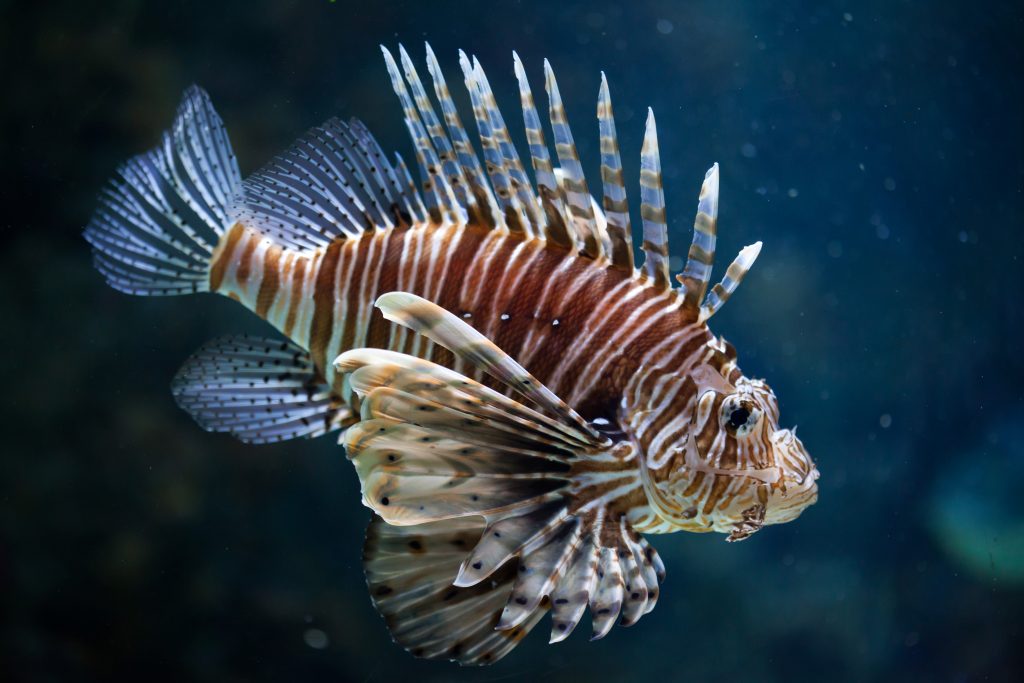
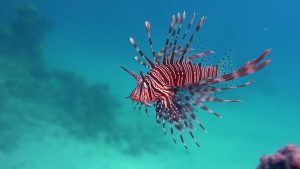
The lion fish, or turkey fish, is often admired for its beauty. Unlike the angelfish, the lionfish is considered to be invasive, causing great harm to the Mediterranean’s marine environment.
The finding also raises a more complex question: whether the species has already been present but simply gone unnoticed. The yellowbar angelfish is known for its relatively cryptic behaviour, which may make it difficult to detect. The absence of records in areas such as Cyprus, the Turkish Mediterranean coast and Rhodes, which are all regions with high reporting of non-indigenous species, may therefore reflect limited observation rather than true absence.
Crete sits at what scientists describe as one of the most dynamic fronts of marine biological invasions in the eastern Mediterranean. Its warm waters, geographical position and strong connection to the Levantine basin make it particularly exposed to the arrival and spread of new species. More broadly, over 230 non-indigenous marine species have been recorded in Greece, many of which have already expanded into the waters around Crete.
The appearance of Pomacanthus maculosus adds to this growing pattern. While the ecological consequences of its presence are not yet known, the study stresses the importance of continued monitoring. Detecting species at an early stage is critical for understanding whether they will establish populations and what impact they may have on local ecosystems.