Easter Sunday always revives the conversation about animals, albeit temporarily and with a focus on lambs and kids. It is probably the only time of the year when the issue of our relationship with other species is in the spotlight. Still, another category of animals doesn’t receive any attention at all.
Stray and unattended equines continue to exist in a “virtually non-existent” legal framework, it is claimed, in a “huge legal vacuum” which makes it unclear who, if anyone, is responsible for their welfare. And to live their daily lives in conditions that all too often border on abuse.
Maria Marolia, a founding member of Help Horses Ymittos, talks to TO BHMA International Edition about a sad state of affairs which, though it stems from institutional deficiencies, is allowed to persist by our “collective tolerance”. She is clear that “the time to stay silent has passed.”
What is your view on the continued use of donkeys, mules and other equines in tourist areas around Greece, especially in our current era of extreme weather events including heat waves?
Unfortunately, there is little real respect for equines in Greece. The people who really understand their needs and have the training and education required to manage them properly are few and far between.
What signs of exhaustion or abuse do you see most often in animals that work in the sun and heat? Are there signs of long-term deterioration or pain?
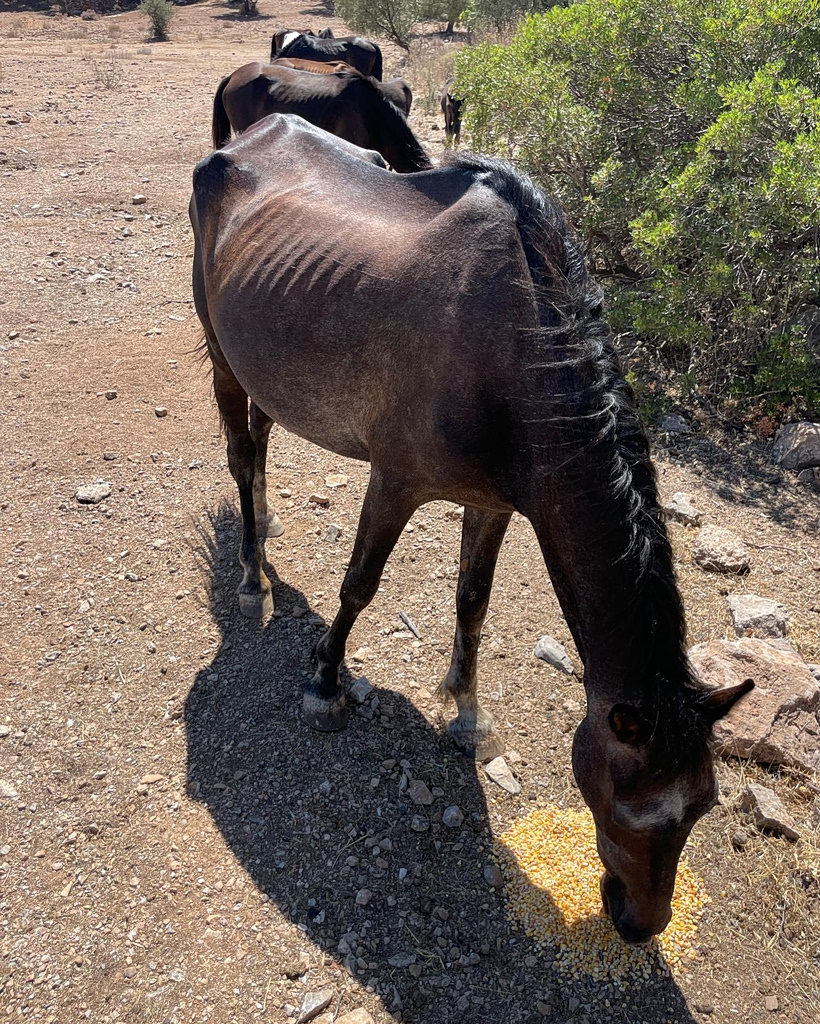
There are numerous signs, which usually couldn’t be more obvious. We see animals that are dehydrated and malnourished, whose hooves have not received the attention they need. Tooth care, too, which is absolutely critical especially in horses which wear bridles, is totally absent. At the same time, inappropriate equipment and saddles can cause severe pain and even open wounds, which we see all the time. These are not isolated incidents; images like these reflect years of neglect and pain.
Do members of the public, whether locals or tourists, ever contact you with complaints about horses working tourist routes on Santorini, Rhodes, or elsewhere that are not being cared for properly? If so, how do you respond?
We receive complaints, which is only to be expected. However, we set up Help Horses Ymittos with a very specific objective in mind: rescuing the horses I myself found in a truly horrific state in the foothills of Mount Hymettus, in the Municipality of Kropia, in August 2023. There were more than 130 of them in all, and rescuing so many animals in a short space of time, without resources and infrastructure, continues to be an uphill struggle. Still, we already have just short of a hundred horses in our care, even though we started from scratch as recently as 2023. We have arranged for some of these horses to be adopted or fostered, too, and rescued other equines (Mogli from Karydochori, near Serres, for instance), but we simply can’t take on any more. What we can—and always—do, is give people guidance in how to care for their animals properly.
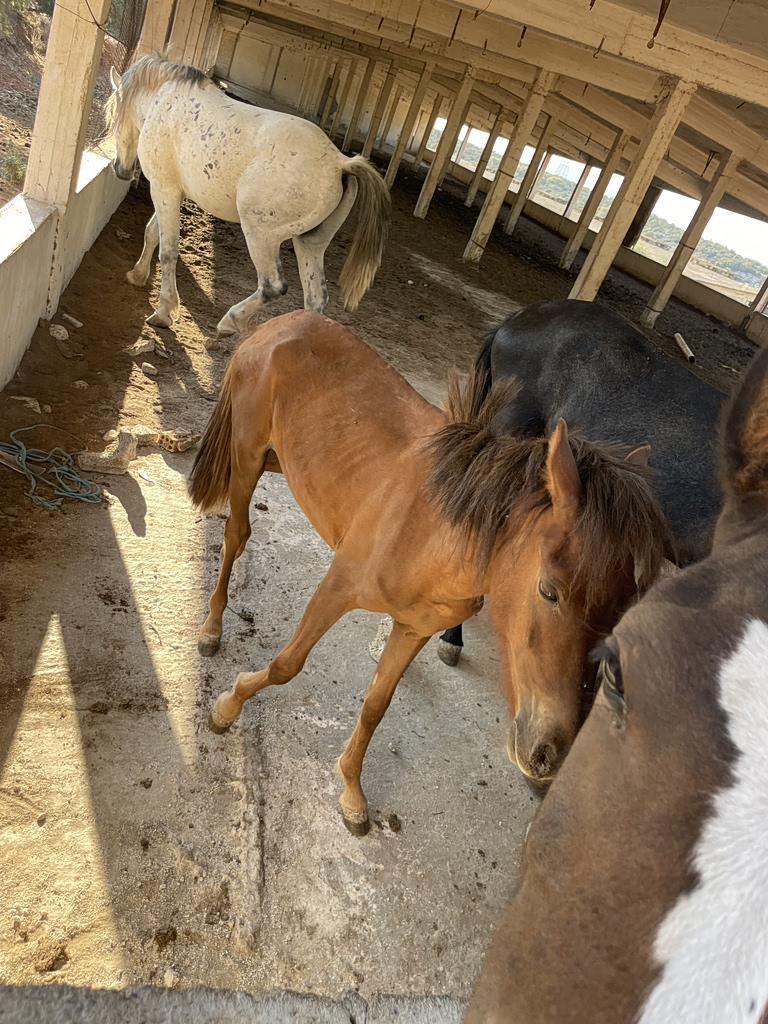
Rescued horses at the facilities of Help Horses of Ymittos.
Because, in reality, lodging a complaint simply isn’t enough. When there is no clear legal framework and virtually no mechanisms in place to enforce what legislation there is relating to equines and to pets, it’s all too easy to pass the buck. Ultimately, there is no clear accountability. I’d like to add something particularly important: the abuse isn’t limited to equines tourists ride and those that pull buggies. It’s present in riding clubs, in equestrian sports and riding schools of every sort—indeed, wherever there are equines. You’re just as likely to see a horse being abused in training for dressage or showjumping as you are a donkey being mistreated on Santorini.
In your opinion, when does the use of these animals stop being “tradition” and cross over into exploitation or abuse?
That line is crossed when respect and knowledge are absent. Whether it’s for tourist rides or activities or festivals and events, when an animal is placed under conditions that cause it intense stress, intense fear, pain and exhaustion, there isn’t a “tradition” in the world that can justify it!
What would you say to the tourists who continue to pay for “experiences” like these, while ignoring the animals’ pain and fatigue? Is there a way to offer rides, for instance, without causing the animals harm? What is the state doing? Is it supporting your efforts? What is the current legal framework in Greece?
Let’s get something straight from the beginning: not everyone is an abuser. But someone who doesn’t know about horses may not even recognize the abuse. Still, some things are crystal clear. No equine should have to work or be ridden when the temperature reaches 30°C or higher—regardless of the time of day. And they must be given proper breaks: no animal should ever be left tethered in the sun, without food or water, or remaining saddled or in harness. We should never ride or employ animals that are visibly underweight or dehydrated.
We often hear the excuse “He’s very old…” And yes, old animals don’t gain weight easily and lack muscle—just like old people. Of course, that actually means we’re placing even more of a burden on them! Ask yourself this: would you saddle your grandmother or grandfather with the super marker shop? Would you put them to work? And one other thing: low prices don’t make an experience an “opportunity”. It just means that someone has cut corners somewhere—usually in the animals’ food, care, space, veterinary care or equipment. A horse is not an object. It is a living creature with complex needs.
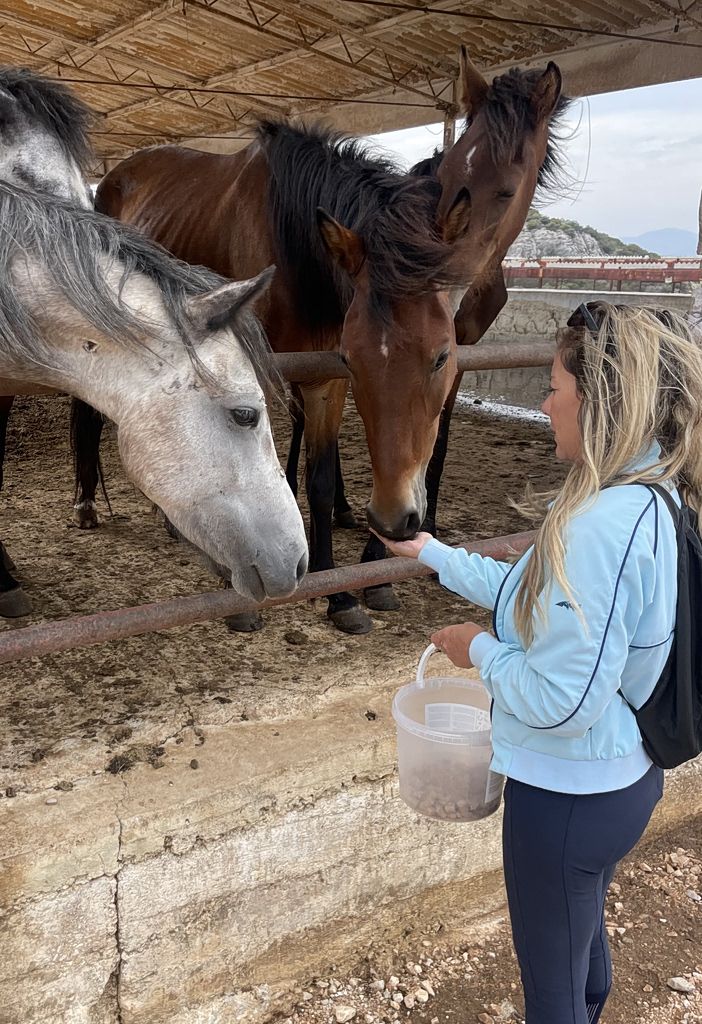
Horses – Maria Marolia: an everlasting and unique bond.
As far the state is concerned, the overall picture is one of failure. There is no real protection in place for equines. In fact, it has got even worse. We experienced a legislative setback just after we started up, when responsibility for stray and unattended horses was removed from the Regions without being assigned elsewhere. That decision was taken by the Deputy Minister for Rural Development at the time, a certain Mr. Keletsis who remains part of the current Cabinet. This created a huge legislative gap. The legislative framework is not only incomplete, it is effectively non-existent. Even basic tools, such as identification forms or passports, have not been implemented properly.
If there was any real will, there would be a clear and enforceable legal framework and a functional and specialized regulatory mechanism. That would include an animal welfare organization with a proven track record (in terms of the number of animals it cares for, per animal category and per region), veterinarians, and a special animal police force. Without them, we’re talking about good intentions, not actual protection.
More broadly, what is society’s moral responsibility toward animals that cannot protest for themselves? How can their voice be heard?
The time for silence or passing the buck is definitely over. Animals live like this today because we as a society tolerate it. If we want things to change, we have to change it ourselves, directly. We need to get informed and intervene, not turn a blind eye. These animals cannot advocate for themselves: as long as we stay silent and do nothing, the abuse will continue.
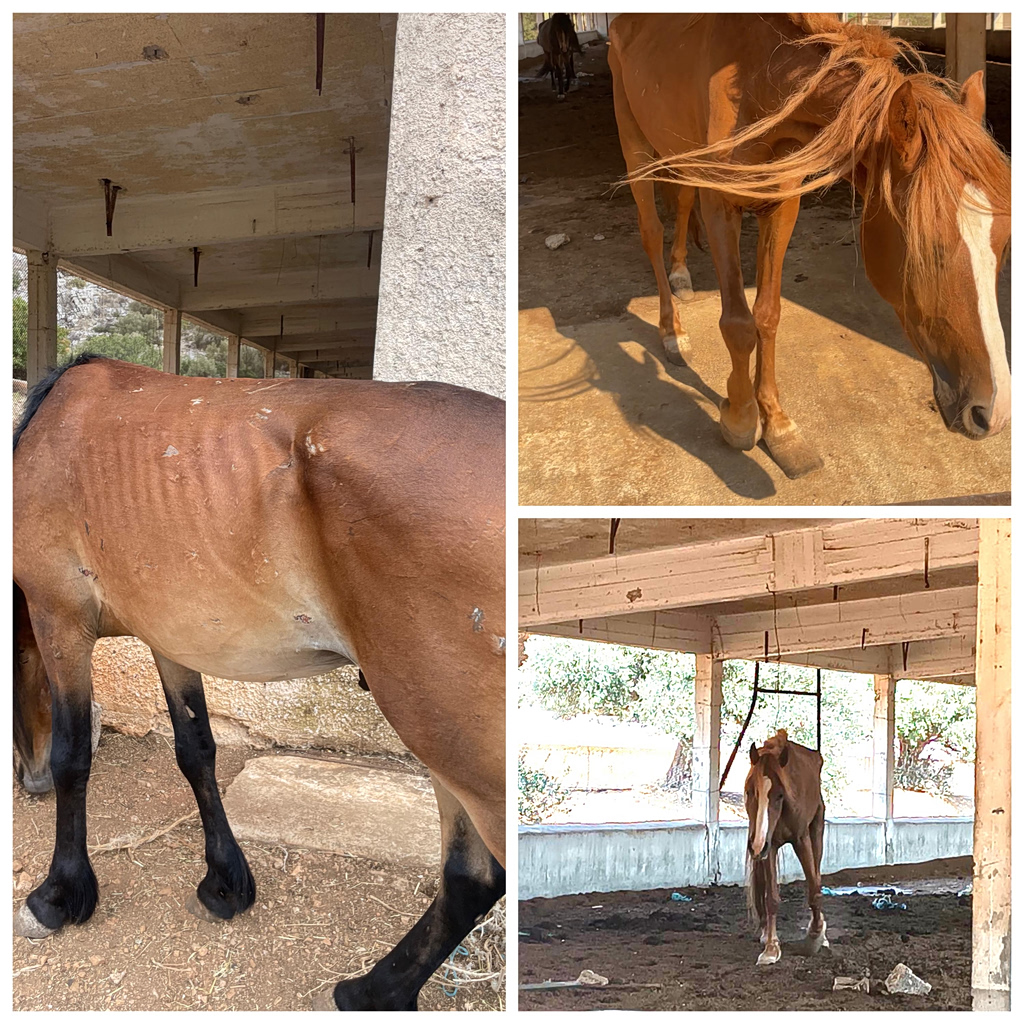
Maria Marolia – Founding Member HELP HORSES YMITTOS (Help Horses AMKE)
Details & more information about its activities:
Kontratsi Zakynthos and Aristogitonos, 19400 KOROPI