Are we, the youth of today, equipped to understand if our democracies are under threat?
In our case, family members—the grandparents or other relations who lived through periods of dictatorship in the country—have the images, thoughts and words that can help us understand. And they have agreed to share their life experiences with us, so we can better understand if our democracy is truly at risk today.
Because talking with people who lived through dictatorship is enough to teach us the value of democracy and the importance of our protecting it.
“There are no winners in a war”
Roberto Hernando, who was born in Quintanar de la Sierra, Burgos, Spain, on 23 February 1954, picks out the things he considers invaluable in a democracy for his granddaughter, Martina.
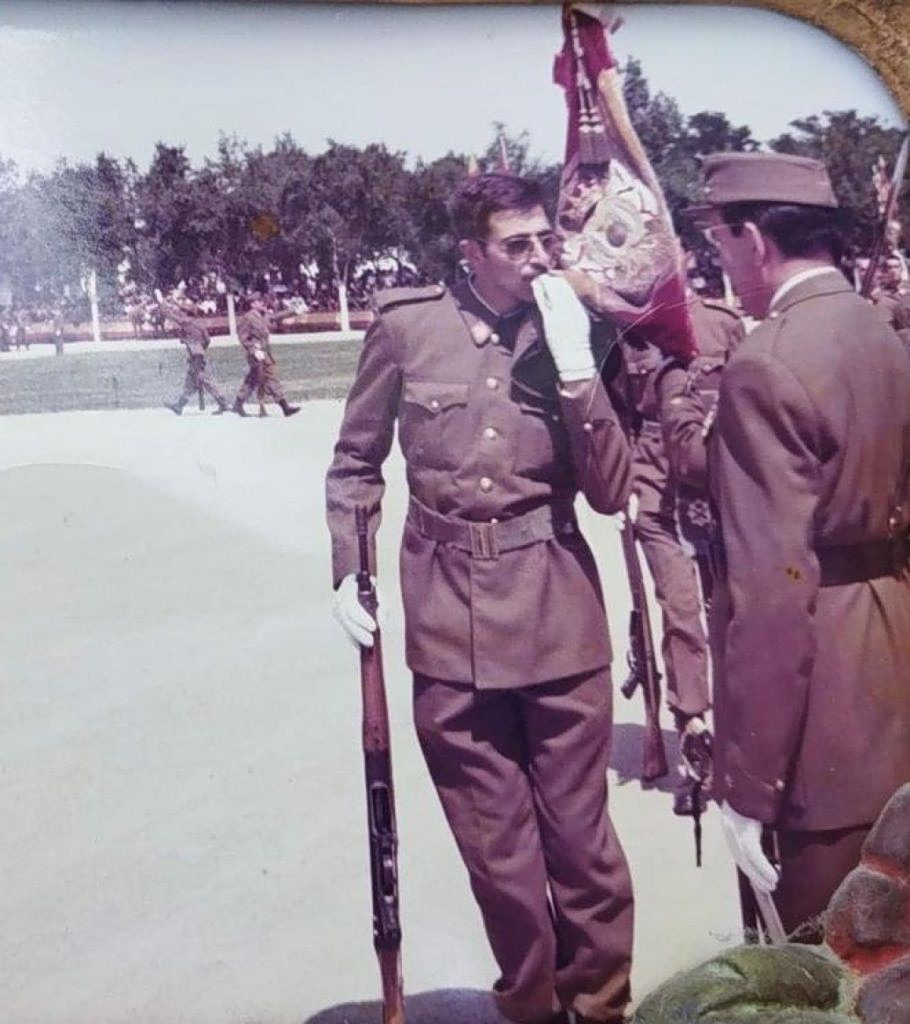
Roberto Hernando in 1975, during his military service.
What were things like in Spain when you were young and had to do your military service?
“Well, Martina, those were different times. Spain was not like it is today; life was more difficult. There weren’t as many amenities. And military service was compulsory then. I was called up when I was 20 years old, and went north to a camp in Burgos, where it was very cold.
It was all about discipline, order and getting up really early. But it also taught you things. To stay alert, to do what you’re told, and to respectful—which are qualities a lot of people lack today.”
What do you think about our democracy today, compared with how things were in the past?
“At that time, you couldn’t raise your voice, let alone speak out against the government. Now there is freedom in everything, which is good, but it also brings a lot of chaos with it. In the past, things were much clearer, much more… serious. Now there’s a lot of nonsense: social media, people being offended by anything and everything. Democracy is good, of course, but you have to know how to handle it. And I sometimes feel that we’re losing control.”
How do you feel about the rumors that military service may be made compulsory again?
“Look, I’m not going to lie: It wouldn’t be very nice, but I don’t think it’s that absurd as an idea. Military service made you a man—or a woman, today, of course. You were taught values, camaraderie, how to share a bunk, how to get along without complaining.
A lot of kids today don’t even know how to boil an egg. A year in the army would bring them back down to earth a little. But I’ll say this, too: if it becomes mandatory again, it should be done properly, not like in the old days when some barracks really were a disgrace.”
Did you gain anything from the experience?
“Yes, of course. I made friends who I still have today—can you believe that? And I learned to be independent. I learned to iron, to sew on buttons, to be patient… skills it seems no one has anymore. I learned to live with people from every corner of Spain, each of them with their own accent and mentality. It was more a school of life than a punishment.”
So, with all the experience you’ve acquired over the course of your life, do you think democracy has value, despite its flaws?
“Absolutely. I’ve experienced times when you couldn’t even speak your mind, and I wouldn’t wish that on anyone. I prefer a flawed democracy to a dictatorship or a war—that goes without saying. There are no winners in a war—just pain. And, with all its problems, democracy does at least allow you to live in peace, to choose, to protest and to be yourself. And that, my love, is priceless.”
“Women were supposed to be seen and not heard”
Alicia Alvarez Velazquez was born in Carles, in Asturias, Spain, on 17 January 1934. Today, in conversation with her granddaughter Laura, she recalls how dictatorship felt and extols the virtues of democracy.
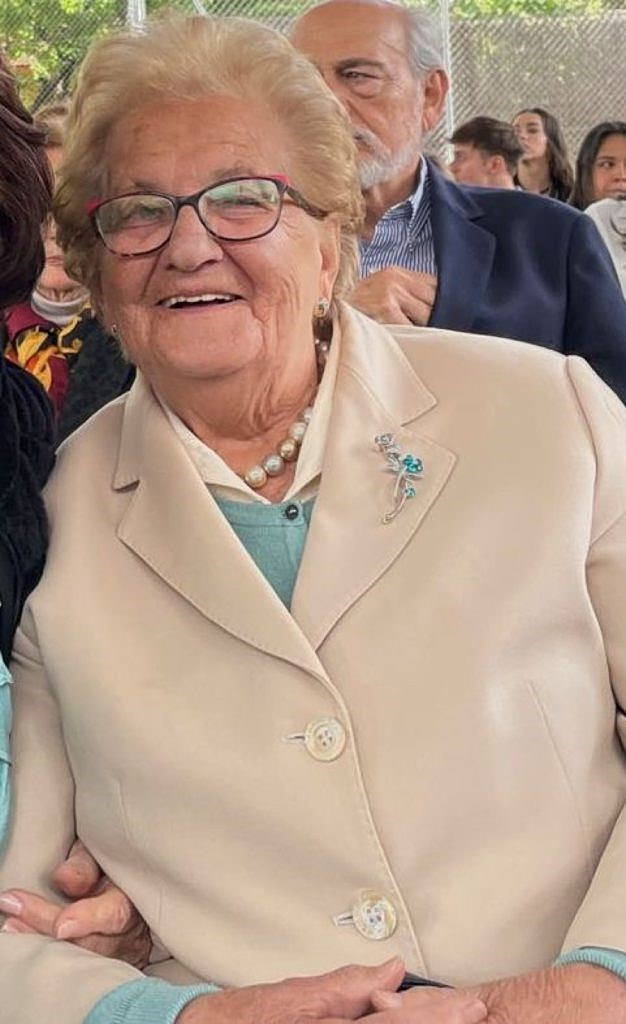
Alicia Alvarez Velazquez at the Colegio Santa Catalina de Sena, Madrid, in 2024.
Grandma, you were born during the Civil War, right?
“Yes, I was born in 1934. I was two years old when the civil war started. I have no memories of the war itself, but I lived through the whole post-war period. There was a lot of poverty and fear.”
What was life like back then?
“Very difficult. We didn’t have enough food or clothes, and you weren’t allowed to raise your voice. If you said something they didn’t like, you could get into trouble. Women had to hold their tongues and do as they were told.”
Do you think war is a bad thing?
“Just bad? It’s terrible! It leaves a country in tatters, and every person in it in pain. And the bitterness doesn’t go away for years once it’s over.”
And what is your opinion of democracy today?
“It’s wonderful. Today, you can study, speak your mind, vote…All of that is so important. But we have to remember to protect it, because people had to fight to get it.”
Do young people understand what happened then?
“I think some people understand, but others think it’s all in the past and doesn’t matter anymore. But that’s not true. If we forget, the same thing could happen again. That’s why it’s so important to talk about it.”
This article was originally published in the insert “The European BHMA” published with “TO BHMA on Sunday” on 11 May 2025.