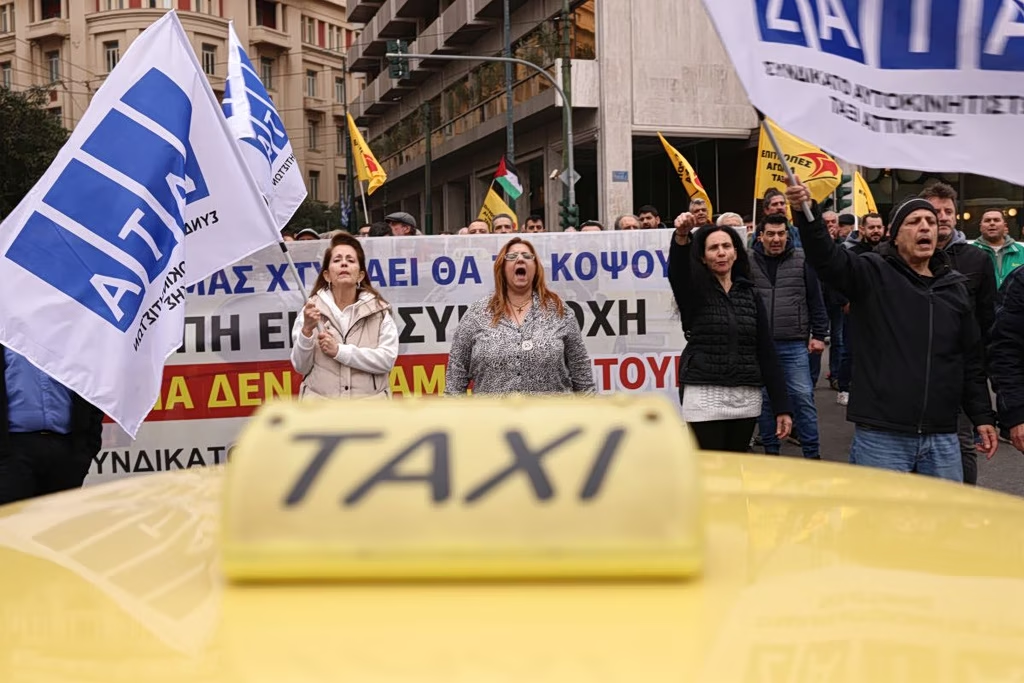
Democracy does not collapse overnight. You don’t need to see tanks in the streets or hear sirens. Usually, it just slips away quietly. Through little changes, minor concessions, which don’t seem important at first. Until, one day, you look around and democracy is nowhere to be seen. Look at what is happening in Hungary and Poland. Leaders who were duly elected by voters have found ways to hold onto power by using every means at their disposal.
They take control over the media, change the laws to their advantage, restrict and repress the universities, appoint their own judges. On television, you only hear what they want you to hear. If you have a different opinion, there’s nowhere to air it.
And the worst thing of all? All of this is happening within the European Union itself. Where human rights and freedom are supposed to be protected. And, yes, the EU’s official representatives are concerned and issue statements… but they simply aren’t doing enough. What about the citizens? Some are afraid. Others are silent. Others simply adapt.
And that’s the most dangerous thing: our getting used to it. Saying “Hey, never mind, it’s nothing”. Accepting that the news will be controlled, that institutions won’t be independent, that our voices won’t be heard.
Democracy is not a given. It needs participation and criticism; it needs us to be passionate and speak out. And the politicians aren’t its guardians. We are: the citizens. And our young people, in particular. The ones who have their whole lives ahead of them. If we don’t speak out when we see injustice, if we don’t react when our freedoms are restricted, then, one day, we may not be able to say anything at all.
Social inequality
“It’s simple,” my father told my mother recently at dinner. “If someone can’t afford to pay the electric bill, he won’t bother his head with politics, Irene. All you care about then is making ends meet…”. “It’s not just about money, kids,” our teacher Mrs. Petropoulou said in class recently (she often says stuff like that). “It’s also about who has access to education, who can study, who has a chance to advance in their chosen careers.”
The more limited the opportunities, the more the least qualified make it to the top. And that’s how citizens are pushed out of the sphere in which socio-political change is brought about. Economic inequalities create a dangerous and out-of-control accumulation of power and wealth in the hands of a specific few. This gives the economically powerful elite the power to impose itself and shape political and social developments—through their business deals, political donations and everything else they do—to their advantage.
Democracy isn’t protected by politicians; we the citizens are its guardians, and the young people in particular. If we don’t speak out when we see injustice, then, one day, we may not be able to say anything at all.
Consequently, political power is constrained and guided by the “strongest”, which gradually brings a system into being that serves vested interests at the expense of the actual needs of the majority and things that are of universal interest. In addition, corruption, which is shored up by the powerful alliance between wealth and political power, leads to policy deliberately grounded in a lack of transparency, in deception and in the abuse of power. And this, in turn, erodes the strength and perceived permanence of democratic institutions.
At the same time, as socio-economic discriminations grow, so does political polarization, creating fertile ground for the emergence of anti-democratic factions. These political movements exploit the social discontent, target the most vulnerable groups, and embrace actions that reject democracy.
And as the public’s distrust of their political systems continues to grow, as these systems prove unable to represent the populace and defend their interests, they opt to remain politically inactive. “Why bother voting? They’re all the same” is a refrain we often hear. But simple as they may seem, these are dangerous words. Because they breed apathy. And apathy breeds authoritarianism.
Misinformation
We live in the age of speed. Everything is fast, with news pouring in from everywhere. Alerts, headlines, videos. But the truth can sometimes get lost amidst all the noise. And the worst thing is that we don’t always realize it. Recently, we did a poll about fake news on the streets of our city, Arta in Western Greece. Our fellow citizens seemed to share out anxieties and doubts.
Most of them spoke about the difficulties they have distinguishing fake from actual news and their anxiety over the role vested political and economic interests play in news provision. What caught our attention above all, though, was the fact that most of the people we spoke to had already fallen victim to fake news, which they then spread on social media. So misinformation is more than just a problem. It’s poison.
It is entering our everyday life drip by drip, changing how we see things, how we think, what we believe. And when we reach a point where a decision must be made—who to vote for, what to support, what to reject—that decision is no longer based on reality, but rather on a distorted image of it.
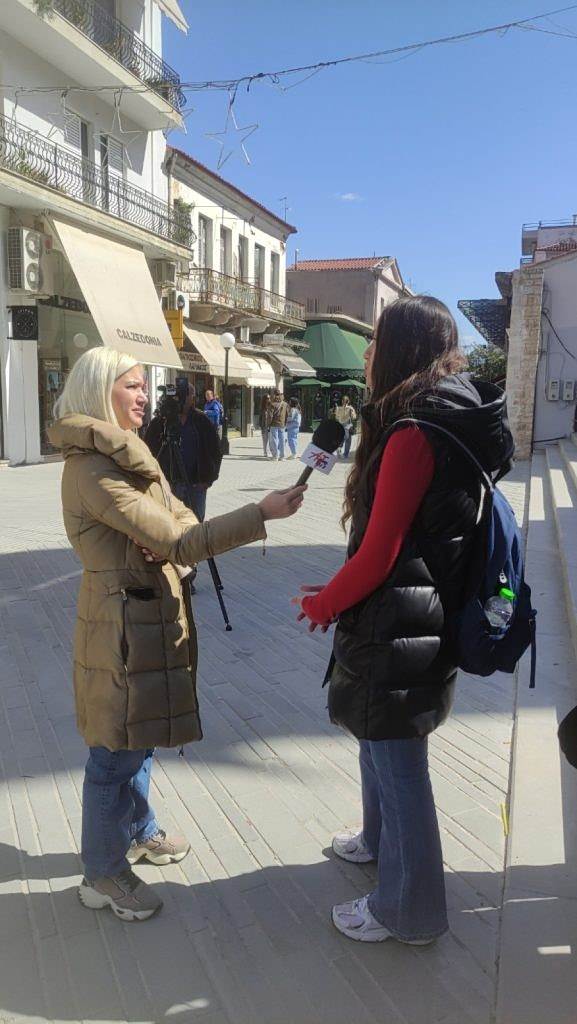
Recently, we did a poll about fake news on the streets of our city, Arta in Western Greece. Most of them spoke about the difficulties they have distinguishing fake from actual news and their anxiety over the role vested political and economic interests play in news provision.
When we cannot distinguish the truth from a lie, it opens the door to division. Suddenly, we’re not talking anymore. We’re fighting. Us and them. Ours and yours. A society divided, which does not trust institutions, or even its own people. And this is a perfect climate for those who want to exert control.
The people who want to sow confusion and rise the wave of chaos into power. What can we do? We can—and should—be skeptical, though not of everything. Just about things that seem “too good to be true”. We can look a little harder. We can ask questions. We can talk things over. And, above all, we can stop taking information at face value. Because when we stop seeking the truth, democracy will start to fray.
Hackers and propaganda
In our modern era, democracy isn’t under threat from an army. No, the assault is led by hackers, who circulate fake news and propaganda insidiously on social media. The greatest risks include interventions from abroad launched by state and non-state actors intent on manipulating democratic processes by means of cyber-attacks, propaganda and the spread of misinformation.
Certain countries have been accused repeatedly of such interventions aimed at destabilizing governments and influencing public opinion in their favor. “It’s like they’re toying with our minds”, my classmate Chrysanthi commented in class the other day.
This new form of “warfare” requires a new type of defense. Democracies must protect their fundamental principles by ensuring free and fair elections and a society resistant to external influences. In an age in which information is a weapon, preserving democracy is more than just a choice; it’s a necessity.
Each new era faces its own challenges and obstacles to democracy, but finds ways to survive. Democracy is a living form of governance, which never stops evolving and requires the active participation of the people. Right now, it needs citizens to rally round a common cause: making it clear that democracy is so much more than parliaments and constitutions.
It’s a stance we adopt in our daily lives. It’s when you do your homework before you vote. When you cross-check what you read. When you discuss, debate, and disagree with respect for others’ opinions When you stand up and say: “This is not right.” And yes, these are difficult times! Misinformation, inequalities, polarization, online threats… But that is precisely why democracy is worth defending. We will write the future of democracy together!
This article was originally published in the insert “The European BHMA” published with “TO BHMA on Sunday” on 11 May 2025.