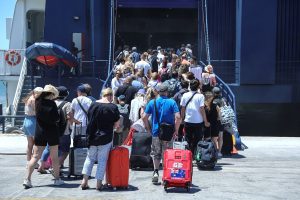
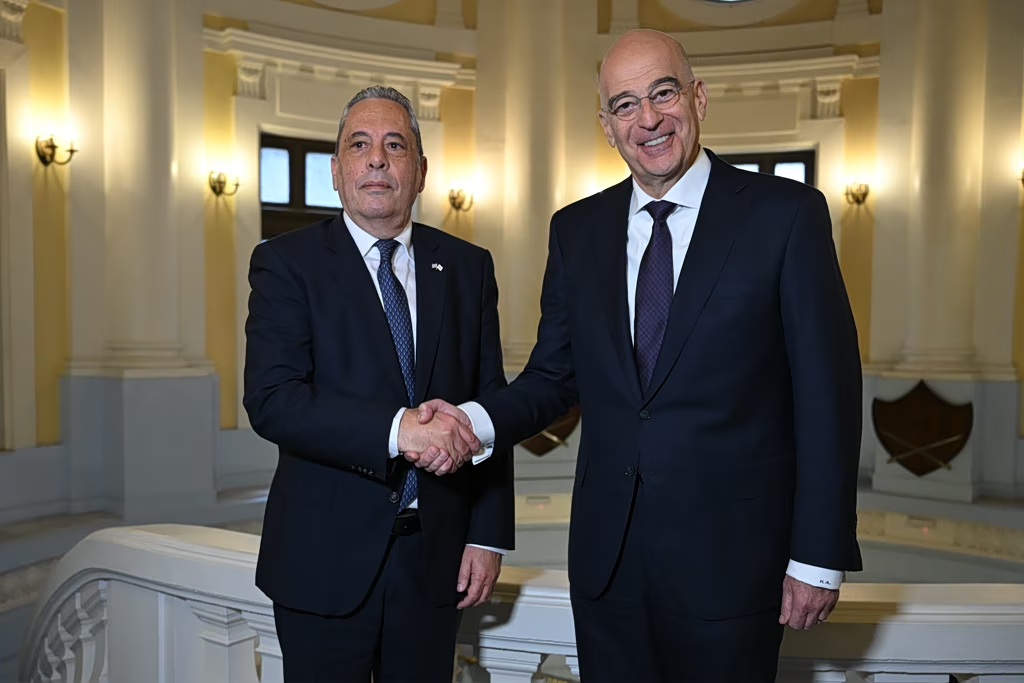
Greece will allocate 56 million euros to keep ferry ticket prices in check as geopolitical tensions in the Middle East weigh on the economy, Shipping and Island Policy Minister Vassilis Kikilias said on Tuesday, outlining the government’s latest response measures.
Describing the situation as highly volatile, Kikilias warned that the escalation of hostilities—now extending to strikes on energy infrastructure—makes any reliable forecasts impossible. “No one truly knows what tomorrow will bring,” he said, stressing that the government is nevertheless preparing through targeted pre-emptive actions. He underscored the strategic importance of the ferry sector, noting its deep ties to tourism, services, and the broader economy—pillars that account for a significant share of Greece’s GDP.
The minister pointed to last year’s intervention as a successful model: a 50% reduction in port fees combined with 27 million euros in support helped prevent fare increases and, through market competition, even led to discounts of up to 32% on tickets, cabins, and vehicle transport.
Building on that approach, Prime Minister Kyriakos Mitsotakis announced a new 56 million euros package following consultations with ferry operators. The aim, Kikilias said, is to ensure that rising operational costs are not passed on to households and travelers. The funding will cover mandatory ticket discounts that had until now been absorbed by ferry companies.
“This year is not a normal situation—it is wartime, and its duration remains unknown,” the minister noted, adding that the government would proceed “calmly and step by step.” He also referenced a broader 300 million euros support package directed at the market to assist both consumers and businesses.
Beyond economic measures, Kikilias emphasized maritime safety as a top priority. According to him, 27 vessels of various flags have already been struck in the wider region. Currently, 138 Greek-owned and Greek-flagged ships are operating in the area, including 11 within the Persian Gulf and two in the Gulf of Oman. Greek authorities remain in constant contact with these vessels, issuing guidance and monitoring developments in real time to safeguard crews navigating increasingly dangerous waters.