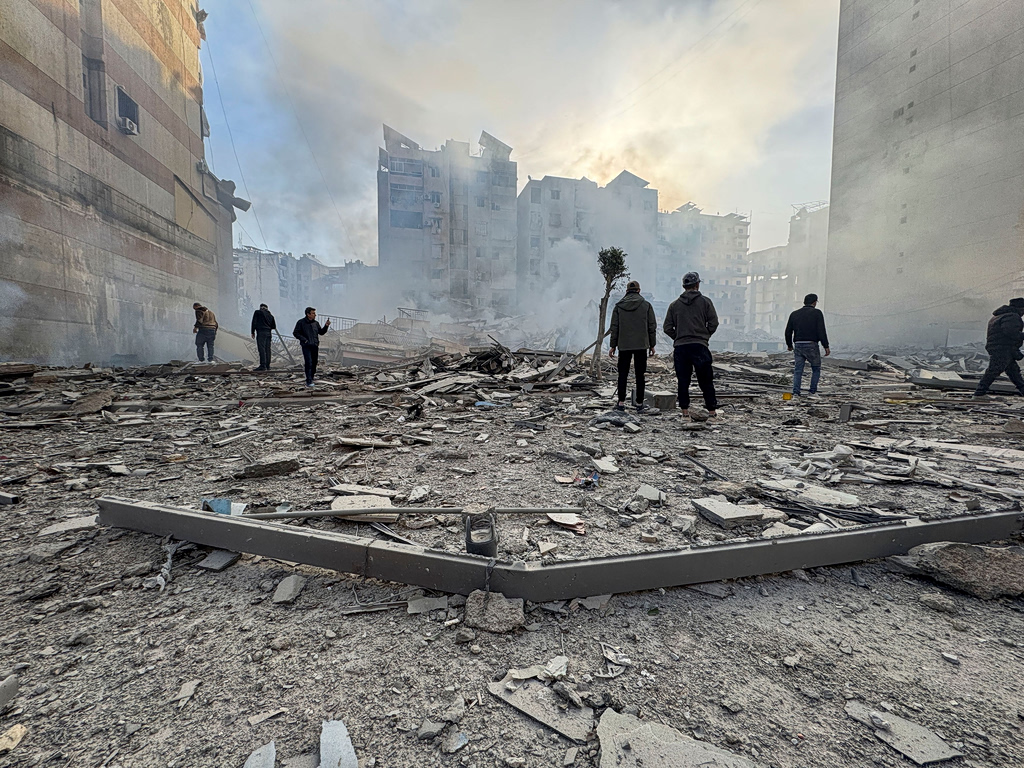
Behind the near-total absence of strong reactions from the world’s major powers to the war involving Iran lies something deeper: the possible formation of a new global balance of power—one that increasingly resembles the logic of the historic Yalta Conference of 1945.
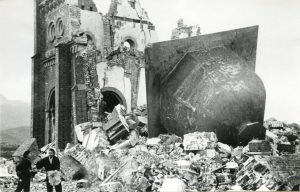
In February 1945, in the Crimean resort of Yalta, Franklin D. Roosevelt, Winston Churchill, and Joseph Stalin gathered for days of negotiations to determine the postwar order following the expected defeat of Nazi Germany.
The future of Poland dominated the agenda, and most historians agree that the United States did not press the Soviet Union hard enough to ensure a truly independent government there after the war.
As for the Balkans, the issue of Greece had already been settled earlier—during the so-called “percentages agreement” between Stalin and Churchill in Moscow in October 1944. It was the classic question of spheres of influence.
But what does all of this have to do with the war in Iran today? What connection could an event that took place 81 years ago in Crimea possibly have with the geopolitical crisis of 2026?
According to this analysis: far more than the average reader might imagine.
What Yalta and Iran Have in Common
The common denominator is American power, which remains largely uncontested—even by Russia or China.
As the The New York Times recently asked: “Iran has friends. Where are they?”
Neither Turkey, India, Russia, nor China has taken meaningful steps to prevent the United States—alongside Israel—from acting against Iran.
From the perspective of international relations theory, this behavior is not surprising. States tend to align with—or at least avoid confronting—the stronger power when the opposing side in a conflict has little chance of prevailing.
For example, what would Russia gain from openly backing Iran at this moment? Unconfirmed reports even suggested that Russian personnel withdrew from the country and that systems such as the S‑400 missile defense system had been deactivated. China is also believed to have withdrawn some of its military advisers.
Russia, meanwhile, may benefit indirectly from the situation. Rising oil prices could provide much-needed revenue to support its war effort in Ukraine.
China, on the other hand, is a civilization-state with millennia of history and what a former Central Intelligence Agency official once described as “strategic patience.” It observes, learns, and adapts.
India has recently completed a strategic agreement with the United States and has strong reasons to favor stability in the Middle East—even if that stability comes after Iran’s defeat. Such an outcome could accelerate the planned India–Middle East–Europe Economic Corridor (IMEC), which would run through Saudi Arabia, Israel, and Greece on its way to Europe.
Turkey, for its part, has limited room for maneuver. Its air force reportedly has fewer than 40% of its F‑16 Fighting Falcon jets operational, and it is waiting for possible Eurofighter Typhoon acquisitions from Gulf partners—a process that current developments may further complicate.
The Emergence of a “New Yalta”
In other words, much like in 1945, the world may be witnessing the beginning of a new geopolitical arrangement.
This time, the three central players would be:
- the United States
- Russia
- China
Together they could shape global spheres of influence—though the United States would remain the most powerful of the trio.
Russia’s ambitions appear largely confined to the strategic space between its territory and the former Soviet satellite states.
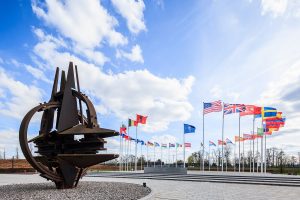
Even if Ukraine were to lose its war, a full-scale Russian invasion of NATO countries remains possible but not the most likely scenario—at least for now. Russia, particularly after the German invasion of 1941, has long been shaped by a deep sense of insecurity and the belief that it is constantly under threat.
China, the second pillar of this emerging order, would ideally prefer to absorb Taiwan without war. This idea has been discussed by international relations scholar Charles Glaser in his book “Retrench, Defend, Compete: Securing America’s Future Against a Rising China.” His argument suggests allowing China to take Taiwan while strengthening defensive lines stretching from Singapore to the Sea of Okhotsk north of Japan and southwest of Alaska.
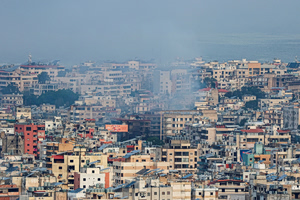
The United States, meanwhile—the dominant power—has largely consolidated its influence across the Americas from Alaska to Chile. Europe remains dependent on American natural gas and military equipment, and with Israel’s help Washington has largely neutralized threats from Iran, Syria, Hezbollah, and Hamas.
In this emerging order, the United States would likely take the lion’s share of influence.
A Turning Point in Global Politics
If this interpretation proves correct, the post-Iran war world could resemble a tacit “gentlemen’s agreement” among the major powers.
The principal strategic competitors for the United States would remain Russia and China. Other challenges—such as North Korea or Cuba—would remain relatively limited, the latter being more of a lingering irritation for Washington since 1961 than a serious threat.
For now, the hope is that the war will end quickly.
Few outside Iran—and even fewer among its former allies—are likely to shed tears for the country’s theocratic regime.
If a “new Yalta” truly emerges, 2026 may be remembered as a turning point. The key question is whether this new global arrangement will create fewer dangers—or perhaps even new opportunities—for countries like Greece.