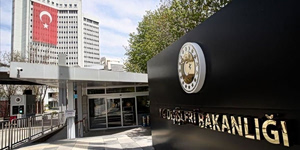
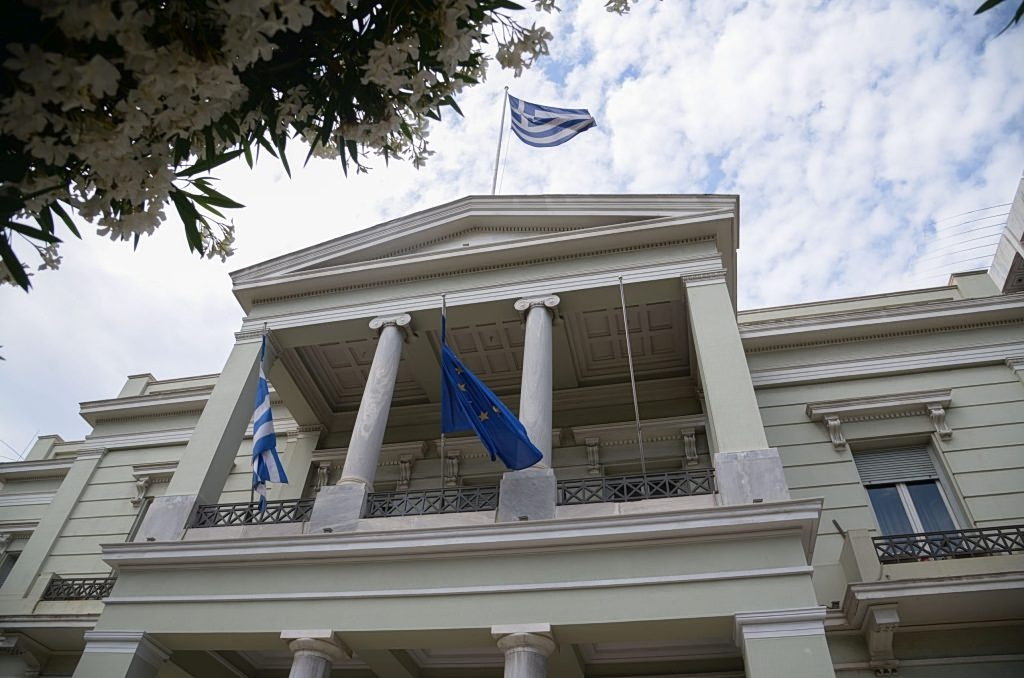
Greece’s foreign ministry immediately and curtly responded on Thursday to the latest and recurrent provocation by official Ankara regarding the Muslim minority community in the northeast province of Thrace, again pointing to the Lausanne Treaty of 1923 as clearing citing a “Moslem Minority” in the region and dismissing Turkey’s gripe over the appointment of muftis by Greek state rather than an election by minority members.
In the treaty, and specifically Article 45 states: “…The rights conferred by the provisions of the present Section on the non-Moslem minorities of Turkey will be similarly conferred by Greece on the Moslem minority in her territory…”
Regarding the position of mufti, a quasi-legal religious official authorized to interpret Islamic law and provide religious guidance, in Turkey, muftis are appointed by the state, not elected. Individuals appointed to such civil servant positions are part of the centralized religious authority known as the presidency of religious affairs (Diyanet), which operates under the Turkish government.
While such positions are appointed by the Turkish state in the country, Ankara has long agitated to the same positions serving the Muslim minority in northeast Greece filled by election.
Along those lines, the foreign ministry in Athens again emphasized that the Muslim minority’s legal status is clearly defined by the Treaty of Lausanne of 1923 and that the minority has a religious rather than an ethnic character, something that—according to latter —is not open to different interpretations. At the same time, Athens repeated that the Treaty does not provide for the election of muftis by the minority, a fact that is also linked to the judicial and administrative responsibilities they exercise.
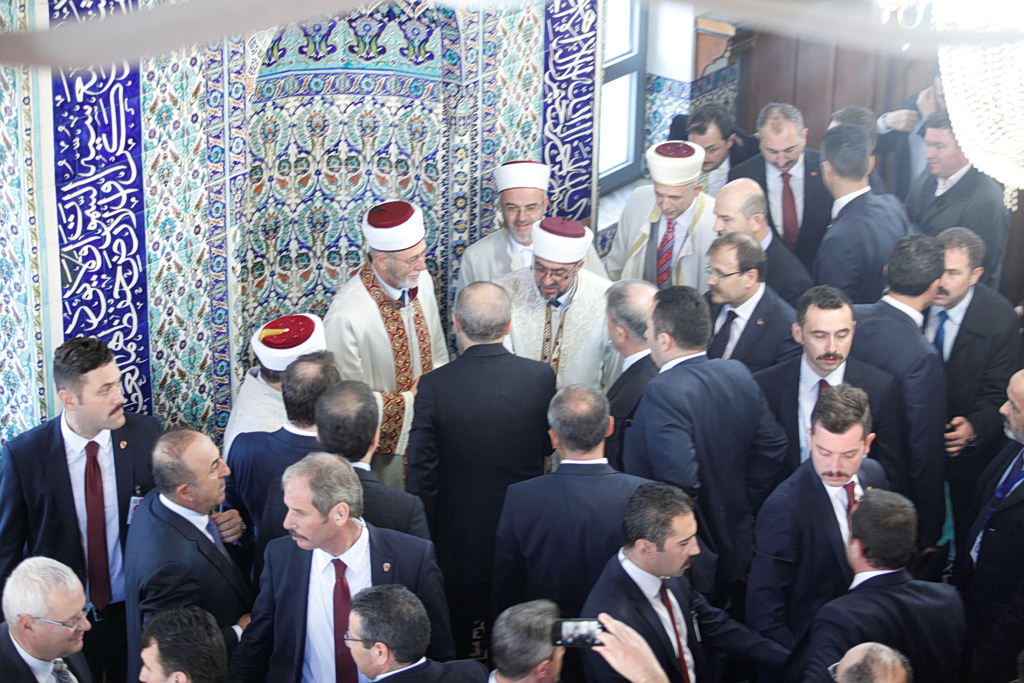
File photo: The President of Turkey, Recep Tayyip Erdoğan (center, with his back turned to the camera) visits the Sehrekustú Mosque (Kır Mahalle) in the small northeast Greece city of Komotini on Friday, December 8, 2017. ANA-MPA / NIKOS ARVANITIDIS
Although the actual text of the Lausanne Treaty is widely available, in Turkish as well, and the fact that muftis are appointed in the country, similar to Greece, official Turkey often revisits the matter in a manner aimed to portray it as a “human rights violation”, a recent provocation, discrimination etc.
Conversely, the once vibrant ethnic Greek community in Istanbul has been whittled down to some 5,000 permanent residents today, while the indigenous ethnic Greek communities on the islands of Imbros (Gökçeada) and Tenedos (Bozcaada) – awarded to the newly founded Republic of Turkey in 1923 – have all but disappeared.
The reaction came after the following statement issued in Ankara on Wednesday:
Regarding Greece’s Policies Toward the Muftis of the Turkish Minority in Western Thrace https://t.co/OVheHDg5h3 pic.twitter.com/4JGynptkxV
— Turkish MFA (@MFATurkiye) April 8, 2026
The Greek foreign ministry’s full statement reads:
“The Muslim Minority of Thrace is a religious minority. The Treaty of Lausanne of 1923, which governs its legal status, does not allow for multiple interpretations, and its religious rather than ethnic character is indisputable.
“In the Treaty of Lausanne, no provision is made for the election of Muftis by the Minority, nor could this be the case given that they are also entrusted with judicial and administrative responsibilities.
“The Greek State, under Law 4964/2022, provided for the establishment of a committee composed of members of the Minority, including women, which evaluates and proposes the most suitable candidates for the position of Mufti. In implementation of this law, the appointment of the new Mufti of Didymoticho has been completed, while calls for applications have already been published for the positions of Muftis in Xanthi and Komotini. All this is taking place while in Turkey itself Muftis are appointed.
“Greece, as a European state governed by the rule of law, handles the issues of the Muslim Minority in Thrace with full responsibility, on the basis of the principles of equality before the law and equal citizenship, and above all ensures the religious freedom of its members. This will not change, just as the designation of the Minority as provided by international law will not change because some refuse to accept the obvious.”