The European Commission has unveiled a bold proposal for the European Union’s Multiannual Financial Framework (MFF) for 2028–2034, totaling nearly €2 trillion. Described by the Commission as both ambitious and dynamic, the new long-term budget is designed to bolster Europe’s resilience, strategic autonomy, and competitiveness, while ensuring social cohesion and environmental sustainability.
A Strategic Investment in Europe’s Future
At 1.26% of the EU’s average GDP over the seven-year period, the proposed MFF provides a long-term financial foundation aimed at responding to structural geopolitical and economic shifts. According to the Commission, the framework is intended to help the EU emerge as a more independent, prosperous, and secure bloc, equipped to handle a range of evolving challenges—from security and climate resilience to energy and migration.
Commission President Ursula von der Leyen emphasized that the new budget will enable Europe to “shape its own destiny,” supporting peace, prosperity, and the Union’s core values.
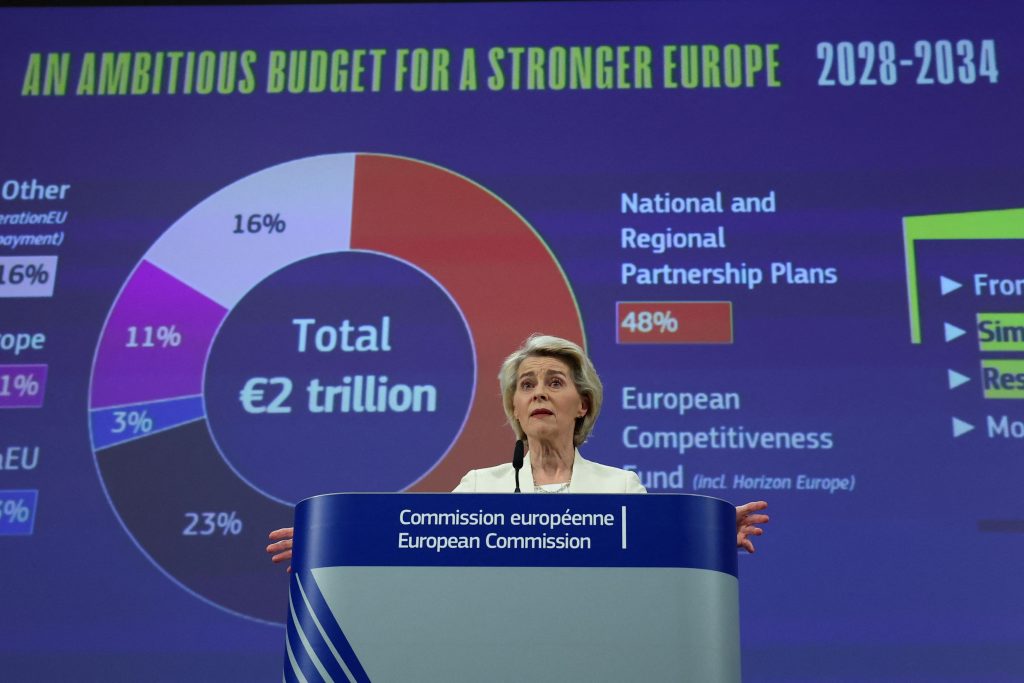
European Commission President Ursula von der Leyen speaks during a press conference on a proposal for the EU’s next seven-year budget, in Brussels, Belgium July 16, 2025. REUTERS/Yves Herman
Key Features of the 2028–2034 MFF
The Commission’s proposal brings several innovations and structural reforms to the EU budget, including:
- Greater Flexibility: Designed to allow for swift reactions to unforeseen events and emerging priorities.
- Simplified Financing Instruments: Streamlining EU funding to make it more accessible to citizens and businesses.
- Localized Budget Implementation: National and Regional Partnership Plans will ensure funds target specific needs and reforms for stronger territorial and social cohesion.
- Boost to Competitiveness: A strategic focus on securing supply chains, enhancing innovation, and supporting clean and smart technologies.
- New Own Resources: Introduction of new revenue streams expected to generate approximately €58.5 billion annually, reducing pressure on national budgets.
Investing in People and Regions
A core focus of the new budget is on cohesion and agricultural policy, with funding channeled through targeted National and Regional Partnership Plans. These plans will consolidate support across employment, farming, fisheries, urban development, and rural regeneration—ensuring stronger impact and administrative simplification.
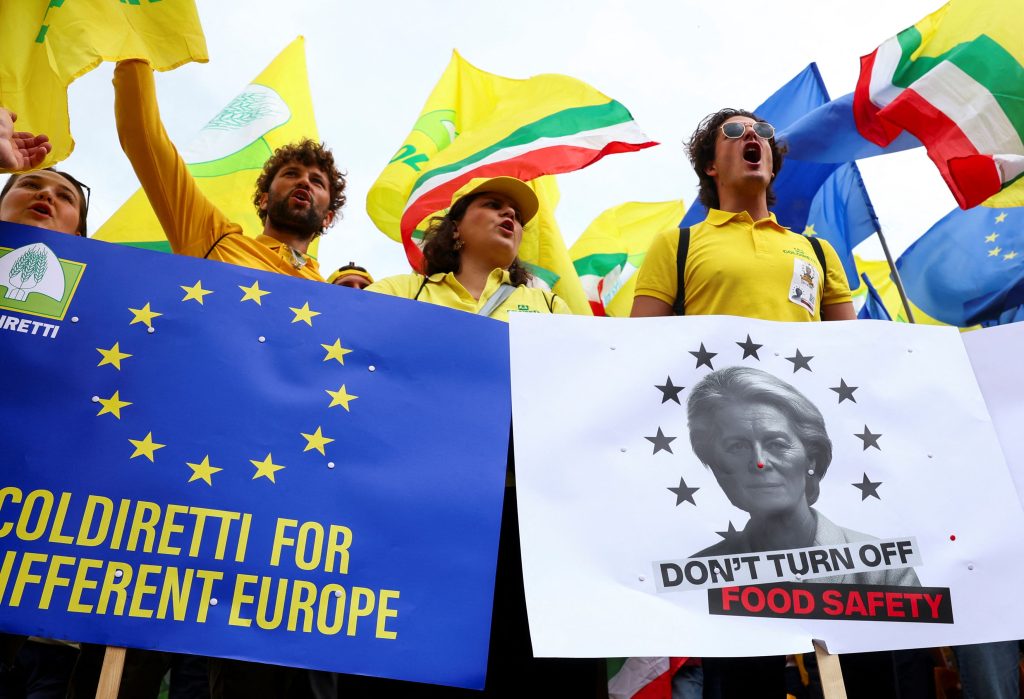
Farmers protest against proposed cuts to Common Agricultural Policy (CAP) funding and the European Commission’s plan to merge agricultural and cohesion policies, in Brussels, Belgium July 16, 2025. REUTERS/Yves Herman
Notably, minimum funding thresholds will be secured for less-developed regions, with guarantees that no region receives less than under the current budget. Farmers and fishers will continue to benefit from income support, risk management tools, and simplified payment and audit systems.
Additionally, 14% of national allocations will be earmarked for reforms and investments in skills, social inclusion, and poverty reduction, particularly in rural areas.
Education, Culture, and Democratic Values
Education and civic engagement remain central pillars. The Erasmus+ programme will be expanded, becoming the cornerstone of the Union’s Skills Agenda, while the AgoraEU programme will promote democratic values, cultural diversity, and media freedom.
Enhancing Competitiveness and Innovation
A new European Competitiveness Fund—worth €409 billion—will invest in strategic technologies across four domains: green transition, digital transformation, health and bioeconomy, and defense and space. Working in tandem with the €175 billion Horizon Europe research initiative, these funds will support projects from conception to scale-up, reducing administrative burdens and time-to-disbursement.
Resilience and Crisis Preparedness
To improve Europe’s ability to manage crises, a new Crisis Response Mechanism will offer nearly €400 billion in loans to Member States in the event of severe emergencies. The budget will also support agricultural reserves, crisis management reform, and readiness in key sectors including healthcare and civil protection.
Strengthening Defense and Security
The budget will significantly reinforce EU defense and strategic autonomy. Through the Competitiveness Fund, €131 billion will be allocated to defense and space—five times more than the previous framework. The Connecting Europe Facility will also be scaled up, enhancing dual-use infrastructure and cybersecurity.
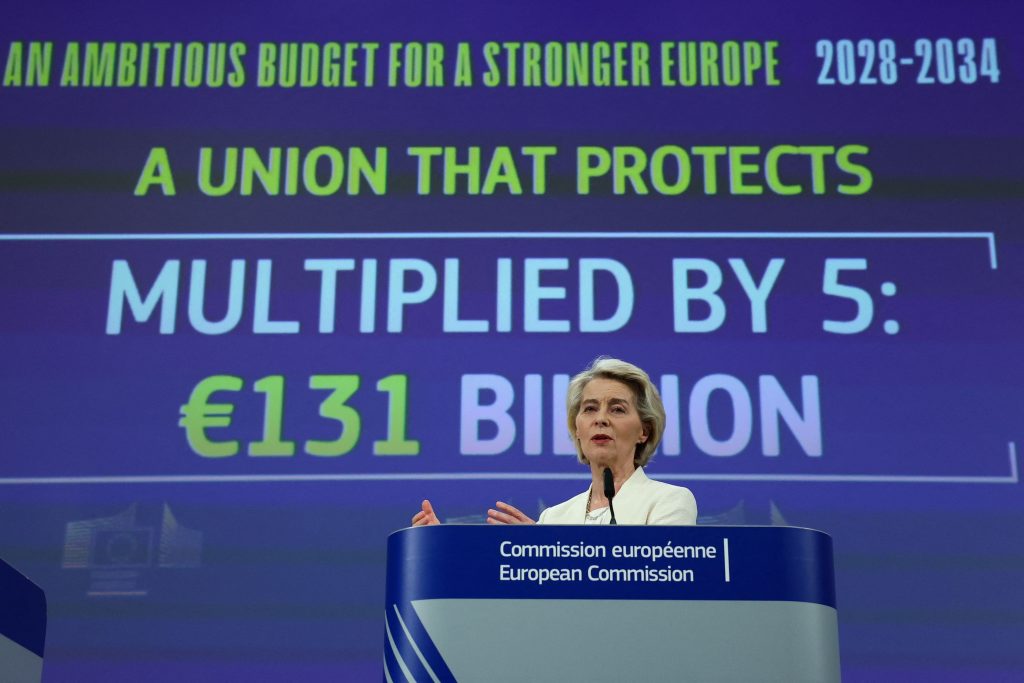
European Commission President Ursula von der Leyen speaks during a press conference on a proposal for the EU’s next seven-year budget, in Brussels, Belgium July 16, 2025. REUTERS/Yves Herman
An additional €34 billion will be directed towards managing migration, securing borders, and supporting law enforcement—tripling current levels.
A Global Europe
The external action component of the MFF includes €200 billion for the Global Europe programme, aimed at supporting partnerships, diplomacy, and enlargement. A €15 billion reserve will address emerging crises, while up to €100 billion will be available for flexible support to Ukraine. Funding will also continue for peacebuilding and promoting human rights through the EU’s Common Foreign and Security Policy.
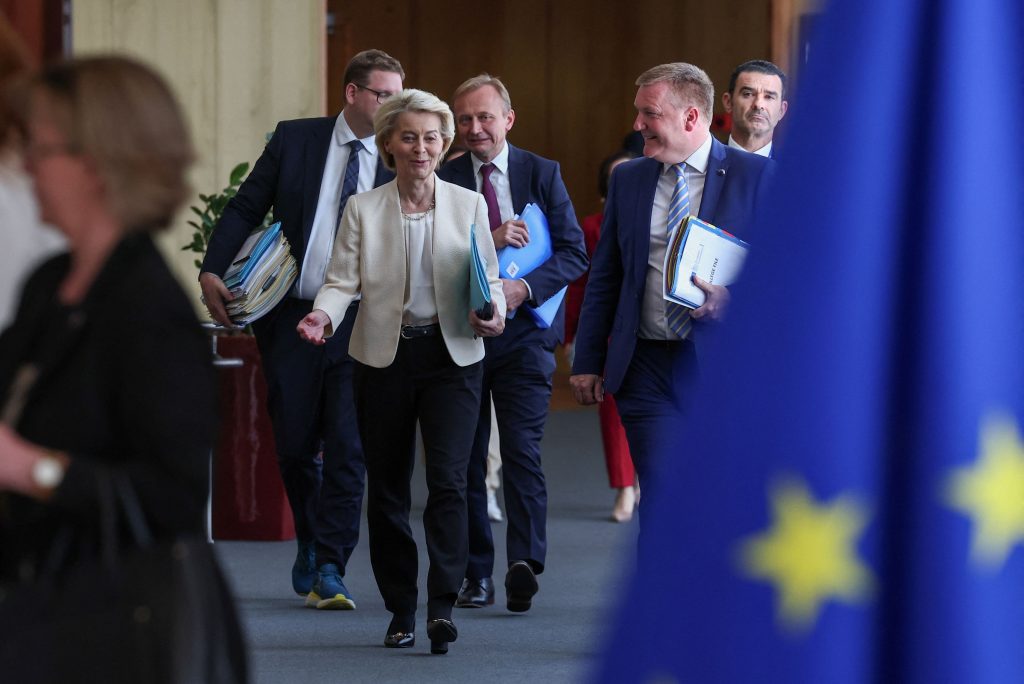
European Commission President Ursula von der Leyen and budget commissioner for the European Union Piotr Serafin arrive for the meeting of the college of European Commissioners discussing the EU’s next seven-year budget in Brussels, Belgium July 16, 2025. REUTERS/Yves Herman
New Revenue Streams for a Modern EU
To fund these priorities while relieving national budgets, the Commission proposes five new “own resources”:
- Revenues from the EU Emissions Trading System (ETS) – ~€9.6 billion/year
- Carbon Border Adjustment Mechanism (CBAM) – ~€1.4 billion/year
- Levy on non-collected electronic waste – ~€15 billion/year
- Excise duty-based contribution from tobacco – ~€11.2 billion/year
- Corporate contribution from large companies (CORE) – ~€6.8 billion/year
Combined, these measures are expected to generate €58.5 billion annually in 2025 prices.
The proposed MFF and its revenue instruments will be debated by the EU Council, requiring unanimous approval and the consent of the European Parliament. The Commission has pledged to work toward a swift and inclusive agreement, ensuring the EU is fully equipped to meet the challenges and opportunities of the next decade.
As President von der Leyen stated: “Our budget will help build a Union that protects. With €131 billion for Defence and Space, this is five times more than today—strengthening our industrial base and our capabilities.”