Israel has announced it will open the Rafah border crossing with Egypt on Wednesday as reported in Reuters, allowing Gazans to move in and out and increasing the flow of humanitarian aid, according to public broadcaster Kan. The move comes after Hamas handed over additional bodies of deceased hostages, fulfilling part of the ceasefire obligations.
Some 600 trucks carrying food, medical supplies, and infrastructure repair equipment are expected to enter Gaza. Returnees who had fled during the war will be permitted to re-enter, pending Israel’s security approval. Earlier delays occurred after Israel threatened to restrict aid due to Hamas’ partial non-compliance with the ceasefire.
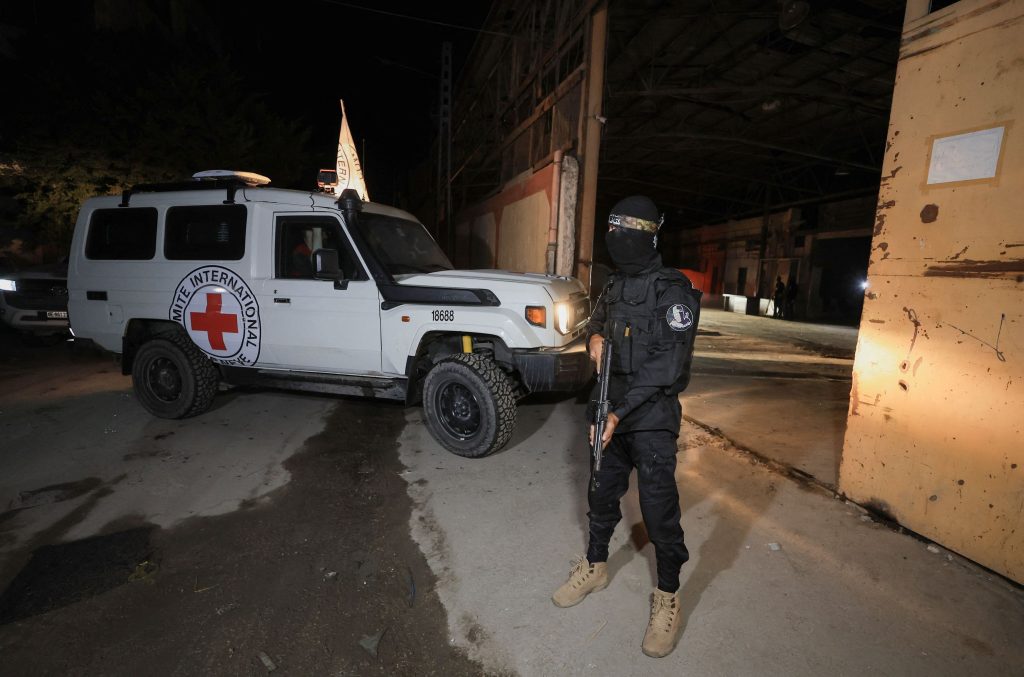
Red Cross vehicles arrive to receive from Hamas militants the bodies of deceased hostages who had been held in Gaza since the deadly October 7, 2023 attack, as part of a ceasefire and a hostages-prisoners swap deal between Hamas and Israel, in Gaza City, October 14, 2025. REUTERS/Dawoud Abu Alkas
Humanitarian Crisis and Reconstruction Needs
The United Nations estimates that Gaza’s war-torn infrastructure has produced 55 million tons of rubble—13 times the mass of the Pyramids of Giza—and that recovery could take decades. European, Arab, Canadian, and U.S. officials have expressed willingness to contribute to an estimated $70 billion reconstruction effort, with UN agencies already clearing tens of thousands of tons of debris.
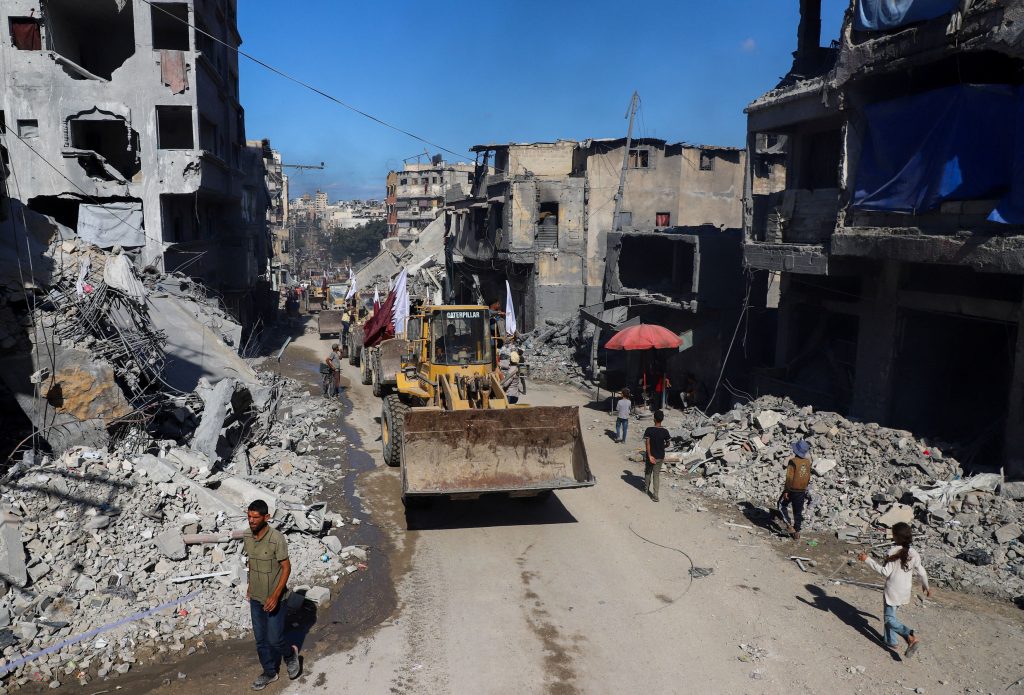
Heavy machinery drives through a street,amid a ceasefire between Israel and Hamas, in Gaza City, October 14, 2025. REUTERS/Ebrahim Hajjaj
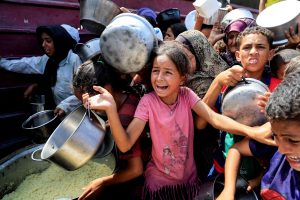
Over two years of Israeli bombardment have left Gaza largely in ruins, particularly Gaza City, where 83% of buildings were damaged. More than 68,000 Palestinians were killed, and famine has afflicted over half a million residents.
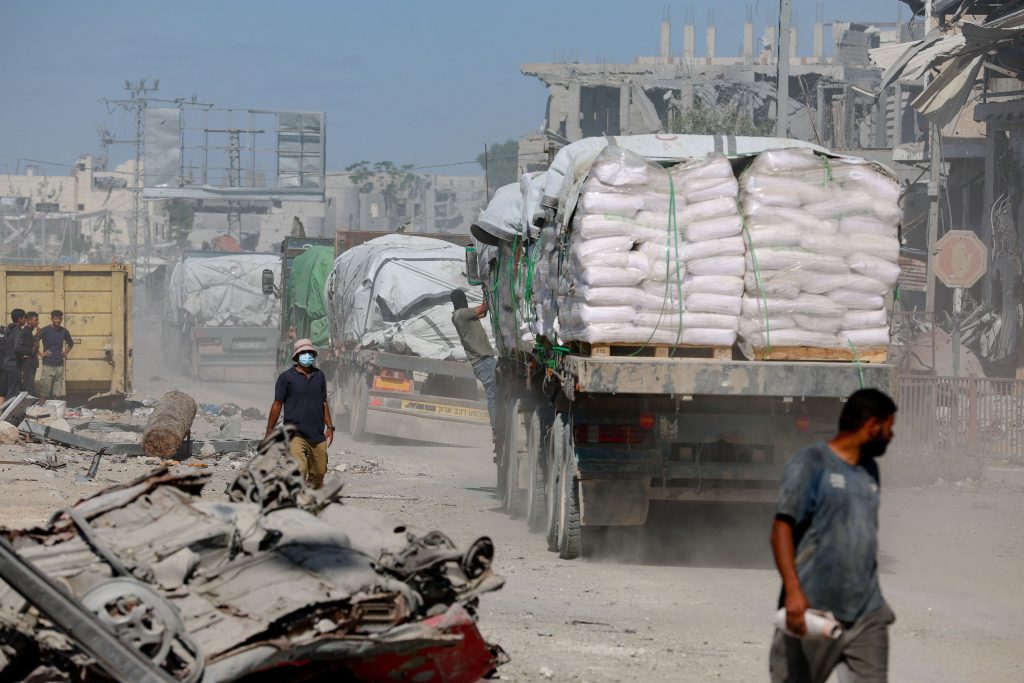
Trucks carry aid for Palestinians, amid a ceasefire between Israel and Hamas in Gaza, in Khan Younis, in the southern Gaza Strip, October 14, 2025. REUTERS/Ramadan Abed
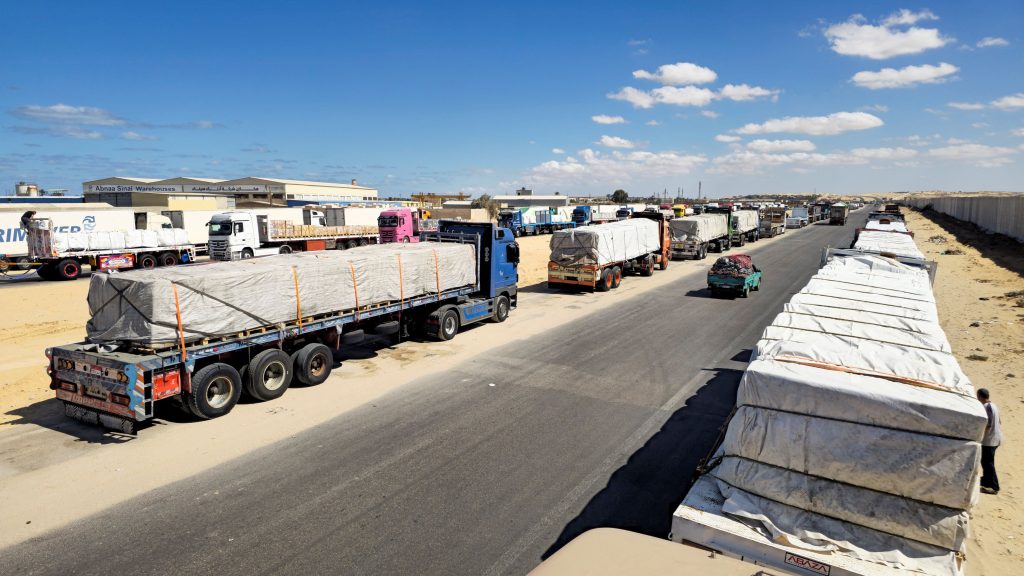
Trucks carrying humanitarian aid prepared by the Egyptian Red Crescent, which are to enter the Rafah crossing into the Gaza Strip tomorrow, line up, after a ceasefire between Israel and Hamas in Gaza went into effect, in Al-Arish, the capital of the North Sinai Governorate, Egypt, October 14, 2025. REUTERS/Stringer
Ceasefire Compliance and Security Concerns
While a ceasefire is in effect, tensions remain. Hamas fighters have reasserted control on the streets of Gaza, executing individuals accused of collaborating with Israel and confronting rival factions. President Donald Trump warned that Hamas must disarm under his 20-point peace plan, stating, “If they don’t disarm, we will disarm them, and it will happen quickly and perhaps violently.”

Israel continues to restrict aid deliveries and monitors the enclave closely, citing violations of the ceasefire, while Hamas claims it will maintain order and target collaborators and armed looters.
Political Path Forward: PA, Hamas, and Governance
Nasser al-Qudwa, nephew of late Palestinian leader Yasser Arafat, returned to the West Bank after four years in self-exile, proposing a roadmap for Gaza’s governance. As reported in Reuters, he envisions Hamas transforming into a political party, ending administrative and security control over Gaza, and allowing Palestinians to run the territory under international supervision.

A Palestinian politician Nasser al-Qudwa speaks during an interview with Reuters in Ramallah in the Israeli-occupied West Bank October 13, 2025. REUTERS/Tom Perry
Qudwa emphasized that the Palestinian Authority (PA) should participate in transitional governance and use existing assets to form a new police force, though he clarified that Gaza should remain run by Palestinians, with elections held in the future.
International Oversight: Board of Peace and EU Role
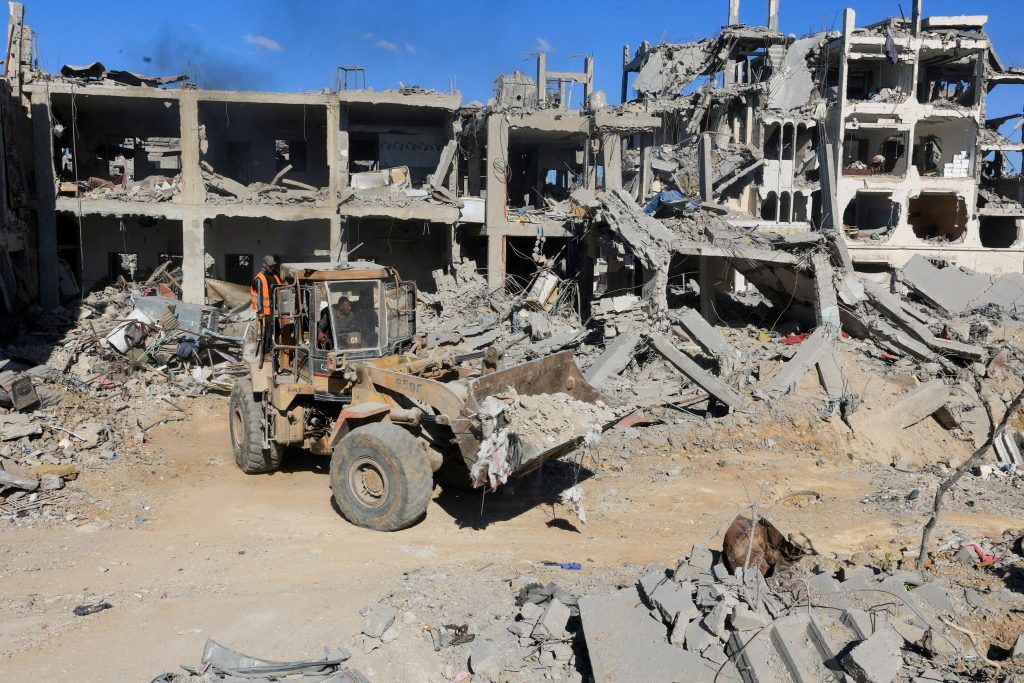
Heavy machinery removes debris from a street, amid a ceasefire between Israel and Hamas, in Gaza City, October 14, 2025. REUTERS/Dawoud Abu Alkas
Trump’s plan includes a “Board of Peace”, led by the U.S., to oversee Gaza’s temporary technocratic governance and manage redevelopment funding. The European Union is pushing to maximize its influence in reconstruction and governance, providing technical assistance, humanitarian oversight, and monitoring at the Rafah border crossing. EU diplomats have stressed the need for clarity on the PA’s role, the timeline of the transitional phase, and Gaza’s long-term political structure.