An Iranian official said authorities have verified that at least 5,000 people were killed during recent protests across Iran, including around 500 members of the security forces, marking one of the deadliest episodes of unrest in the country in years.
The official, who spoke to Reuters on condition of anonymity due to the sensitivity of the issue, said those deaths were caused by what he described as “terrorists and armed rioters” who targeted “innocent Iranians.” He added that the final toll was not expected to rise sharply.
According to the official, some of the heaviest clashes and highest number of fatalities occurred in Kurdish-populated areas of northwestern Iran, where Kurdish separatist groups have been active and where unrest has historically been among the most violent.
Iranian authorities have repeatedly blamed foreign enemies for the unrest, accusing Israel and armed groups abroad of supporting and equipping protesters. Iran’s Supreme Leader Ayatollah Ali Khamenei has also accused the United States and Israel of organizing violence and inciting chaos during the demonstrations, which erupted on December 28 over economic hardship and later expanded into broader calls for an end to clerical rule.

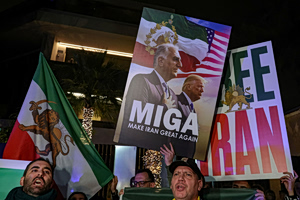
Demonstrators set fire to a U.S. and an Israeli flag during a rally in solidarity with Iran’s government in Tehran, near the Iranian Consulate in Istanbul, Turkey, January 18, 2026. REUTERS/Dilara Senkaya
Rights groups have reported significantly lower death tolls. The U.S.-based Human Rights Activists News Agency (HRANA) said it had verified more than 3,000 deaths, with several thousand additional cases under review, and confirmed more than 22,000 arrests. Iranian Kurdish rights group Hengaw has also reported heavy security measures and intense clashes in Kurdish regions during the protests.
Iranian prosecutors have said detainees accused of aiding rioters or taking up arms would face severe punishment, describing them as “mohareb,” a charge that carries the death penalty under Iranian law.
The crackdown appears to have largely quelled the protests, according to residents and state media, though independent verification has been hampered by repeated internet shutdowns. Internet monitoring group NetBlocks said access was briefly restored before being cut again, leaving communication and information flow severely restricted across the country.