The United States is threatening Iran with what it calls “the largest economic attack ever carried out,” ahead of the announcement of new sanctions targeting Tehran and its trading partners.
Iran, for its part, is vowing to halt all oil exports from the Gulf “if the economic war continues,” while warning that countries that cooperate with the United States will “face serious consequences.”
The exact details of the new US sanctions package against Iran will be unveiled in a press conference by Treasury Secretary Scott Bessent on Monday afternoon. Bessent has already framed the move as an economic D-Day for Iran.
“At dawn, an economic D-Day begins, the largest economic assault ever carried out against an adversary,” Bessent wrote in an opinion piece published in the Financial Times on Sunday.
The US shift from military to economic pressure comes as prospects for negotiations to end the war appear to have collapsed.
Sanctions Against Iran
The US and Israeli attack on Iran on February 28 caused thousands of casualties, while Israel also expanded its operations into Lebanon, which has paid a heavy price in lives.
Iran’s economy, under sanctions since the 1979 revolution, was already struggling before the war, with high inflation, energy shortages and a weakened currency. Damage to infrastructure, disrupted trade and reconstruction costs are adding further strain.
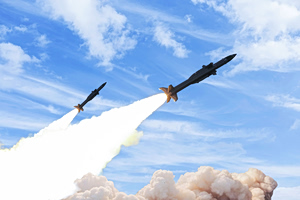
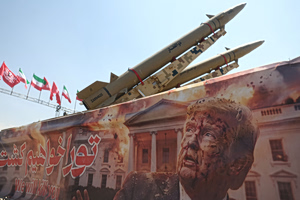
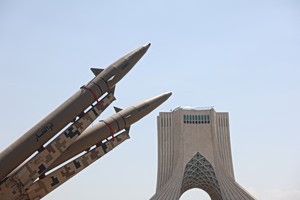
Even so, Iran has shown remarkable resilience under military pressure and has kept its ability to launch missiles and drones at neighboring Gulf states.
At the same time, Iranian control over the Strait of Hormuz is affecting the global economy, shifting pressure back onto the US, which has been unable to untangle the standoff.
Further sanctions will fall on, or mainly on, Iranian society, which already bears the brunt of both the economic crisis and military aggression. Washington hopes the resulting hardship could spark public backlash against the regime.
The US made similar assumptions when Trump launched the offensive against Iran, at a time when the country was in the middle of one of its largest waves of protest since the 1979 revolution.
In the early days of the war, the US president addressed Iranians directly, telling them they had a historic opportunity to break free from the regime. But his expectations were not met: the military campaign, civilian deaths and strikes on public infrastructure had the opposite effect, and the protests eventually died down.
Tehran Warns Of Retaliation
Tehran insists it will not bow to economic pressure, as it has not for decades, while also warning of retaliation.
“If the economic war continues, not a single drop of oil will be exported, not through the Strait of Hormuz and not from anywhere in the Persian Gulf,” Mohsen Rezaei, secretary of Iran’s Supreme National Security Council, wrote in a social media post.
“Iran will consider any country’s participation in or support for America’s economic war against the Iranian people to be an act of war,” he added.
Foreign Ministry spokesperson Esmaeil Baghaei said on Monday morning that Tehran is preparing for the US sanctions and warned that states that assist American aggression are legitimate targets for Iran.
The warning also extended to Europe, as Baghaei referenced Bulgaria’s “mistake” in allowing US refueling aircraft to be deployed on its territory.
“Under international law, targeting the point of origin and source of any act of aggression is Iran’s legitimate right, and there will be no leniency when it comes to defending the country’s sovereignty and territorial integrity,” Baghaei said. His comments came two days after US aircraft left Bulgaria amid reports that the country could become a target for Tehran.
New Risk Of Escalation
Although direct military exchanges between the US and Iran have paused over the past two weeks, Washington’s sanctions threat risks dragging not just the region but other powers into greater tension.
Bessent is threatening China with consequences over its trade ties with Iran, while at the same time urging Beijing to work with Washington to reopen the Strait of Hormuz.
Beijing has limited itself to calling for renewed diplomatic efforts, noting that “sanctions and pressure do not help resolve the problem.”
Pakistan, which played the lead mediating role in reaching the earlier memorandum of understanding, is trying to revive prospects for talks. Army chief Asim Munir is visiting Tehran today, Monday, “as part of efforts to restore peace and security in the region,” according to sources in Islamabad.
Oman’s Foreign Minister, Badr Albusaidi, will also travel to Iran on Wednesday for talks on the status of the Strait of Hormuz.
Iraq, meanwhile, has proposed setting up a joint security council with Iran and Saudi Arabia aimed at rebuilding trust between the two traditional regional rivals.
Is The Region’s Security Setup Shifting?
A prolonged state of neither war nor peace cannot last forever, and countries in the region are already feeling the strain. It appears the region’s security architecture can no longer look the way it did before the war.
According to the Financial Times, Saudi Arabia is considering state-backed insurance packages for ships passing through its ports, as insurers have either sharply raised premiums or stopped covering damages linked to the war, hurting the kingdom’s economy.
Qatar, forced to halt liquefied natural gas production because of the Iranian attack, has cut its government agency budgets by 30 percent and reduced funding for various overseas services by 85 percent.
“After so many months of war, it’s starting to look like this might be a new status quo, at least for the near future,” military and diplomatic analyst Alexandru Hudisteanu told Al Jazeera.
“The main thing that’s changed is the security architecture, which was blown apart the moment the war against Iran began,” he said.
Absent a lasting solution, the region’s security arrangements will need to be revisited, including Iran’s position and the roles of the US and other regional players, he added, pointing to the recent Mecca agreement as an example of an ongoing process.
With information from Financial Times, Al Jazeera, Reuters