Israeli Prime Minister Benjamin Netanyahu on Tuesday called for Hamas to be expelled from the region, a day after the UN Security Council endorsed President Donald Trump’s 20-point plan to end the conflict in Gaza. The plan, which offers the militant group amnesty if it commits to peace, has faced objections from both Hamas and Netanyahu’s political allies.
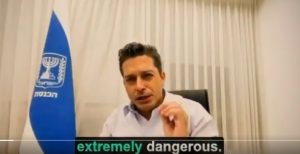
Netanyahu, who publicly endorsed the plan during a White House visit in September, posted a series of messages on X emphasizing Israel’s commitment to peace while calling on neighboring countries to join in removing Hamas and its supporters from Gaza.
“Israel extends its hand in peace and prosperity to all of our neighbors,” Netanyahu wrote, urging collective action to ensure that Hamas has no role in Gaza’s governance. A spokesperson clarified that expulsion would aim to prevent Hamas from governing the Palestinian population, in line with the plan’s provisions.
Tensions Between Plan and Netanyahu’s Statement
Trump’s plan stipulates that Hamas members who commit to peaceful coexistence and decommission weapons will receive amnesty, and those wishing to leave Gaza will be allowed safe passage to third countries. The plan does not explicitly call for the group’s disbandment or forced removal.
Ahead of the UN vote, Netanyahu also reiterated Israel’s opposition to Palestinian statehood, responding to pressure from far-right coalition allies. He opposes any Palestinian Authority role in Gaza, highlighting ongoing tensions over the plan’s implementation.
Multinational Force to Oversee Gaza
The UN resolution authorizes a temporary multinational force in Gaza to stabilize the territory and monitor the ceasefire. It also allows member states to participate in a “Board of Peace” tasked with overseeing reconstruction and economic recovery.
Hamas criticized the resolution for failing to respect the political and humanitarian rights of Palestinians and warned that an international force attempting to disarm the group would lose its neutrality.
Reham Owda, a Gaza-based political analyst, noted that Hamas’ objections should be seen as an attempt to negotiate the international force’s role rather than a complete rejection of the plan.
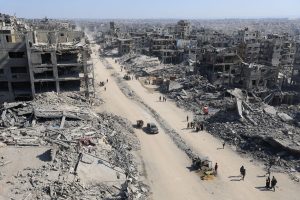
A ceasefire brokered under Trump’s plan took effect on October 10. While Israel has partially withdrawn forces, it still controls 53% of Gaza, and both sides have accused each other of violations.
As reported in Reuters, Palestinian residents expressed cautious support for the international force, seeing it as a potential safeguard against continued military occupation. Abu Abdallah, a displaced businessman in central Gaza, said: “Hamas can’t decide our fate alone, but we also don’t want to get rid of one occupation, Israel, and get another international occupation.”