A planned summit between U.S. President Donald Trump and Russian President Vladimir Putin has been put on hold after Moscow rejected an immediate ceasefire in Ukraine, U.S. and European officials said on Tuesday, complicating efforts to negotiate an end to a war that has raged for more than two years.
A senior White House official told Reuters, “there are no plans for President Trump to meet with President Putin in the immediate future,” after a preparatory in-person meeting between Secretary of State Marco Rubio and Russian Foreign Minister Sergei Lavrov was shelved following a phone call.
The postponement came as Russia reiterated long-standing conditions for a peace deal in a private communique, known informally as a “non paper,” that, according to U.S. officials and people familiar with the matter, reaffirmed Moscow’s demand that it be granted full control of the contested eastern Donbas region.
Russia already controls all of Luhansk province and about 75% of neighboring Donetsk, the Reuters reporting said. That position effectively rejects President Trump’s call for a ceasefire that would begin with a freeze of frontlines at their current locations.
European leaders urged Washington to stand firm. In a statement Tuesday, senior European powers including Britain, France and Germany said they “strongly support President Trump’s position that the fighting should stop immediately, and that the current line of contact should be the starting point of negotiations.” European countries also emphasized that Moscow lacks genuine interest in peace.
Preparatory diplomacy stalled when a planned face-to-face meeting between Rubio and Lavrov — expected in Budapest on Thursday — was called off after the two spoke by phone. Lavrov said the timing and venue of any summit were less important than implementation of understandings reached earlier in Alaska, the Reuters reporting added.
“I guess the Russians wanted too much and it became evident for the Americans that there will be no deal for Trump in Budapest,” one senior European diplomat. A second diplomat said, “The Russians haven’t at all changed their position, and are not agreeing to ‘stop where they are.’”
White House officials and European diplomats said neither side had publicly abandoned the idea of a summit, but Moscow’s stance on territorial demands has cast doubt on whether a productive meeting can be arranged soon. Kremlin spokesman Dmitry Peskov told reporters there was “no understanding” of a date and that “serious preparation” would be required.
Trump said he did not want a “wasted meeting,” but left open the possibility of developments. “We’ll be notifying you over the next two days,” he said, according to Reuters.
Destination Budapest
The choice of Budapest as a venue has proved contentious inside the EU, where Hungary’s Prime Minister Viktor Orban is one of few leaders maintaining warm ties with Russia. Any trip to Budapest by Putin would require overflight of other EU countries, raising security and legal questions. Poland warned it could force Putin’s plane down and arrest him on an international warrant if it crossed Polish airspace, while Bulgaria signaled it could allow an overflight.
The impasse has pushed allies to intensify separate diplomatic efforts. NATO said Secretary General Mark Rutte traveled to Washington for talks, and Dutch Prime Minister Rutte was expected to present European views on a ceasefire and negotiations to Trump, Reuters reported.
High-Profile Summit
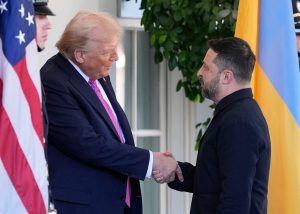
U.S. media and officials have described the planned summit as an attempt by Trump to broker a high-profile deal similar to earlier efforts that produced limited progress in Alaska. But a closed-door meeting between Trump and Ukrainian President Volodymyr Zelenskiy last week — in which Trump repeatedly urged concessions — left Kyiv disappointed even though Trump later publicly backed a stop-the-lines ceasefire.
Western officials fear a summit in which Putin extracts territorial concessions from Kyiv without meaningful guarantees could undercut Ukrainian defenses and broader European security. Russia has also made clear it will not accept NATO forces on Ukrainian soil as part of any stabilization arrangement, a point that remains a major obstacle to consensus on international security guarantees.
Kirill Dmitriev, a senior Russian investment envoy, said on social media that “preparations continue” for a summit. But European diplomats urged that unless Moscow softens its demands — in particular, its insistence on control over the remainder of Donetsk — Washington would be unlikely to proceed.