Rescue operations continue across Southeast Asia after a rare tropical storm triggered widespread floods and landslides, killing nearly 700 people and leaving hundreds missing. Indonesia, Thailand, and Malaysia are grappling with the full scale of the disaster as improved weather allows access to previously cut-off areas.
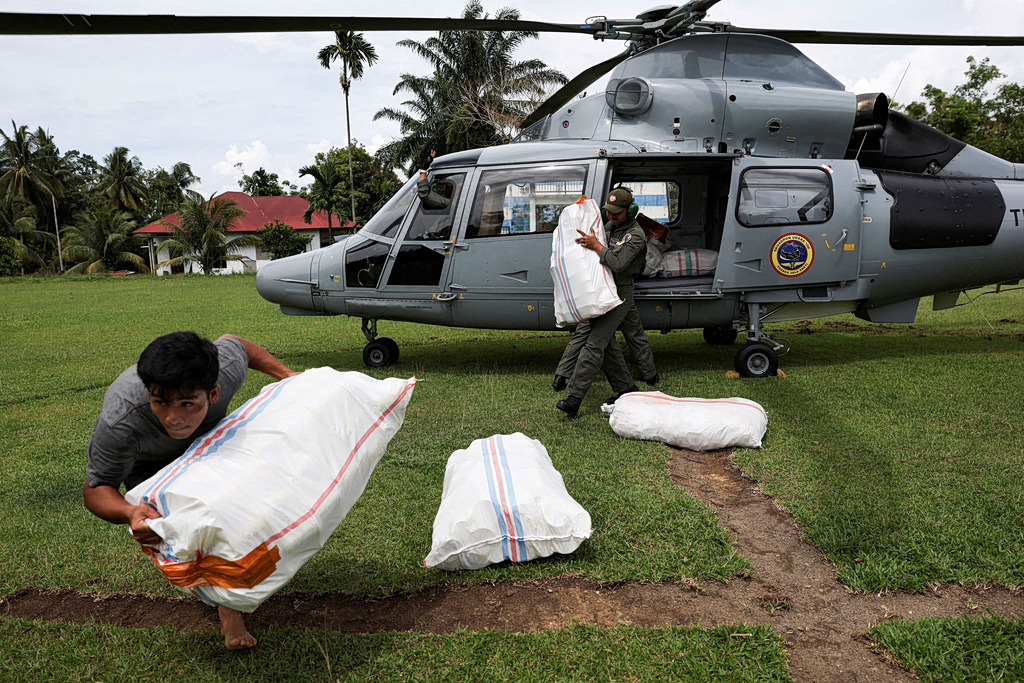
A man moves a relief supply package delivered by a Navy helicopter in an area affected by deadly flash floods in Palembayan, Agam regency, West Sumatra province, Indonesia, November 30, 2025. REUTERS/Willy Kurniawan TPX IMAGES OF THE DAY
Indonesia has borne the brunt of the devastation, with the death toll rising to 502 and 508 people reported missing. Floods and landslides have damaged over 28,000 homes, affecting 1.4 million residents. In Palembayan, West Sumatra, the sun revealed the magnitude of the destruction: residents and rescue teams cleared mud, trees, and wreckage from roads, salvaging what they could from destroyed homes. Military personnel and volunteers worked to deliver water and supplies while families searched for loved ones.
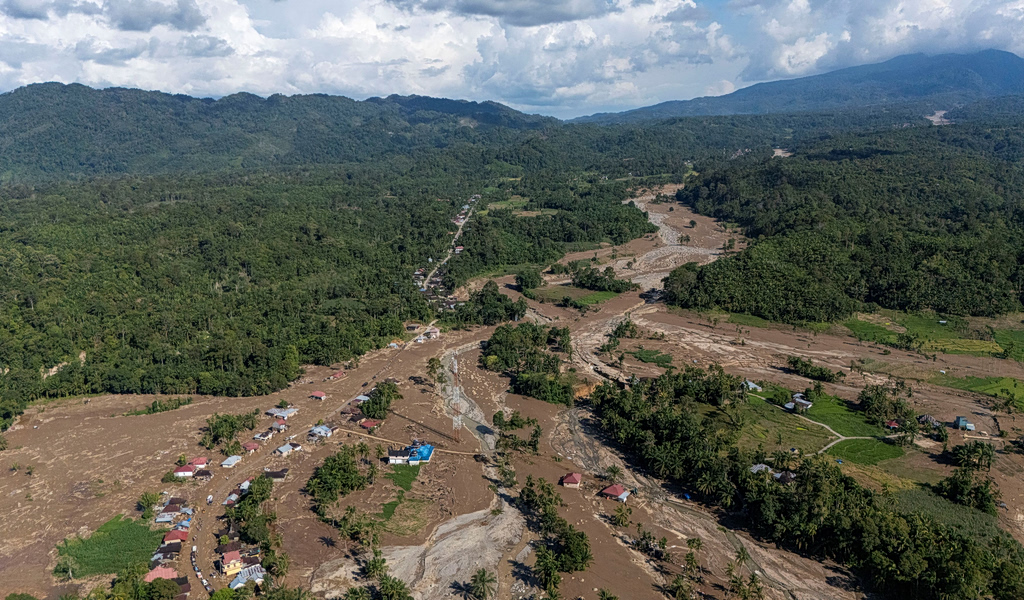
A drone view shows an area hit by deadly flash floods following heavy rains in Palembayan, Agam regency, West Sumatra province, Indonesia, December 1, 2025. REUTERS/Willy Kurniawan
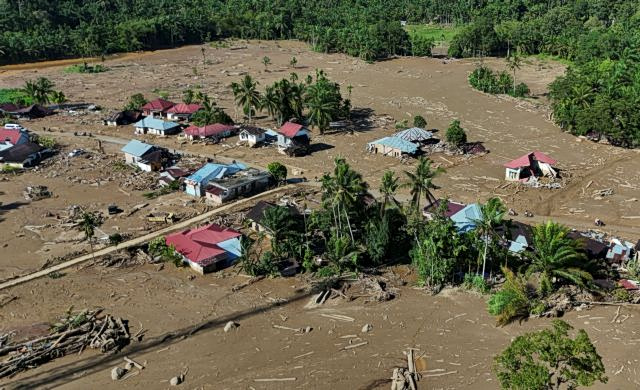
A drone view shows an area hit by deadly flash floods following heavy rains in Palembayan, Agam regency, West Sumatra province, Indonesia, December 1, 2025. REUTERS/Willy Kurniawan
As reported in Reuters, President Prabowo Subianto visited the hardest-hit provinces, praising the resilience of communities. “We face this disaster with resilience and solidarity. Our nation is strong right now, able to overcome this,” he said, noting ongoing efforts to reopen roads, bridges, and communication networks.
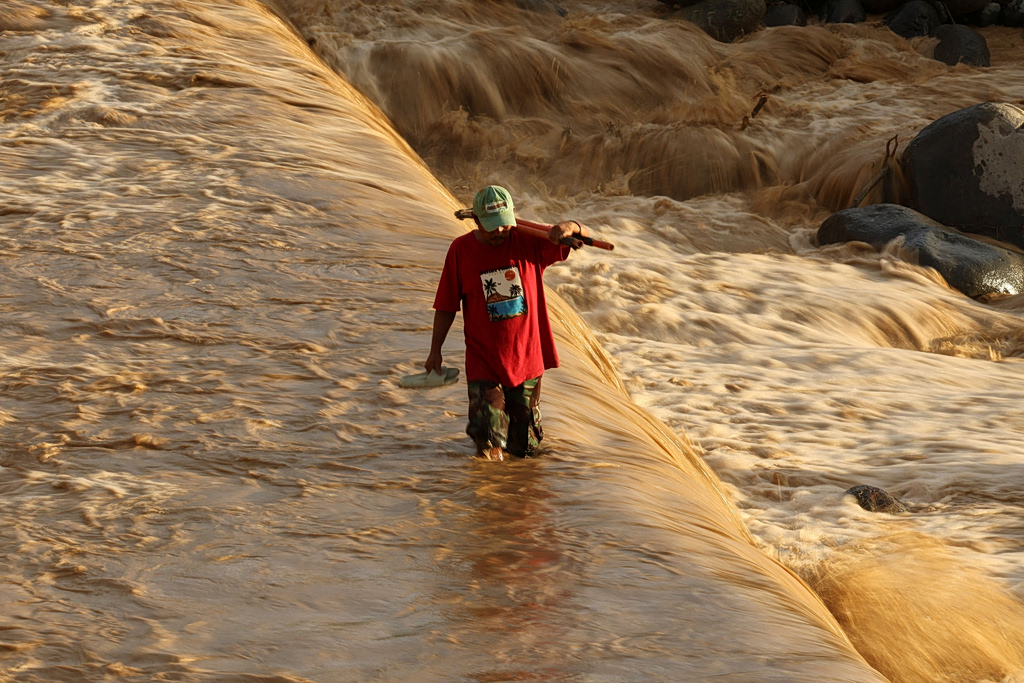
A man walks through water after a nearby bridge collapsed following deadly flash floods caused by heavy rains in Padang, West Sumatra province, Indonesia, November 30, 2025. REUTERS/Willy Kurniawan
Thailand reported 176 deaths from flooding across eight southern provinces, affecting about three million people. Songkhla province, the hardest hit, saw 138 fatalities after receiving a record 335 millimeters (13 inches) of rainfall in a single day—the heaviest in 300 years. Recovery efforts have focused on Hat Yai, the regional trading hub, with 85% of water services restored. Prime Minister Anutin Charnvirakul set a seven-day target for residents to return to their homes.
In Malaysia, three deaths have been confirmed, with 11,600 people still in evacuation centers. Authorities remain on high alert for additional flooding waves.
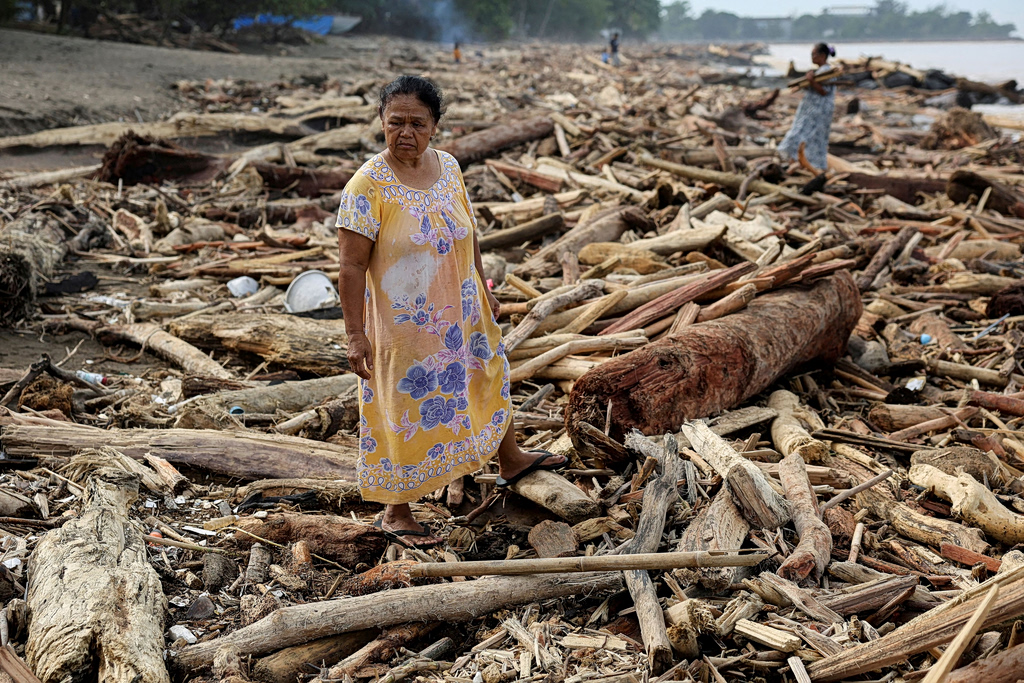
FILE PHOTO: A woman stands amidst tree trunks that were stranded on a shore following deadly flash floods and landslides, in Padang, West Sumatra province, Indonesia, November 30, 2025. REUTERS/Willy Kurniawan/File Photo
Scientists warn that extreme weather events like these are likely to become more frequent due to global warming, emphasizing the need for resilient infrastructure and disaster preparedness across the region.
The storms follow a string of deadly weather events across Southeast Asia, including typhoons and floods in the Philippines and Vietnam, further highlighting the vulnerability of densely populated areas to climate-related disasters.
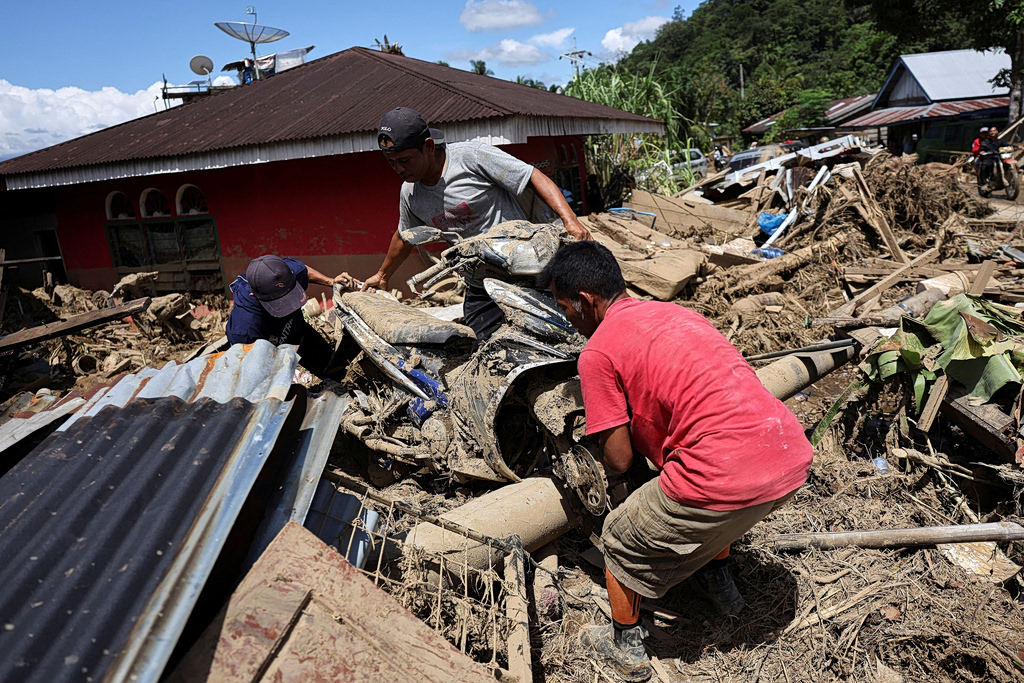
Local residents recover a motorbike from under the rubble at an area hit by deadly flash floods following heavy rains in Palembayan, Agam regency, West Sumatra province, Indonesia, December 1, 2025. REUTERS/Willy Kurniawan