After the deadliest border clashes in more than a decade, Thailand and Cambodia have agreed to a ceasefire that came into effect at midnight on Monday. The agreement followed intense diplomatic efforts and paved the way for military commanders from both sides to meet for direct talks on Tuesday.
At least 38 people, mostly civilians, were killed during five days of conflict that saw artillery, rocket fire, and airstrikes exchanged across their 800 km-long border, displacing more than 300,000 people. The fighting began on July 24, triggered by escalating tensions after a Cambodian soldier was killed in May.

People rest at a temporary shelter, the day after the leaders of Cambodia and Thailand agreed to a ceasefire on Monday in a bid to bring an end to their deadliest conflict in more than a decade and ahead of military negotiations, in Srei Snam district, Siem Reap province, Cambodia, July 29, 2025. REUTERS/Chantha Lach
The peace agreement was reached during negotiations in Putrajaya, Malaysia, hosted by Malaysian Prime Minister Anwar Ibrahim, with support from U.S. President Donald Trump and China. Both leaders—Thai acting Prime Minister Phumtham Wechayachai and Cambodian Prime Minister Hun Manet—agreed to end hostilities, restore communications, and implement mechanisms to uphold the ceasefire.
“This is a vital first step towards de-escalation and the restoration of peace,” Anwar said.
Though Thailand’s military reported minor attacks by Cambodian troops in the early hours of Tuesday, they were described as isolated incidents. Phumtham emphasized that the situation remained calm and under control, downplaying the risk of escalation. Cambodia’s defence ministry also stated that there had been no ongoing clashes.
The ceasefire followed Trump’s direct intervention, with the U.S. President warning both nations over the weekend that trade talks with the U.S. would be suspended if the fighting continued. Both Thailand and Cambodia currently face a 36% tariff on goods exported to the U.S., their largest trade partner.
“By ending this War, we have saved thousands of lives,” Trump posted on Truth Social, calling the agreement another win in his “President of PEACE” record.
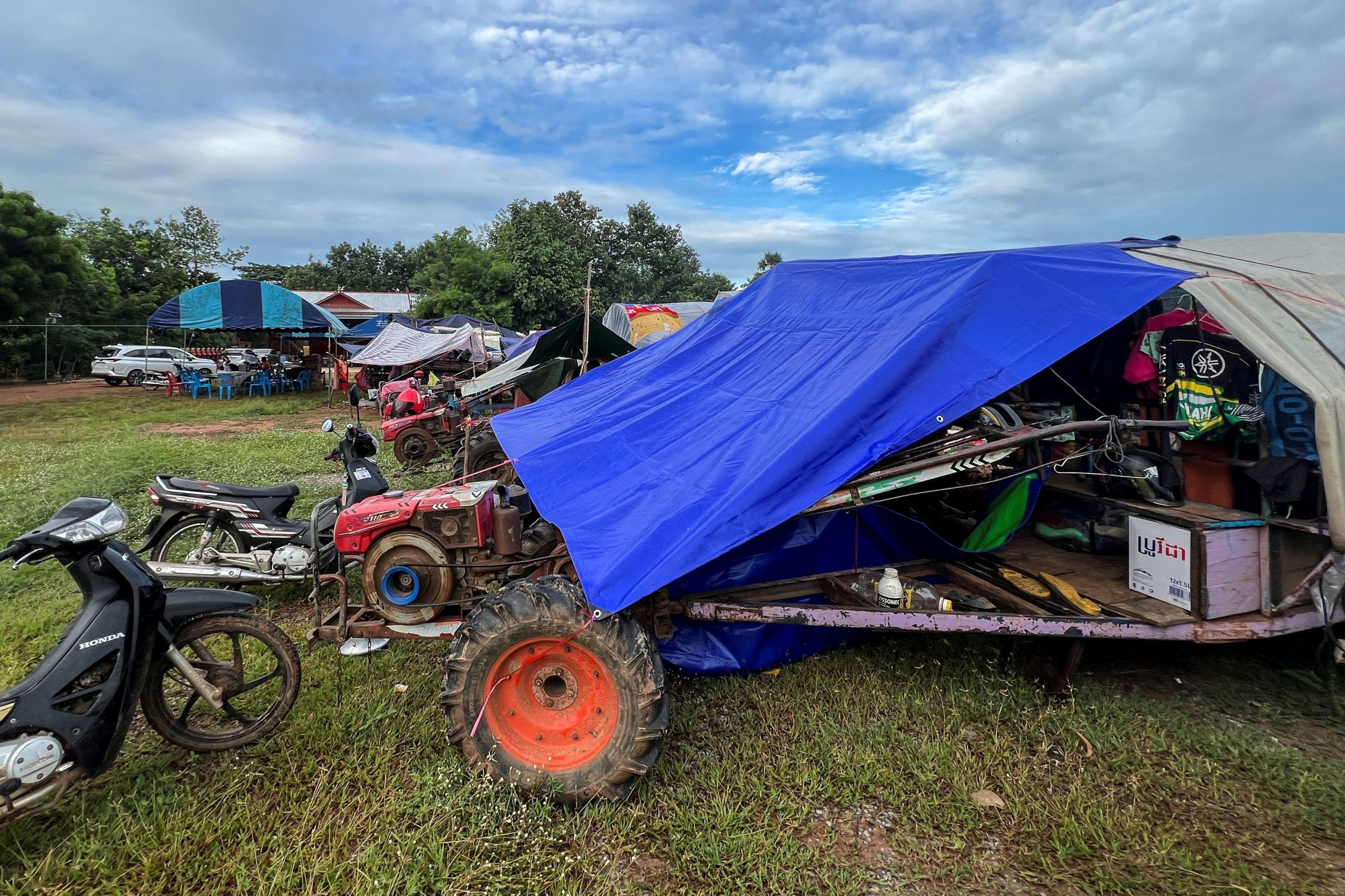
Vehicles used by people as makeshift homes are parked at a temporary shelter, the day after the leaders of Cambodia and Thailand agreed to a ceasefire on Monday in a bid to bring an end to their deadliest conflict in more than a decade and ahead of military negotiations, in Srei Snam district, Siem Reap province, Cambodia, July 29, 2025. REUTERS/Chantha Lach
Longstanding Border Dispute
The Thailand–Cambodia conflict stems from decades-old territorial disputes, worsened by landmine incidents and mutual accusations of military aggression.
Last week’s violence escalated rapidly after Thailand recalled its ambassador from Phnom Penh and expelled Cambodia’s envoy, alleging that Cambodian troops planted mines and fired on civilian areas—claims Cambodia has denied, instead accusing Thailand of “unprovoked and premeditated military aggression.”
The clashes devastated local communities. In Thailand’s Sisaket province, homes were reduced to rubble by artillery, and thousands of civilians sought shelter in evacuation centres. “I want them to cease firing so that I can go home,” said 54-year-old Nong Ngarmsri, one of the many displaced.

A soldier is seen on an Armored Personnel Carrier (APC) on a road near Thailand-Cambodia’s border in Sisaket province, the day after the leaders of Cambodia and Thailand agreed to a ceasefire on Monday in a bid to bring an end to their deadliest conflict in more than a decade and ahead of military negotiations, Thailand, July 29, 2025. REUTERS/Athit Perawongmetha TPX IMAGES OF THE DAY
Tuesday’s meeting between military commanders is expected to lay the groundwork for long-term stability. Phumtham, returning from Malaysia, expressed optimism: “After today, the situation should de-escalate.”
Hun Manet echoed those sentiments, thanking Trump for his “decisive mediation” and praising China for its constructive role. In a social media post, he said the talks brought “brilliant results” and promised continued cooperation for peace.
While the ceasefire offers a hopeful step forward, regional leaders and international observers will be closely watching the border talks for signs of lasting peace in a region long marred by unresolved disputes.