As dust settles on the recent meeting between U.S. President Donald Trump, Ukrainian President Volodymyr Zelensky and European leaders, attention is turning to the possibility of direct talks between Vladimir Putin and Zelensky — a move that could reshape the course of the nearly four-year war in Ukraine.
Trump suggested such a bilateral meeting could be followed by a trilateral session including himself, describing it as “a very good, early step” toward ending the conflict. The summit concluded on an optimistic note, with participants agreeing to pursue concrete next steps toward peace.
Four key takeaways from the talks
1. Security guarantees for Ukraine
Trump pledged that the United States would participate in providing security guarantees for Ukraine, though he stopped short of specifying whether this would involve U.S. troops. He claimed Putin had agreed that Russia would accept such guarantees, provided European nations shouldered much of the responsibility.
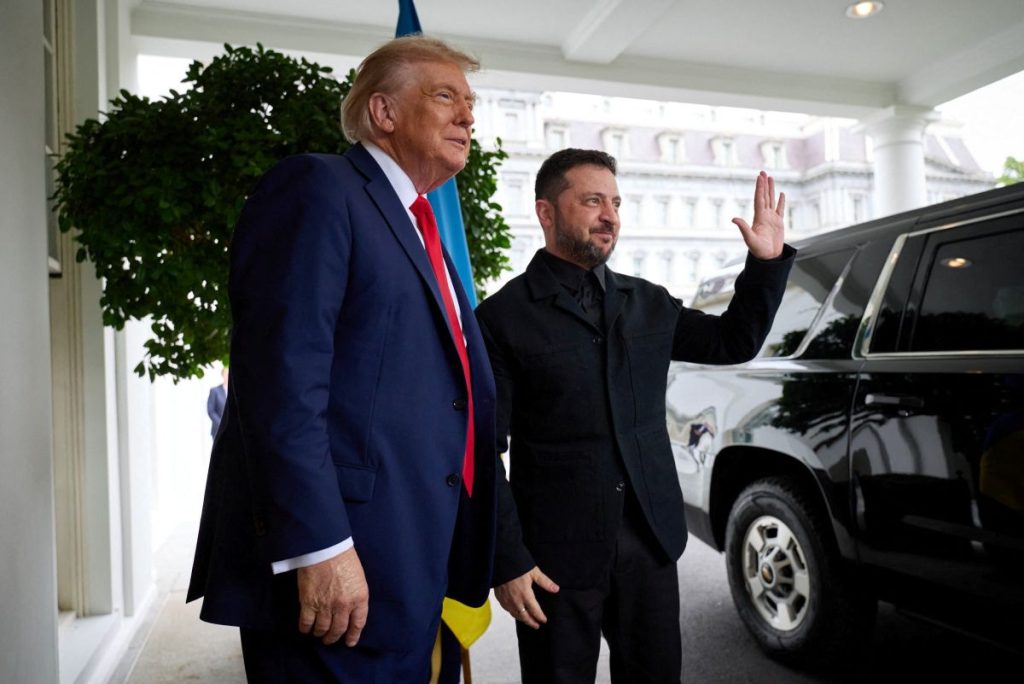
U.S. President Donald Trump and Ukrainian President Volodymyr Zelenskiy meet at the White House, amid negotiations to end the Russian war in Ukraine, in Washington, D.C., U.S., August 18, 2025. Ukrainian Presidential Press Service/Handout via REUTERS ATTENTION EDITORS – THIS IMAGE HAS BEEN SUPPLIED BY A THIRD PARTY.
European leaders welcomed the remarks. European Commission President Ursula von der Leyen said it was “good to hear” that countries were working toward NATO-style assurances, while French President Emmanuel Macron underlined that such guarantees would also strengthen the security of the entire continent.
NATO Secretary-General Mark Rutte echoed this stance, stressing that while Ukraine’s path to NATO membership remains “irreversible,” the alliance is not discussing Kyiv’s accession at this stage. Instead, he said the focus is on providing security guarantees similar to NATO’s Article 5 principle of collective defense. Rutte clarified that there are no plans to deploy NATO troops on Ukrainian soil, underlining that guarantees would serve as an alternative to full membership — a move seen as crucial given Russia’s long-standing opposition to Ukraine joining the alliance.
2. Peace without a ceasefire?
In a controversial statement, Trump argued that a peace deal did not require a ceasefire, citing his experience brokering agreements during ongoing conflicts. While he said he welcomed the idea of halting hostilities, he stressed that negotiations could continue even amid fighting.
German Chancellor Friedrich Merz disagreed, insisting that a ceasefire was essential before any further talks could proceed. Trump later softened his stance, acknowledging that while he had reached other deals without ceasefires, he would accept one if necessary.
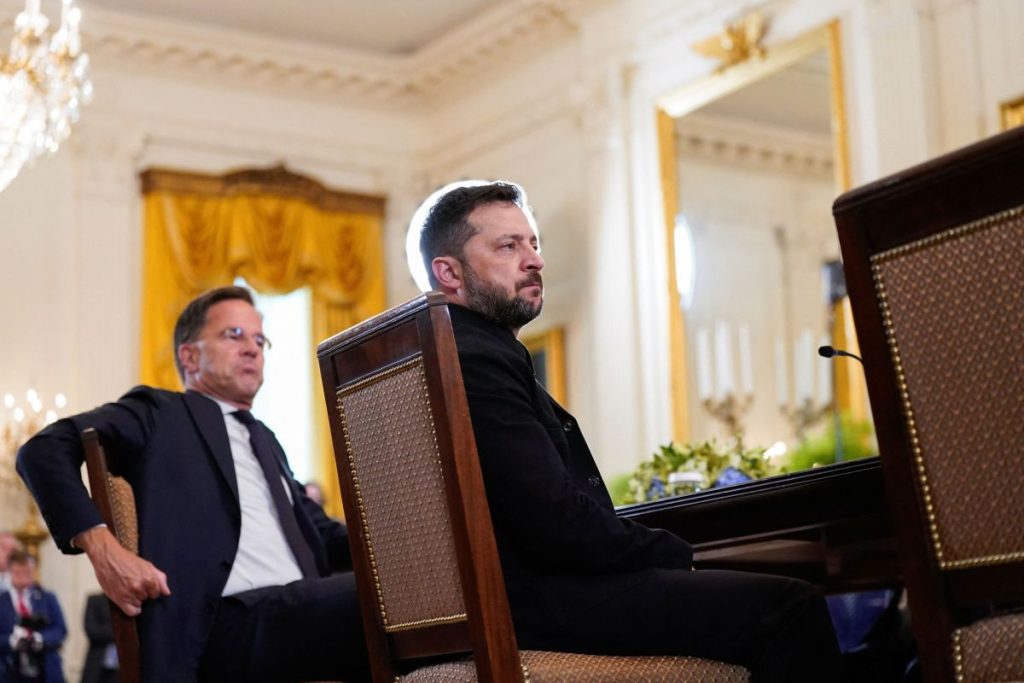
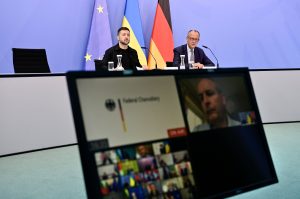
Ukrainian President Volodymyr Zelenskiy listens during a meeting with NATO Secretary General Mark Rutte, U.S. President Donald Trump (not pictured) and European leaders amid negotiations to end the Russian war in Ukraine, at the White House in Washington, D.C., U.S., August 18, 2025. REUTERS/Al Drago
3. A possible Trump–Putin–Zelensky meeting
Trump announced his intention to arrange a trilateral summit with Putin and Zelensky. Both leaders indicated readiness to attend. Macron suggested that an expanded “quadrilateral” meeting might follow, possibly involving NATO, the EU or another coalition.
Trump reportedly phoned Putin during the meeting itself, underscoring his determination to move the process forward.
4. Land swap discussions
Trump raised the issue of potential territorial exchanges, referencing the current front lines as a possible basis for negotiations. Reports suggest Putin has demanded control of the eastern regions of Donetsk and Luhansk in exchange for returning other occupied territories — a proposal at odds with Zelensky’s repeated refusal to cede any Ukrainian land.
Moscow formally annexed Donetsk, Luhansk, Kherson and Zaporizhzhia in 2022, a move condemned as illegal by Western governments.
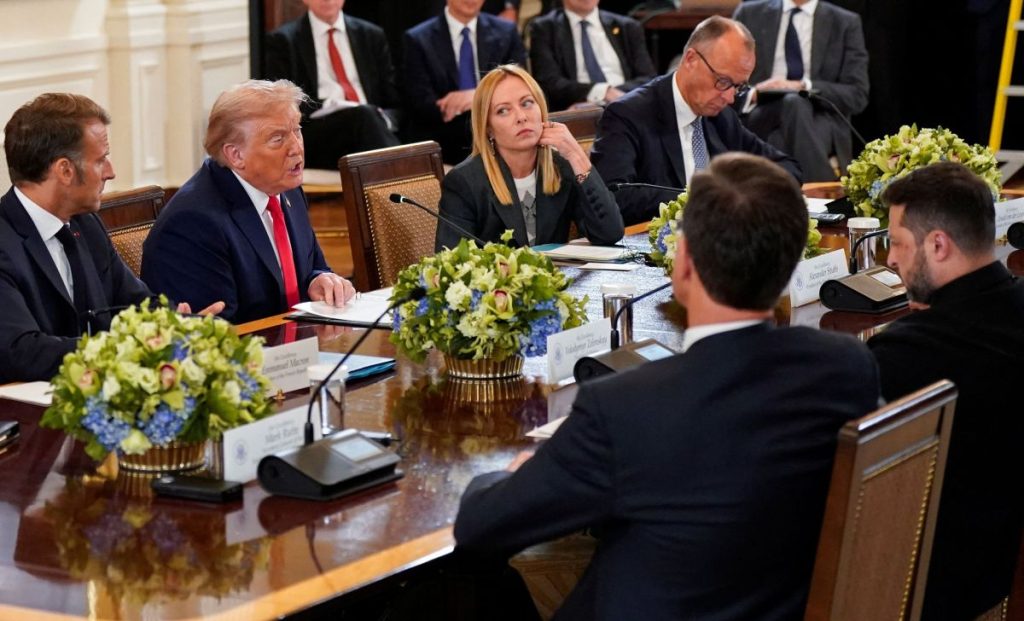
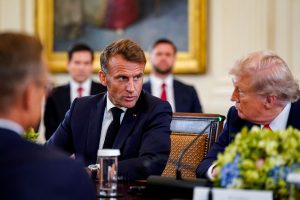
U.S. President Donald Trump speaks during a meeting with Ukrainian President Volodymyr Zelenskiy German Chancellor Friedrich Merz, French President Emmanuel Macron, Italian Prime Minister Giorgia Meloni, and NATO Secretary General Mark Rutte amid negotiations to end the Russian war in Ukraine, at the White House in Washington, D.C., U.S., August 18, 2025. REUTERS/Alexander Drago
The “strategy of flattery”
Beyond the political substance, much attention was paid to the diplomatic tone. Zelensky, who previously faced criticism in Washington for showing insufficient gratitude, repeatedly thanked his American hosts — six times within the opening minutes. He also broke with his usual military attire, opting for a dark suit, and personally handed Trump a letter from Ukraine’s First Lady to Melania Trump.
European leaders also praised Trump’s role in convening the summit. NATO Secretary-General Mark Rutte thanked him for his “leadership,” while Italian Prime Minister Giorgia Meloni suggested that Trump’s involvement had shifted Moscow’s stance.
Still, the warm words were accompanied by reminders of Europe’s vulnerability. Macron emphasized that any deal on Ukraine’s security was also about safeguarding Europe as a whole.