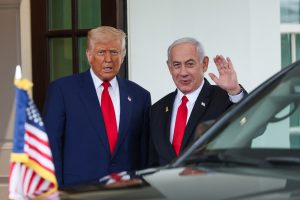
“I ended six wars in six months.” That was U.S. President Donald Trump’s emphatic reply when challenged about his role as a mediator between Russia and Ukraine, just hours before meeting Ukrainian President Volodymyr Zelensky and a delegation of European leaders at the White House earlier this week.
The claim, which Trump often repeats in interviews and on social media, has sparked questions in the international press: Which wars does he believe he ended? And how much truth lies in his assertion?
In an effort to clarify, U.S. outlet Axios asked the White House for details. The response pointed not to six, but seven conflicts that Trump allegedly resolved. The list combined preliminary peace deals, fragile ceasefires in ongoing disputes, and mediations whose legitimacy is contested by those involved.
The conflicts Trump counts as victories
Armenia and Azerbaijan – At the White House, Trump hosted both leaders to sign a preliminary peace agreement aimed at ending their decades-long conflict. They praised him, even saying he “deserves the Nobel.” Still, tensions remain far from settled.
Cambodia and Thailand – After five days of deadly clashes in July, Trump threatened both sides with trade penalties until they agreed to a ceasefire. He called himself the “president of peace,” but the truce collapsed within days.

A Thailand’s mobile artillery unit fires towards Cambodia’s side after Thailand and Cambodia exchanged heavy artillery on Friday as their worst fighting in more than a decade stretched for a second day, in Surin, Thailand, July 25, 2025. REUTERS/Athit Perawongmetha TPX IMAGES OF THE DAY
Iran and Israel – In June, Trump announced a ceasefire after the U.S. supported Israel in bombing Iranian nuclear sites. The situation, however, remains volatile.
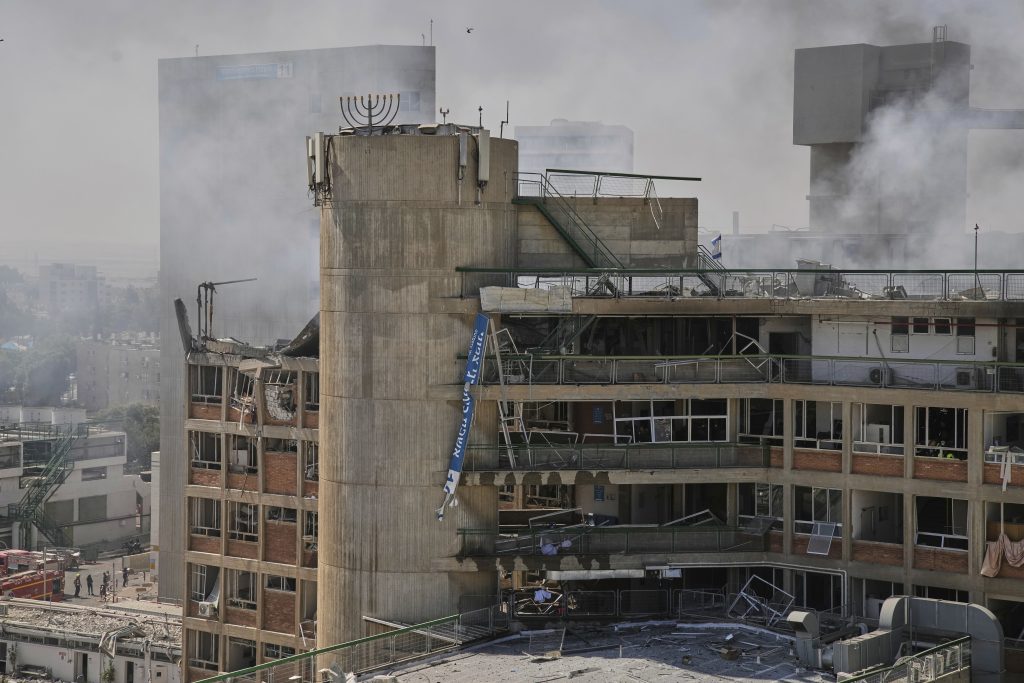
Smokes rises from a building of the Soroka hospital complex after it was hit by a missile fired from Iran in Beersheba, Israel, Thursday, June 19, 2025. (AP Photo/Leo Correa)
Democratic Republic of Congo and Rwanda – Trump celebrated a peace treaty signed at the White House, but soon after, fighting resumed. The UN recently reported dozens of civilian deaths in Congo despite the supposed deal.
India and Pakistan – Trump credited his mediation for halting clashes between the two nuclear powers in May. India, however, does not acknowledge U.S. involvement.
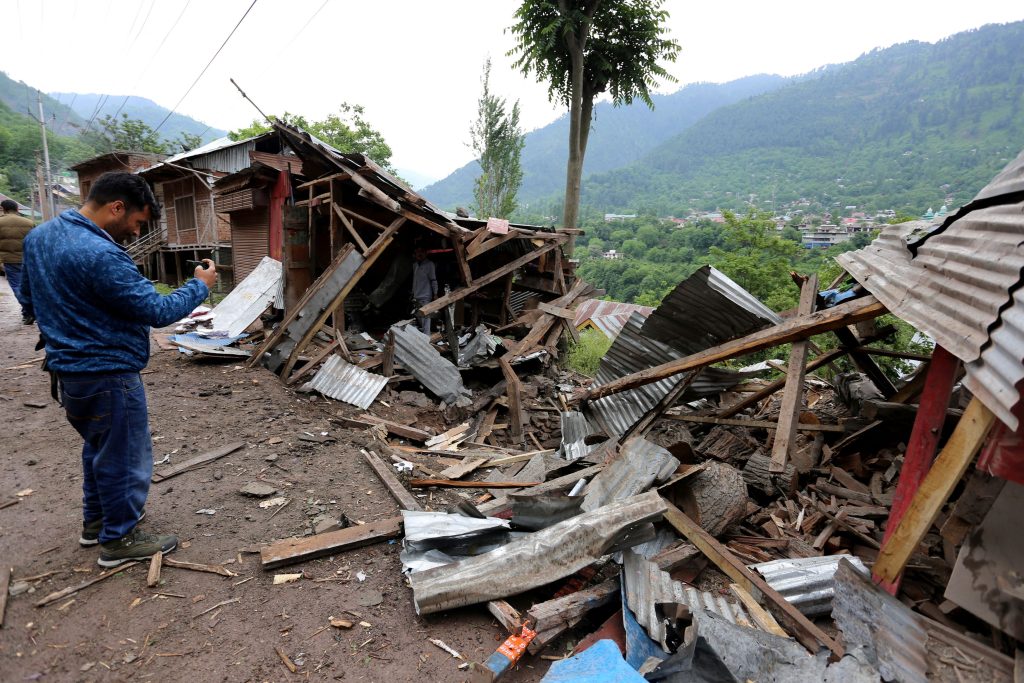
A man uses his mobile phone to film debris of shops damaged by cross-border shelling in Lagama village near the Line of Control (LoC) between India and Pakistan, in Indian Kashmir’s Baramulla district, May 9, 2025. REUTERS/Stringer
Ethiopia and Egypt – Listed by the White House as another achievement, though no war or peace deal exists. The dispute concerns Ethiopia’s massive Nile dam project, which Trump unsuccessfully tried to mediate back in 2020.
Serbia and Kosovo – Added as a seventh case, referring to a 2020 Washington agreement. But relations remain tense, with NATO urging compromise as recently as March.
A contested record
The inclusion of disputes like Ethiopia and Egypt, where no war took place, and the fragility of several ceasefires underline the controversy around Trump’s claim. While he casts himself as a global peacemaker, many of the listed conflicts remain unresolved or only temporarily calmed.
As NATO Secretary General Mark Rutte recently reminded Serbia and Kosovo, progress requires “flexibility, necessary compromises, and a focus on long-term benefits.” For Trump, however, the narrative is clear: he presents himself as the president who ended wars. For his critics, the reality is far more complicated.