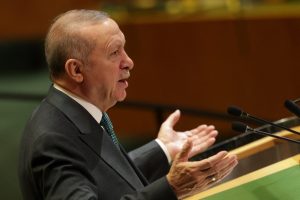
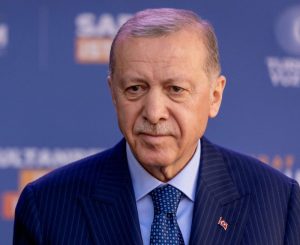
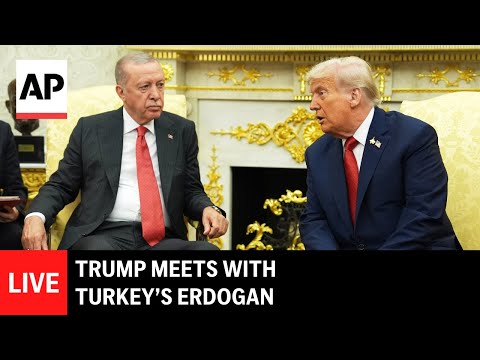
When Recep Tayyip Erdogan returns today to the White House after six years away, it will not simply be about shaking hands with Donald Trump. It will be a reunion between two leaders who see themselves as kindred spirits: populist, transactional and skeptical of the traditional global order. For the US President it is an opportunity to showcase his dealmaking instincts with a leader who speaks the same political language. For Erdogan a chance to amplify Turkey’s position as an indispensable power straddling Europe and the Middle East as well as Russia and the West. The US- Turkey relationship hasn’t always been easy and the last few years has been scarred by mistrust, sanctions, competing foreign policy goals and ambitions. At stake are multibillion-dollar energy and defence deals, the question of Turkey’s role in NATO, and how Washington and Ankara will navigate fault lines from Gaza to Syria.
Watch live here:
Deals in the spotlight
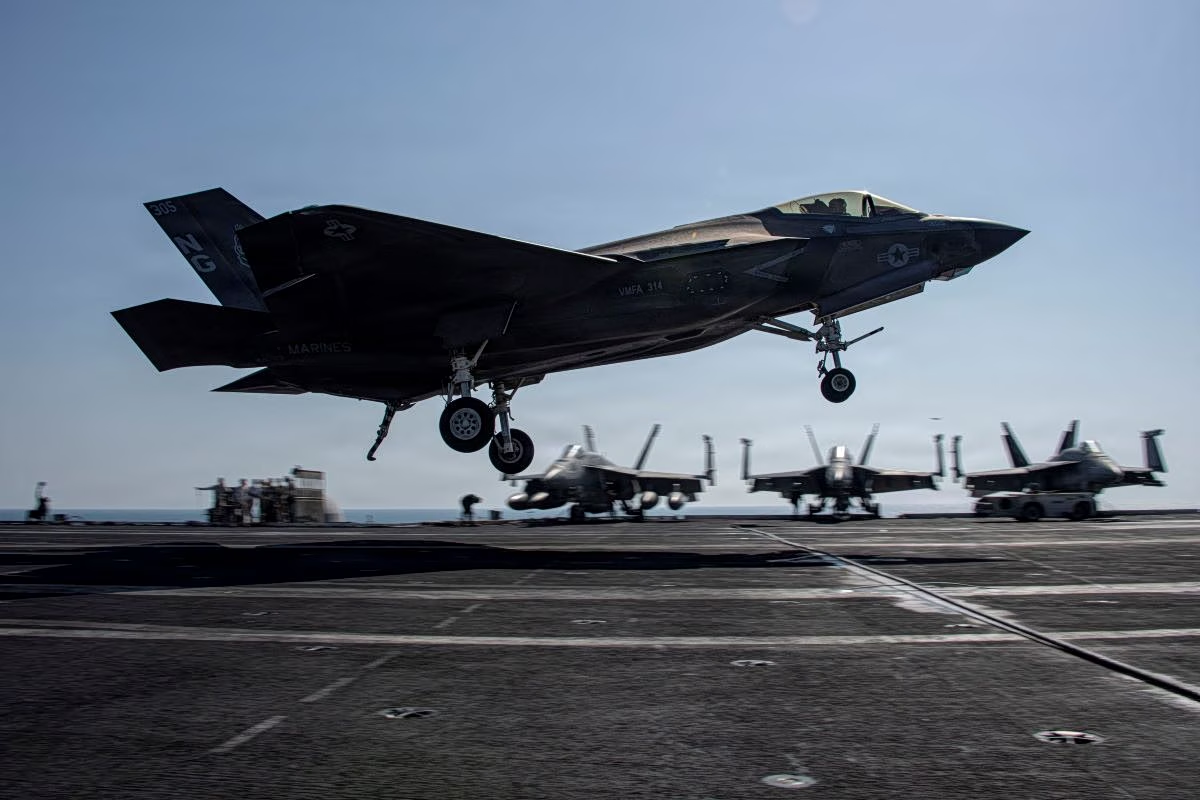
Ankara has dangled the prospect of more than $50 billion in trade, from 200 Boeing planes and purchases of US LNG to defence equipment, hoping it will help turn the page on the tumultuous US-Turkey relationship. It is possible that Trump, eager to tout wins, may embrace whatever the Turkish President’s offerings. However, the most contentious issue remains Turkey’s bid to rejoin the F-35 stealth fighter program, from which it was expelled in 2019 after purchasing Russian S-400 air defences. Sanctions tied to that decision are still in place, and both Congress and key US allies, are likely to resist any sudden reversal. According to Aslı Aydıntaşbaş, an expert on Turkey and Fellow at the Brookings Institute “Greece was promised a qualitative military edge over Turkey during the Biden administration and will similarly oppose the sale of F-35s to Turkey. Even if the administration pushes ahead, F-35 production is facing delays amidst rising demand, meaning delivery could be delayed four to five years, creating risks of reversal under a future US president”.
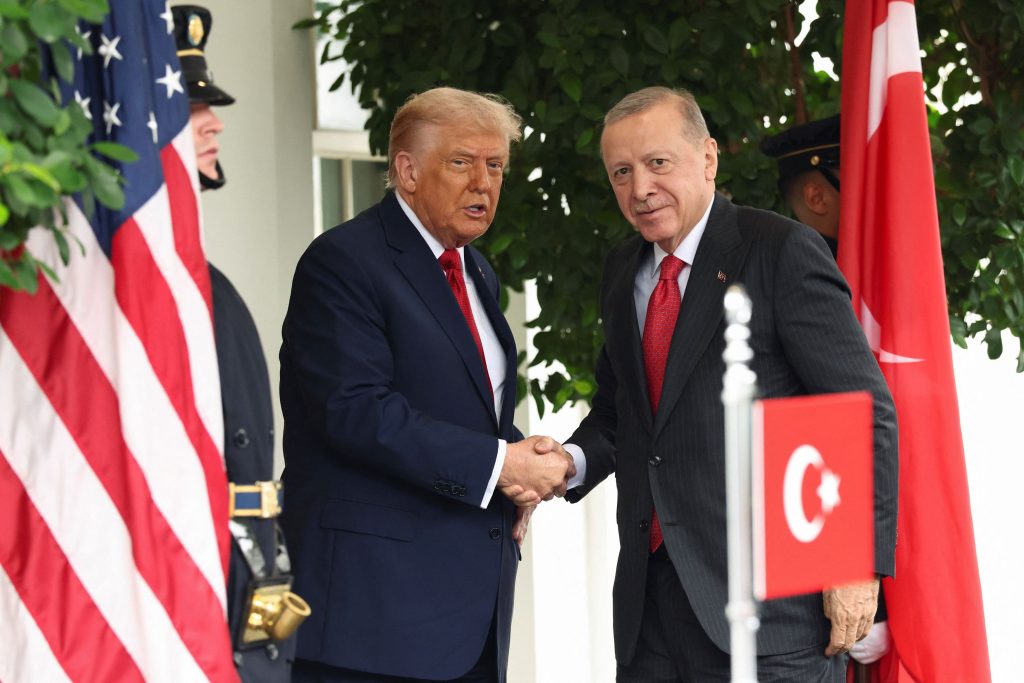
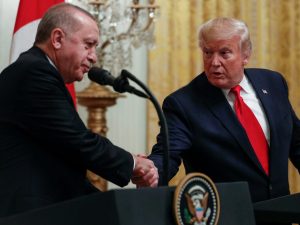
U.S. President Donald Trump and Turkey’s President Recep Tayyip Erdogan shake hands as they meet at the White House in Washington, D.C., U.S., September 25, 2025. REUTERS/Kevin Lamarque
Flashpoints that won’t fade
Even if trade agreements move forward, the geopolitical rifts are harder to paper over. In Syria, Washington and Ankara now both see an opportunity to shape the post-Assad era, but Kurdish autonomy remains a flashpoint. Turkey views Kurdish fighters as a direct threat, while the USA has long relied on them as partners against the Islamic State.
Gaza and Israel pose another test. Erdogan has cast himself as one of Israel’s fiercest critics, positioning Turkey against what he sees as an emerging Israeli regional dominance. Trump, meanwhile, has reinforced Washington’s traditional backing of Israel. The two leaders may find common ground in rhetoric about mediation, but their strategic goals diverge sharply.
A personal bond, a fragile partnership
The Trump–Erdogan relationship has always leaned more on personal rapport than institutional trust. Both men share a populist style, disdain for establishment elites, and a belief in transactional politics. But that chemistry has also led to volatility.
Now, Erdogan arrives in Washington hoping to underline Turkey’s importance to the Western alliance and to reassure international markets of his commitment to stability after years of unorthodox economic policies. Trump, for his part, sees Erdogan as a useful intermediary in conflicts from Ukraine to Gaza. Yet history suggests that personal warmth rarely translates into durable alignment.
Beyond the handshake
The symbolism of Erdogan’s Oval Office return is meant to show that the chill of the Biden years is over. But lasting progress depends on resolving hard issues: the S-400 sanctions, the role of Kurds in Syria, and the growing collision course between Ankara and Jerusalem. Without a mechanism to manage those disputes, even multibillion-dollar deals could prove fleeting.
For Greece and the wider region, the stakes are clear. A Turkey emboldened by US concessions on defence would alter the balance of power in the Eastern Mediterranean. A Turkey locked in confrontation with Israel risks further destabilisation. And a Turkey that sees Washington as tolerant of its hard edges could test NATO unity at a time of war in Ukraine.
In the end, the Trump – Erdogan meeting is about managing an uneasy partnership of kindred spirits. The optics may look warm, but the foundations remain brittle. Long after the Oval Office photos fade, the real question is whether Washington and Ankara can build a relationship that goes beyond deals—and whether they even want to.