The Trump administration’s recent decision to accelerate deportations of undocumented immigrants—including transfers to third countries—has triggered widespread backlash across the United States. The new policy, revealed through an internal Immigration and Customs Enforcement (ICE) document obtained by The Washington Post, grants U.S. immigration authorities expanded powers to deport individuals not to their home countries, but to other nations willing to accept them.
Accelerated Deportations Under ICE Memo
According to the internal memo dated July 9 and signed by acting ICE Director Todd Lyons, immigration authorities can remove migrants to so-called “third” countries, even without prior ties to those destinations. Under standard procedure, ICE must wait at least 24 hours before carrying out such a deportation. However, in cases deemed “urgent,” deportations may proceed in as little as six hours—provided the person has had an opportunity to consult with legal counsel.

FILE PHOTO: Honduran migrants arrive on a deportation flight at the Ramon Villeda Morales International Airport following U.S. President Donald Trump’s national emergency declaration on immigration, in San Pedro Sula, Honduras January 31, 2025. REUTERS/Yoseph Amaya/File Photo
The memo outlines that deportees can be sent to nations whose governments have assured the U.S. that the individuals will not be subjected to torture or persecution. These removals can occur without further legal procedures.
Legal Green Light from the Supreme Court
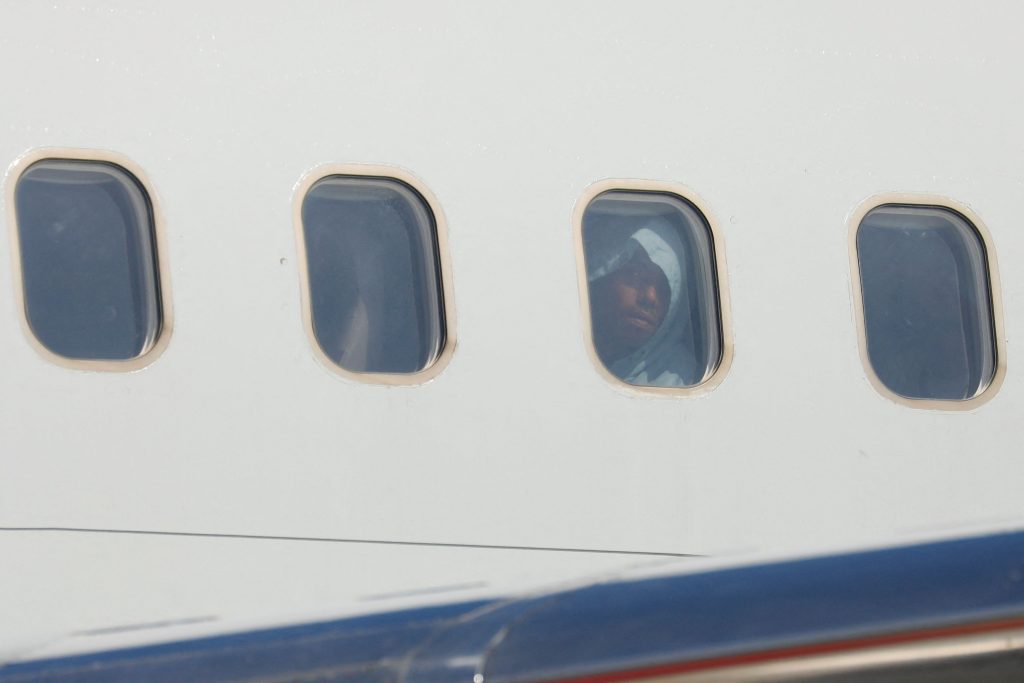
The policy shift follows a U.S. Supreme Court ruling last month, which lifted a lower court injunction that had previously prohibited such deportations unless guarantees against mistreatment in destination countries were secured. Following the ruling, the Trump administration proceeded to deport eight individuals to South Sudan. These included migrants from Cuba, Laos, Mexico, Myanmar, Sudan, and Vietnam.
A Venezuelan migrant reacts after arriving with fellow migrants on a deportation flight from U.S. on a deportation flight at Simon Bolivar International Airport, in Maiquetia, Venezuela June 17, 2025. REUTERS/Leonardo Fernandez Viloria
Diplomatic Pressure and International Scope
The White House has also reportedly pressured five African nations—Liberia, Senegal, Guinea-Bissau, Mauritania, and Gabon—to accept deported migrants. The administration’s efforts signal a broader push to expand the network of countries participating in third-party deportation agreements.
Human Rights Concerns
The policy has drawn intense criticism from human rights advocates and immigration attorneys. Detractors argue that sending migrants to unfamiliar third countries is both inhumane and dangerous, especially when individuals may have no personal or cultural connections to those places, or may not even speak the local language.
Trina Realmuto, an attorney representing a group of migrants who have filed a class-action lawsuit challenging the policy, warned that the new approach undermines legal protections guaranteed by law. She stated that the policy fails to uphold due process rights and fundamental legal safeguards for migrants.
The ICE document became public after being included in the legal case surrounding Kilmarr Abrego Garcia, a Maryland resident who was deported to a maximum-security prison in El Salvador. His case has brought further attention to the human impact of this policy and raised additional legal and ethical questions.