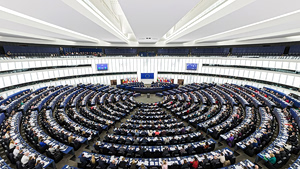
The United Nations General Assembly on Wednesday adopted a resolution proposed by Ghana recognizing transatlantic slavery as the “gravest crime against humanity” and calling for reparations, despite opposition from the United States and abstentions from Europe.
The non-binding resolution, supported by 123 countries, urges member states to engage in dialogue on reparations, including issuing formal apologies, returning stolen artifacts, providing financial compensation, and ensuring guarantees of non-repetition. Fifty-two countries abstained, including the European Union and Britain, while the U.S. and Israel voted against it.
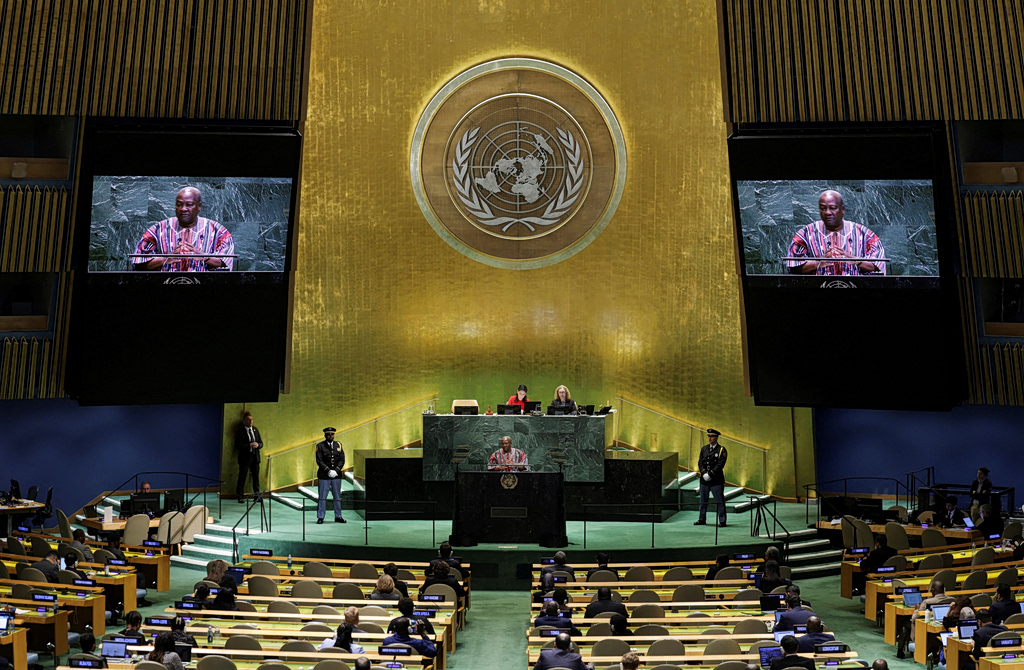
FILE PHOTO: Ghana’s President John Dramani Mahama addresses the 80th United Nations General Assembly (UNGA), at the U.N. headquarters in New York, U.S., September 25, 2025. REUTERS/Jeenah Moon/File Photo
A historic step for accountability
Ghana’s Foreign Minister Samuel Ablakwa described the measure as a call for accountability for the long-lasting consequences of slavery, which saw at least 12.5 million Africans forcibly taken between the 15th and 19th centuries.
“This marks the first vote on the floor of the U.N. recognizing transatlantic slavery as a crime against humanity and calling for reparations,” said Howard University law professor Justin Hansford, noting the resolution represents a significant step in international acknowledgment of historical injustices.
U.N. Secretary-General Antonio Guterres called for “far bolder action” from more states to confront the legacy of slavery, highlighting that only the Netherlands among European nations has formally apologized for its role. The resolution aligns with Africa’s ongoing efforts, led by the African Union, to establish a “unified vision” on reparations.
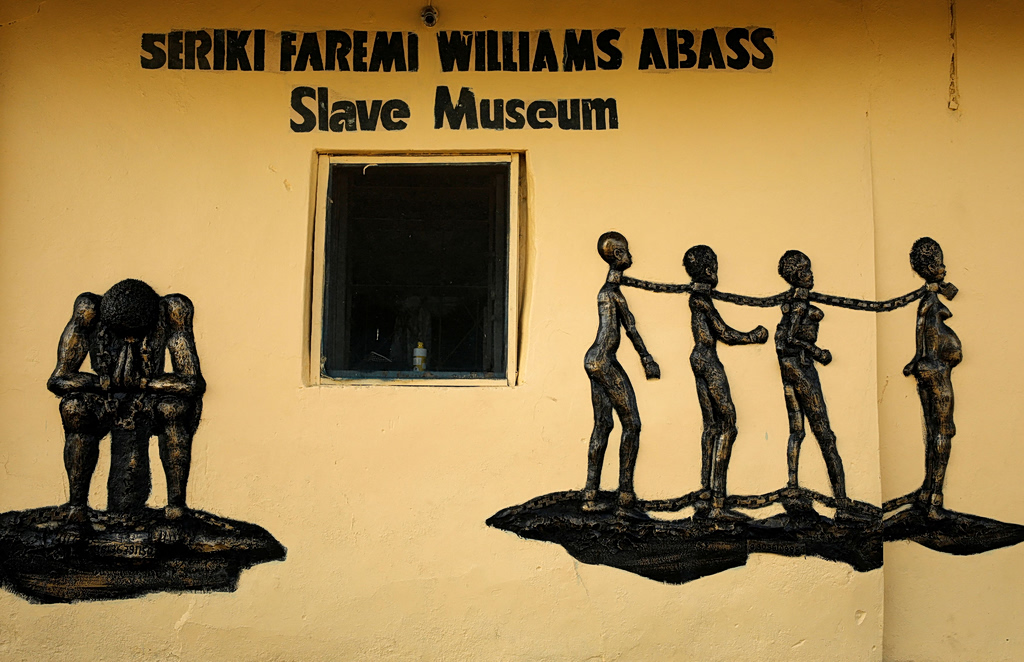
FILE PHOTO: A bas-relief of shackled enslaved people embedded on the wall of the Seriki Abass Slave Museum in Badagry, Nigeria June 19, 2019. REUTERS/Afolabi Sotunde/File Photo
Resistance from the West
Opponents argue that the resolution could imply a hierarchy among crimes against humanity, with the U.S. criticizing it as a “cynical usage of historical wrongs” and the EU citing legal and factual concerns, including the retroactive application of international law.
Historians and activists argue transatlantic slavery’s scale and impact—spanning over 500 years, causing tens of millions of deaths, and devastating African societies—make it a uniquely grievous historical crime. Babatunde Mesewaku, speaking in the Nigerian port town of Badagry, emphasized the lasting human and economic consequences of the transatlantic slave trade.
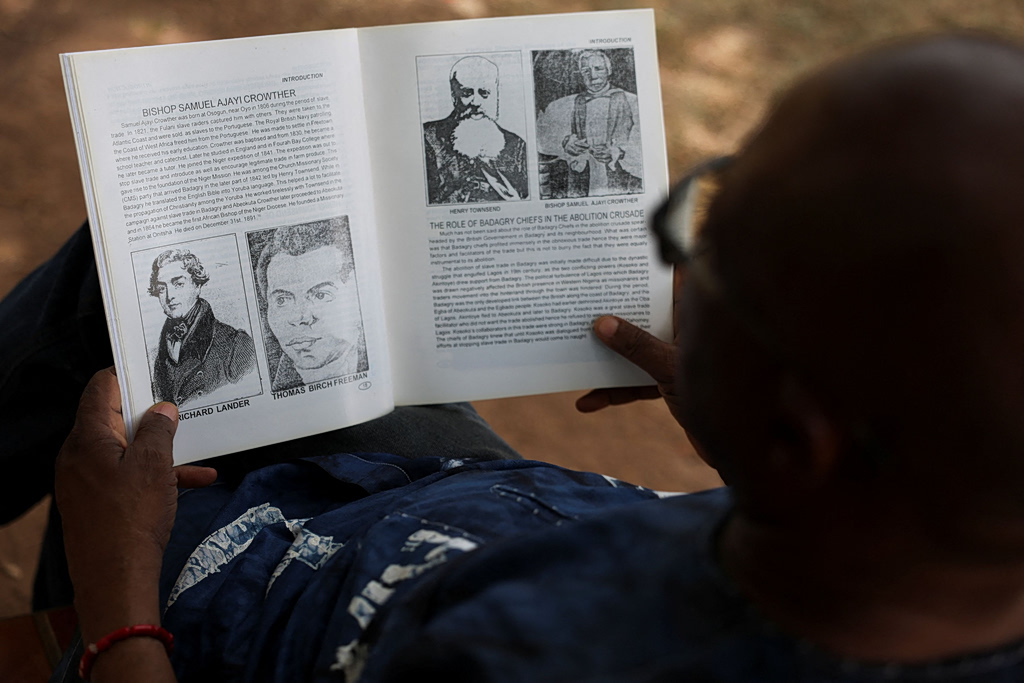
Cultural historian Babatunde Mesewaku reads a book he authored on slave trade before an interview with Reuters on a proposed UN resolution on slavery reparations in Badagry, Lagos, Nigeria, March 25, 2026. REUTERS/Sodiq Adelakun
Path toward reparations
The Ghana-led resolution could pave the way for a U.N. reparations framework and potentially a special tribunal to address the harms of slavery. Ablakwa emphasized the urgency of acknowledging history, stating: “History does not disappear when ignored, truth does not weaken when delayed, crime does not rot… and justice does not expire with time.”