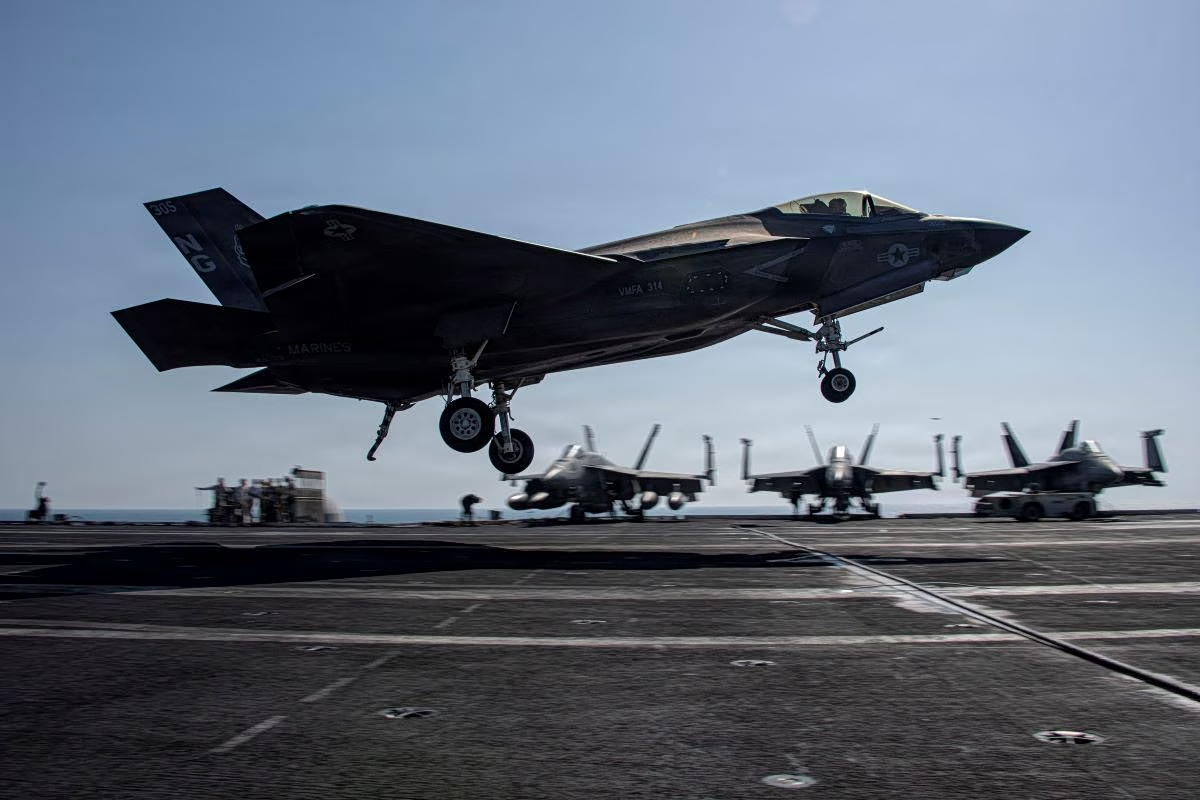
The United States has deployed several warships near Venezuela, signaling a sharp escalation in tensions between Washington and Caracas. The move comes as President Donald Trump intensifies his stance against President Nicolás Maduro, whom the White House has accused of leading a “narco-terrorist cartel.”
According to Reuters sources, vessels including the USS San Antonio, USS Iwo Jima, and USS Fort Lauderdale are expected to arrive in the region by Sunday, joined by at least three more destroyers. The show of force follows Washington’s recent decision to raise its bounty for information leading to Maduro’s arrest to $50 million.
White House spokesperson Caroline Levitt described the Venezuelan government as a “terrorist cartel” and called Maduro a “fugitive leader.” She emphasized that Trump is prepared to use “all means” to prevent drugs from “flooding our country.” In response, Maduro announced the mobilization of 4.5 million national guardsmen to protect Venezuela.
Political motives at play
Trump’s strategy appears to go beyond foreign policy. Analysts note that heightening pressure on Venezuela serves multiple political purposes: energizing conservative and anti-communist Republican supporters, especially among Hispanic voters, while keeping open the possibility of future negotiations over migration and Venezuela’s vast oil reserves.
The escalation contrasts with earlier signs of détente. In February, Caracas released six detained Americans after talks with Trump’s envoy, and just weeks ago Chevron received approval to resume operations in Venezuela.
With global crises unfolding—from the war in Ukraine to instability in the Middle East—analysts question whether Trump seeks full-scale military engagement. More likely, observers say, the Venezuelan standoff may serve as a calculated pressure tactic as the U.S. president heads toward the 2026 midterm elections, where domestic politics remain his priority.