Governments around the world responded cautiously this week to U.S. President Donald Trump’s plan to establish a “Board of Peace,” an international initiative he says will resolve conflicts globally. Diplomats expressed concern that the initiative, chaired for life by Trump, could undermine the United Nations’ authority.
Only Hungary, led by Trump ally Viktor Orban, offered unequivocal acceptance of the invitations sent to around 60 nations, according to officials. Other countries, including France, Germany, Italy, Canada, Australia, Turkey, Egypt, and the European Commission, have not publicly confirmed participation as reported in Reuters.
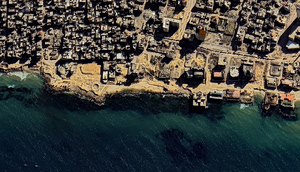
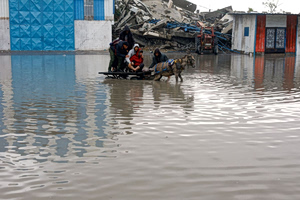
The Board of Peace is set to start by addressing the Gaza conflict under a transitional technocratic administration, then expand to other global conflicts. Member states would serve three-year terms unless they pay $1 billion to secure permanent membership.
“The board will be one of a kind, there has never been anything like it!” Trump said in a recent interview, adding that it would eventually address conflicts “like other countries that are going to war with each other.”
The White House announced initial board members, including U.S. Secretary of State Marco Rubio, special envoy Steve Witkoff, former British Prime Minister Tony Blair, and Trump’s son-in-law Jared Kushner. A separate 11-member Gaza Executive Board, including Turkish Foreign Minister Hakan Fidan, U.N. Middle East coordinator Sigrid Kaag, and an Israeli-Cypriot billionaire, was also unveiled. Israel objected to the board’s composition, saying it contradicts government policy.
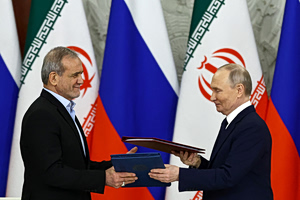
In a move that drew attention, Trump also invited Greek Prime Minister Kyriakos Mitsotakis and Cypriot President Nikos Christodoulides to join the board. According to well-informed Israeli sources cited by DW, these invitations, alongside one extended to pro-Israel Argentine President Javier Milei, are seen as an effort by the U.S. to “balance” the composition of the board against the (unwelcome to Israel) Turkish presence and to ease Israeli concerns.
Trump’s plan has raised concerns among European diplomats, some of whom describe it as a “Trump United Nations” that disregards the U.N. Charter. UN officials, while affirming that member states may form independent groups, reiterated that the U.N. remains the only institution with the moral and legal authority to convene all nations.
Rights groups and observers have criticized the Board of Peace as resembling a colonial-style oversight of Gaza. Critics also questioned Blair’s involvement given his controversial role in the Iraq war. The White House did not detail responsibilities for each board member and noted that more members would be announced in the coming weeks.
The board builds on a U.N. Security Council resolution from November 2025, which authorized a temporary mandate for Gaza only through 2027. Trump’s plan, however, aims to outlive this mandate and expand globally, reflecting the president’s longstanding skepticism of multilateral institutions.
“This simply offers permanent membership to partner countries who demonstrate deep commitment to peace, security, and prosperity,” the White House said in a post on X, framing the initiative as a pragmatic alternative to what it describes as failed international approaches.