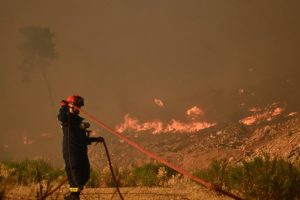
Greece is paying a steep price for climate change. From wildfires and floods to suffocating heatwaves, the economic toll is rising sharply. In 2023 alone, damages hit 26.8 million euros, making it the worst year on record since 1980. Wildfires scorched 1.7 million acres, devastating agriculture, tourism, and housing, according to a landmark European Environment Agency (EEA) report released this week.
A Mounting Bill
Since 2000, climate-related damages in Greece have averaged over 30 euros per person annually, peaking at 60 euros per capita in 2023. While still below the European average of 66.4 euros, the numbers reveal a long-term upward trend that strains households and businesses alike.
The crisis is not only financial. Extreme heat and poor air quality are undermining health and productivity, while rapid construction and mass tourism put fragile coastlines and water resources at risk. Agriculture, transport, and fisheries are adding pressure to already threatened ecosystems.
Progress—and Persistent Gaps
Athens has taken steps, from flood control projects to heat-resilient urban design. Renewable energy investments are multiplying, and environmental taxes now make up 10.1% of total revenues—twice the EU average. Yet fossil fuel subsidies still consumed 0.9% of GDP in 2023, above the EU’s 0.7%.
The energy transition has brought gains—Greece is phasing out lignite and boosting solar and wind—but challenges remain. Nearly one in five households (19.2%) suffers from energy poverty, almost double the EU average. Rural, low-income families are the hardest hit, often unable to access green subsidies or keep homes adequately warm in winter.
Waste Mismanagement
On waste, the picture is bleak. Greece’s recycling rate for municipal waste fell to just 17.3% in 2022, far below EU norms. Packaging recycling also plummeted, while electronic waste and end-of-life vehicle recovery rates lag far behind targets. Without sweeping reforms in waste policy, infrastructure, and public awareness, Greece risks missing EU goals for 2030.
The Road Ahead
The EEA warns that Greece’s path to sustainability hinges on resilient energy systems, fair access to green programs, and stronger environmental enforcement. As climate shocks intensify, the question is no longer whether Greece can afford to act—but whether it can afford not to.