The City of Athens honored Nobel Prize–winning author László Krasznahorkai with its official medal during a ceremony at City Hall, as the acclaimed Hungarian novelist takes part in the inaugural Athens International Literature Festival.
Athens Mayor Harris Doukas presented the award, praising Krasznahorkai’s “exceptional contribution to contemporary world literature” and the philosophical depth and distinct style that have shaped his global reputation. Doukas said the author’s presence at the festival reinforces its international scope and cultural significance.
Krasznahorkai, who won the International Booker Prize in 2015 and the Nobel Prize in Literature in 2025, expressed gratitude for the recognition and emphasized the importance of the new festival. He said he immediately accepted the invitation upon learning about the initiative, noting its potential to connect younger audiences with literature.
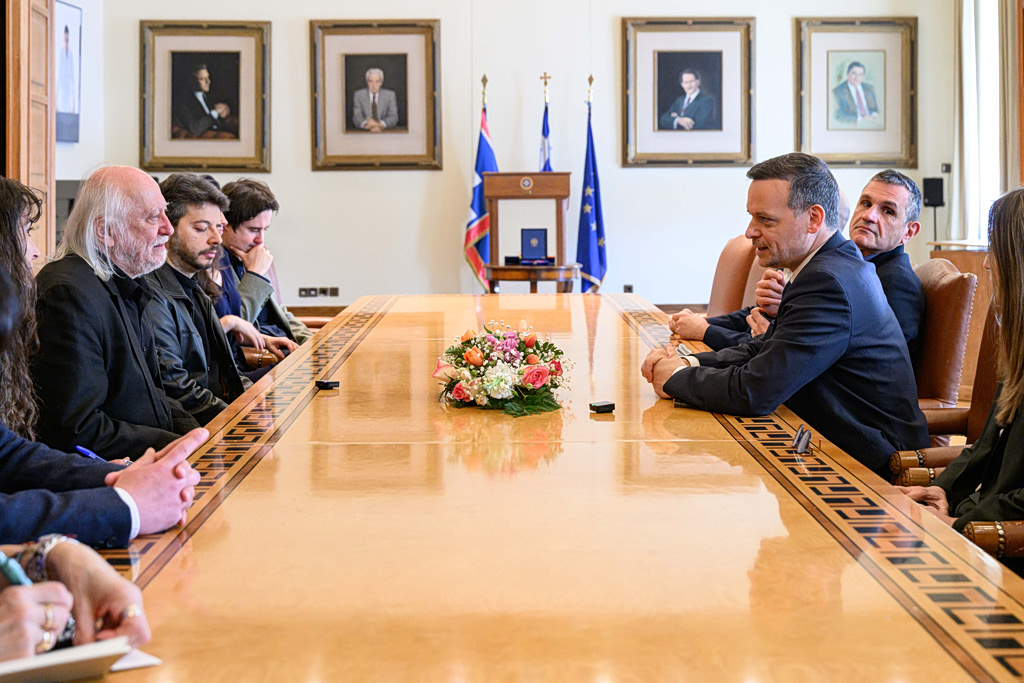
Harris Doukas with László Krasznahorkai
“I am deeply honored to be here and to participate in this festival,” he said, adding that such events play a key role in fostering engagement with books and ideas.
The author is participating in keynote events and discussions exploring the relationship between literature and politics. He is also introducing a screening of Werckmeister Harmonies, directed by longtime collaborator Béla Tarr.
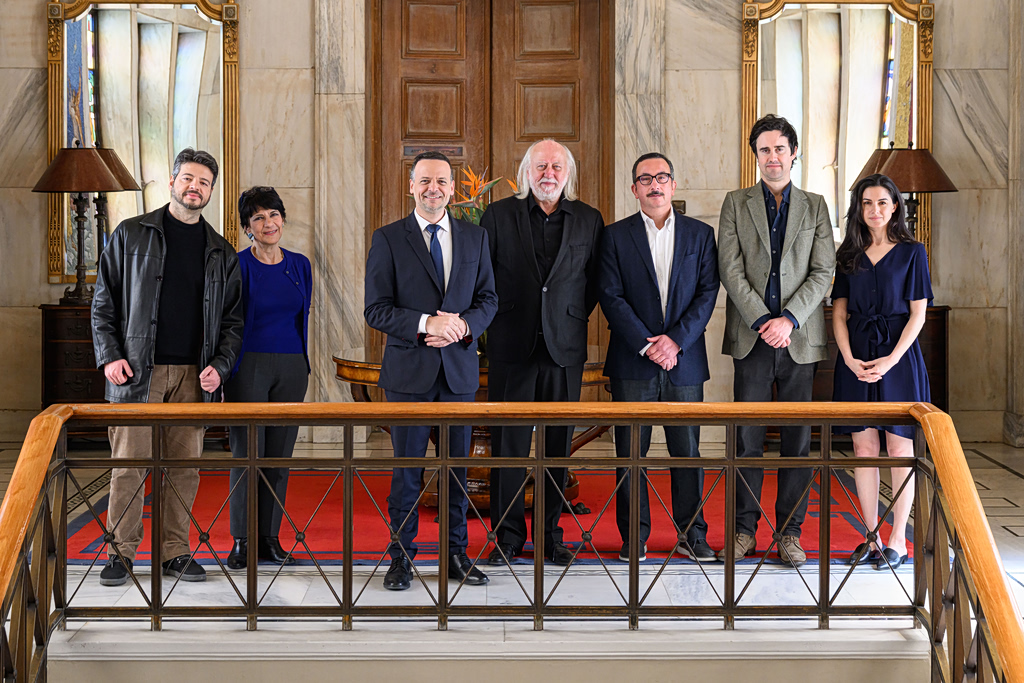
The Hungarian novelist participates in the 1st International Literature in Athens, 27-29 March 2026.
The three-day festival, held from March 27 to 29 at Technopolis, a major cultural venue in Athens, brings together writers, journalists, academics, artists, and readers from Greece and abroad. With free admission, the event aims to promote contemporary literature and encourage public dialogue.
Panels and discussions address themes such as identity, gender, violence, social inequality, and the intersection of politics and literature, positioning the festival as a new platform for cultural exchange and debate.
Organizers say the initiative seeks to establish a dynamic cultural institution in the city—one that connects diverse voices and highlights literature as both an artistic and social force.