The announcement of the running order for the Eurovision Song Contest 2026 Grand Final has completed the puzzle of this year’s competition — and triggered seismic shifts in the betting markets.
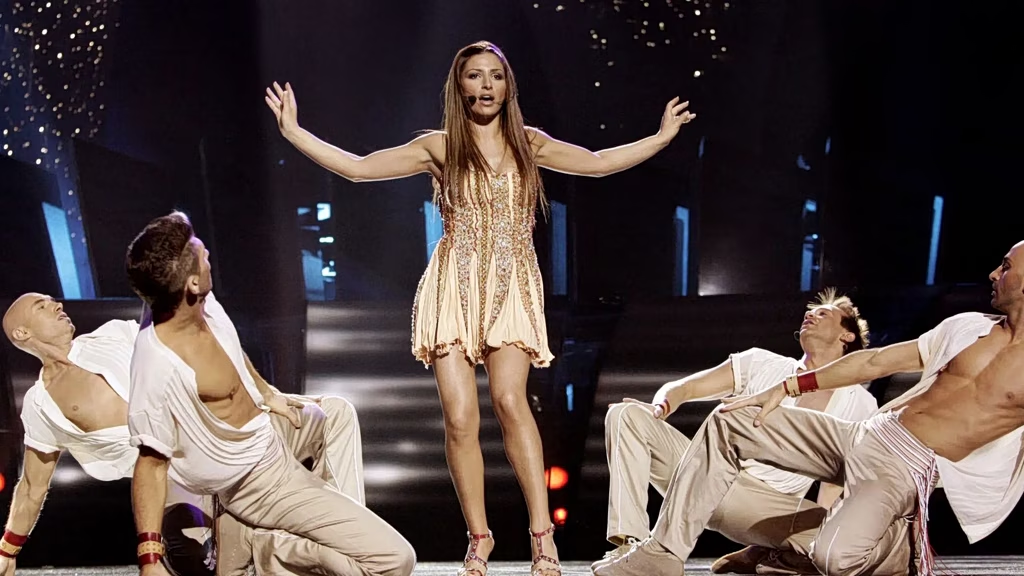
For Greece, the sixth performance slot assigned to Akylas and his song “Ferto” caused the country to slip slightly to third place in bookmakers’ predictions.
With producers from the European Broadcasting Union now controlling the show’s running order instead of relying on random draws, the battle for the Eurovision trophy increasingly revolves around statistics, psychology, and strategic placement of the favorites.

Akylas, representing Greece, performs “Ferto” during the first semi-final of the 2026 Eurovision Song Contest, in Vienna, Austria, May 12, 2026. REUTERS/Lisa Leutner
Yet one major factor threatens to reshuffle the deck entirely: televoting.
The New Era of Televoting
In a change first introduced in 2024, phone lines and online voting through esc.vote and the official Eurovision app now open just before the first note of the opening performance.
Viewers no longer need to wait until all songs have been performed before voting for their favorite entry. In fact, each viewer is now allowed to vote up to 10 times.
Voting will remain open throughout the live show and will close approximately 40 minutes after the final performance. Meanwhile, audiences from non-participating countries — the so-called “Rest of the World” vote — can begin voting from midnight on the day of the final.
The Dominance of the Second Half
The new voting format may challenge one of Eurovision’s most deeply rooted statistical patterns: the overwhelming historical advantage of performing in the second half of the show.
Data from the last 25 years paints a clear picture. The second half of the Grand Final — performance slots 14 to 26 — has produced 17 winners, representing a crushing 68% success rate. By comparison, the first half of the show, positions 1 to 13, has produced only eight winners, or 32%.
The imbalance is widely attributed to “recency bias” — the tendency of viewers to remember more vividly the performances they watched most recently, particularly during peak prime-time television hours across Central Europe.
Although producers have attempted in recent years to balance the competition by placing major favorites earlier in the show — including winners such as Loreen, Duncan Laurence and Måns Zelmerlöw — a place in the second half still represents a major psychological and statistical advantage.

This year, however, the question is whether open voting from the very first minute can finally level the playing field.
Greece and the Curse of Number Six
The new televoting system could prove a blessing in disguise for Greece.
Akylas and “Ferto” were assigned the sixth performance slot — one of the strangest statistical anomalies in Eurovision history. Only one song has ever won the contest from position number six, back in 1957, when Eurovision featured just 10 competing entries.
There are, of course, even worse positions. Slot number two, for example, has never produced a Eurovision winner.
Until recently, the biggest disadvantage of early performance slots was the long wait between the performance and the opening of voting lines. But now Greece — which remains strong in third place among bookmakers with a 10% chance of victory — can capitalize on the immediate excitement of the moment.
Akylas no longer needs viewers to remember him for two full hours. Audiences can vote while he is still on stage — or even use all 10 available votes immediately.
Finland’s Lead and Australia’s Charge
Even so, this year’s overwhelming favorite further strengthened its dominance when the running order was revealed — benefiting directly from the statistical power of the second half.
That favorite is Finland, represented by Linda Lampenius, her violin, and Pete Parkkonen.

Linda Lampenius and Pete Parkkonen, ESC participants from Finland, pose for a picture in Vienna, Austria, May 14, 2026. REUTERS/Elisabeth Mandl
Finland’s chances of winning surged to 38% after being assigned the 17th performance slot — historically the most successful position in Eurovision history, already responsible for seven victories, including wins by Loreen and Lordi.
At the same time, the competition’s biggest recent surprise comes from Australia, despite performing in the statistically weaker first half.
Delta Goodrem, performing “Eclipse,” overtook Greece and climbed to second place in the betting odds with a 14% chance of victory.
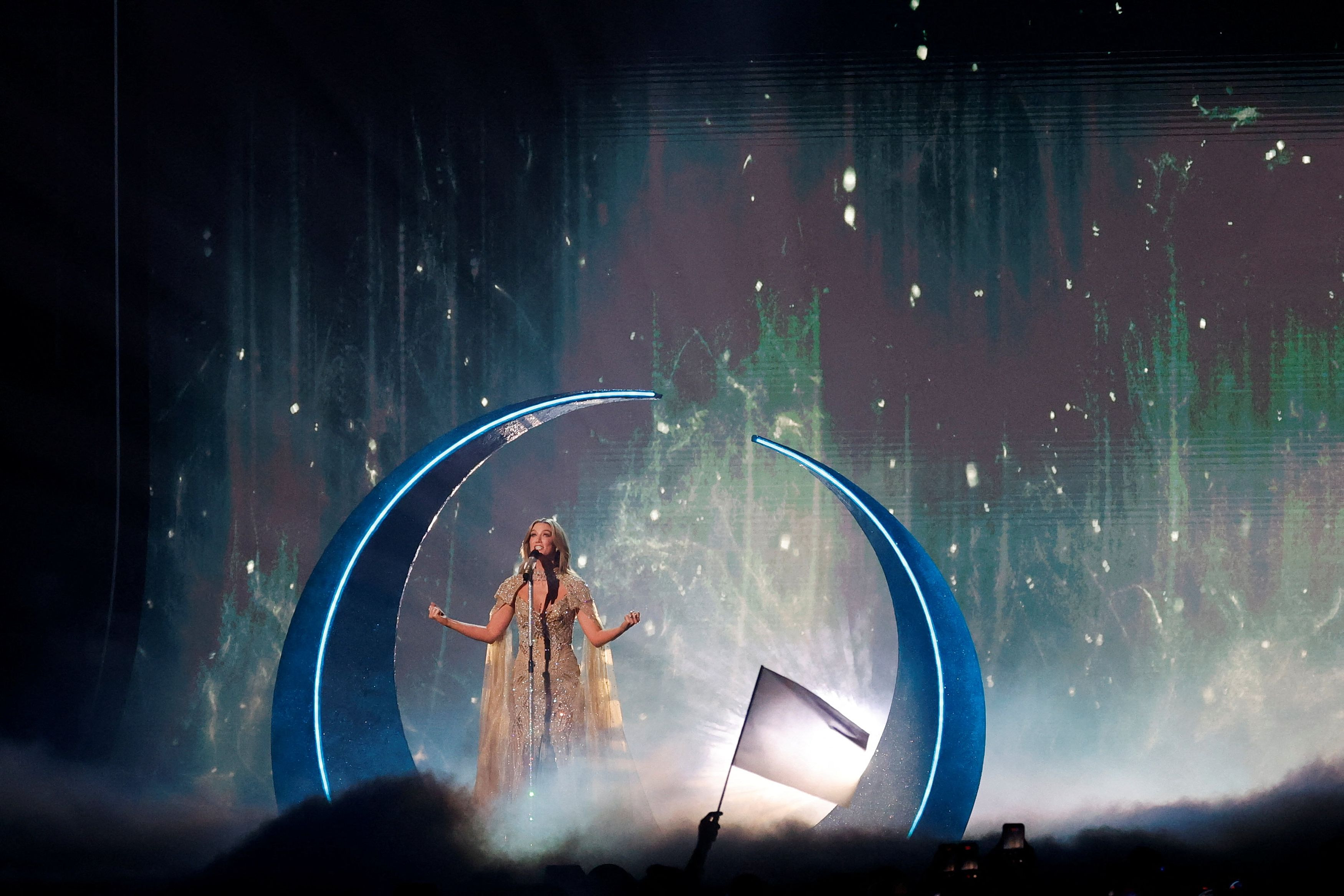
Delta Goodrem, representing Australia, performs “Eclipse” during the second semi-final of the 2026 Eurovision Song Contest, in Vienna, Austria, May 14, 2026. REUTERS/Lisa Leutner
Her eighth-place running order position — considered a “golden spot” in the first half and historically linked to five winners — combined with the already-open voting lines, gives Australia a unique opportunity to collect massive support early in the show.
Cyprus and the Strategic Second Half Advantage
On the other side of the equation, the opening of voting lines from the beginning of the show creates new dynamics for later performers as well.
Cyprus, represented by Antigoni and “JALLA,” will perform in 21st position — a prime television window for energetic ethnic-inspired tracks.
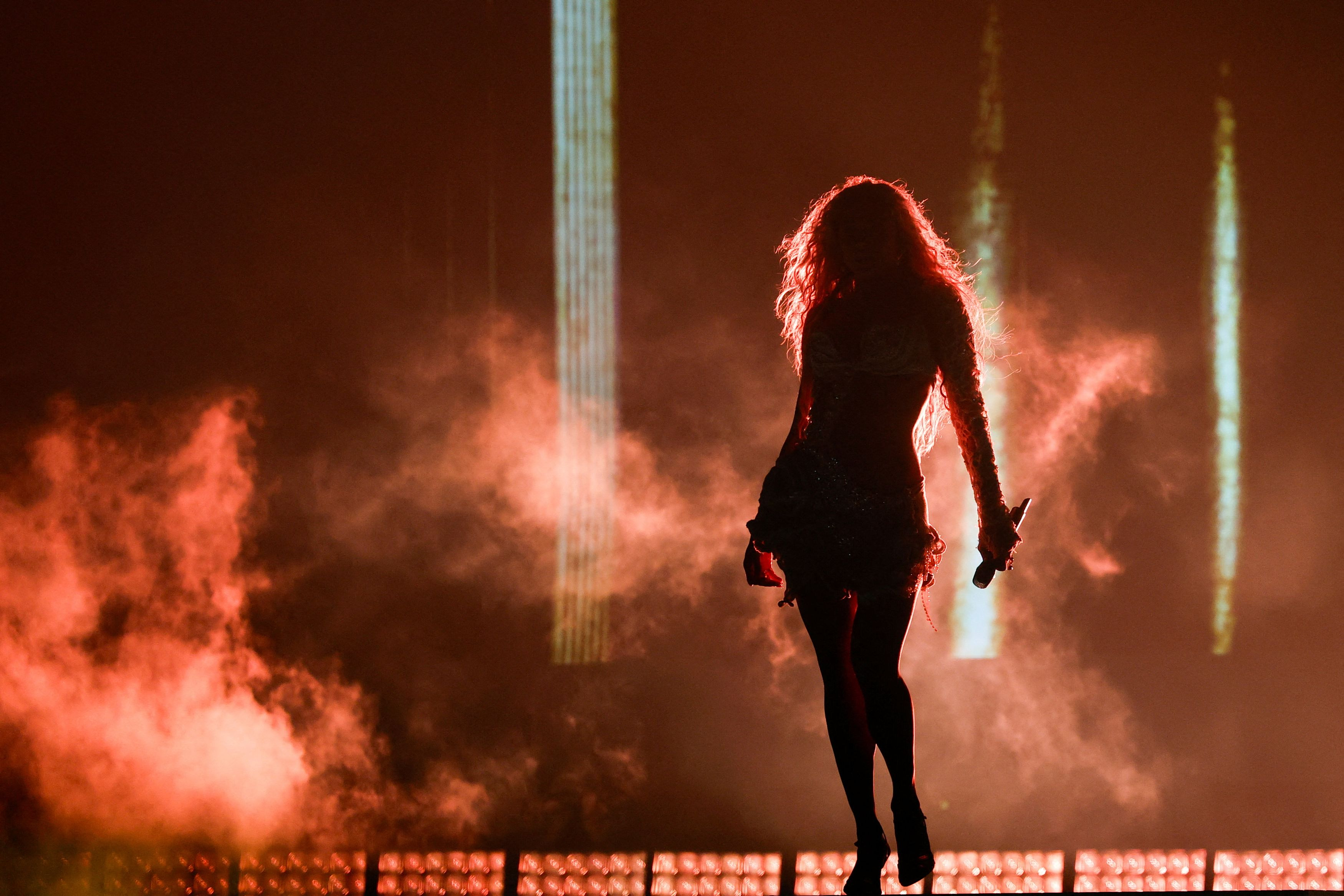
Antigoni, representing Cyprus, performs “JALLA” during the dress rehearsal 2 of the second semi-final of the 2026 Eurovision Song Contest, in Vienna, Austria, May 13, 2026. REUTERS/Lisa Leutner
Although viewers can vote from the start, the Cypriot entry is expected to act as a late injection of energy, benefiting from the momentum of the show and reinforcing the famous “68% rule” just before the competition segment concludes.
The Architecture of the Grand Final
The overall structure of the Grand Final reveals the producers’ clear intention to maintain tension and momentum from beginning to end, now fully aware that every minute translates directly into votes.
Denmark will open the show from first position, hoping to capitalize on the opening minutes of voting, while Israel faces the challenge of making an immediate impact from third place, currently sitting fifth in the betting odds with a 6% chance of victory.
Meanwhile, Romania appears to be gaining momentum with Alexandra Căpitănescu, who secured the 24th and second-to-last performance slot.
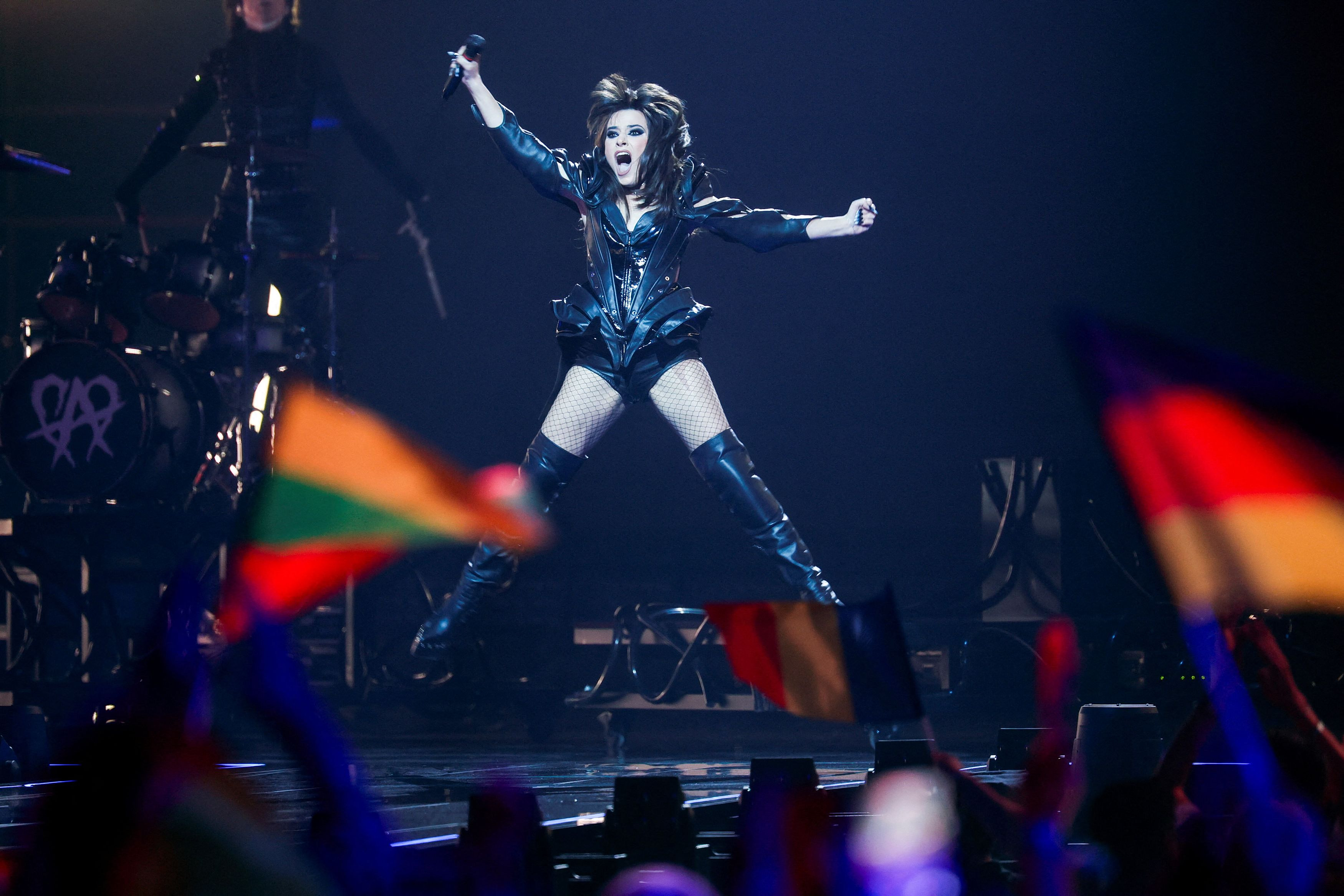
Alexandra Capitanescu, representing Romania, performs “Choke Me” during the second semi-final of the 2026 Eurovision Song Contest, in Vienna, Austria, May 14, 2026. REUTERS/Lisa Leutner TPX IMAGES OF THE DAY
Historically, this position has often launched major surprises and late surges of undecided voters.
Perhaps, in the end, the most important detail of this year’s Eurovision will not be the songs, the staging, or even the betting odds.
It may simply be one number: six.
A number historically considered cursed — but one that, under Eurovision’s revised televoting rules, could rewrite history entirely.
It is also worth noting that this year’s seven-member national juries, which determine 50% of the final result, will cast their votes tonight during the Grand Final jury rehearsal.