From age-old rural rituals to spectacular displays of light and sound, Greece once again honors its rich tapestry of Easter traditions—customs whose origins often fade into the depths of centuries past.
In the northern region of Kavala, the revival of Mazidia marks a return to a long-forgotten rite. On the third day of Easter, icons are carried in procession from the Byzantine church of Saint Taxiarchis to the area’s oldest chapel, in a symbolic act seeking divine blessing for the agricultural season. The procession then moves to the village square, where celebration takes over. The festivities culminate in a communal feast, with offerings prepared by the community’s unmarried women.
Equally steeped in history are the swings of Marpissa on the island of Paros, a custom tracing its roots back to ancient Greek beliefs. The upward motion of the swing was once thought to bring good fortune and a sense of liberation. Today, the tradition survives as a playful yet symbolic courtship ritual. Young men recite romantic couplets, while young women—who hold the final say—choose their suitors in a festive atmosphere shaped by flirtation and verse.
In stark contrast, the memorial feasts held in villages around Kozani offer a poignant reminder of continuity between life and death. On Easter Monday, families gather at the graves of their loved ones, laying out meals featuring the deceased’s favorite foods and drinks. What begins as a solemn act of remembrance gradually transforms into a celebration, with Pontic music, dancing and song evoking both memory and emotional release. At its heart lies a quiet reconciliation with mortality and a renewed appreciation for life.
On the island of Patmos, the Ritual of the Washing of the Feet brings the Gospel to life. On the morning of Holy Thursday, following the Divine Liturgy at the Monastery of Saint John, a solemn procession leads to the central square of Chora. There, the abbot reenacts Christ’s act of humility, washing the feet of twelve priests representing the Apostles. The ceremony’s authenticity and spiritual gravity draw visitors from across Greece and beyond.
Few customs, however, rival the intensity of the rocket war on the island of Chios. On the night of the Resurrection, the sky over Vrontados erupts as rival parish groups launch thousands of homemade rockets at each other’s churches. The “battle” pits the followers of Panagia Ereithiani against those of Saint Mark, each aiming at specific targets on the opposing church. The next day, the tally determines the winner. Yet beneath the spectacle lies a troubling reality: the tradition has led to numerous injuries and fatalities, earning its reputation as one of Greece’s most dangerous Easter customs.
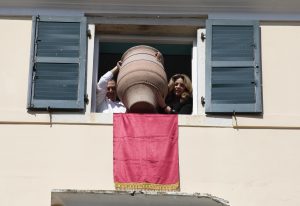
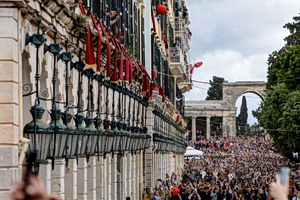
In Corfu, the mood shifts dramatically with the famous botides. At noon on Holy Saturday, as the First Resurrection is proclaimed, residents hurl large clay pots from their balconies, smashing them onto the streets below. The dramatic crash is accompanied by marching bands, creating a thunderous and celebratory atmosphere that signals renewal and rebirth.
The Burning of Judas, observed in regions from Nafpaktos to Lefkas and Crete, remains one of the most enduring Easter rituals. Rooted in the era of Ottoman rule, it involves the creation and public burning of an effigy representing Judas Iscariot, the disciple who betrayed Christ. The act symbolizes the condemnation of treachery, with the figure often stuffed with flammable materials—and sometimes fireworks—for dramatic effect.
Finally, in Leonidio in Arcadia, the Resurrection night is transformed into a luminous spectacle. Hundreds of handmade paper lanterns rise into the sky at the moment the words “Christ is Risen” are proclaimed. This tradition, dating back to the late 19th century, sees entire households participate in crafting the lanterns weeks in advance. The result is a breathtaking display that lights up the night and leaves a lasting impression on all who witness it.