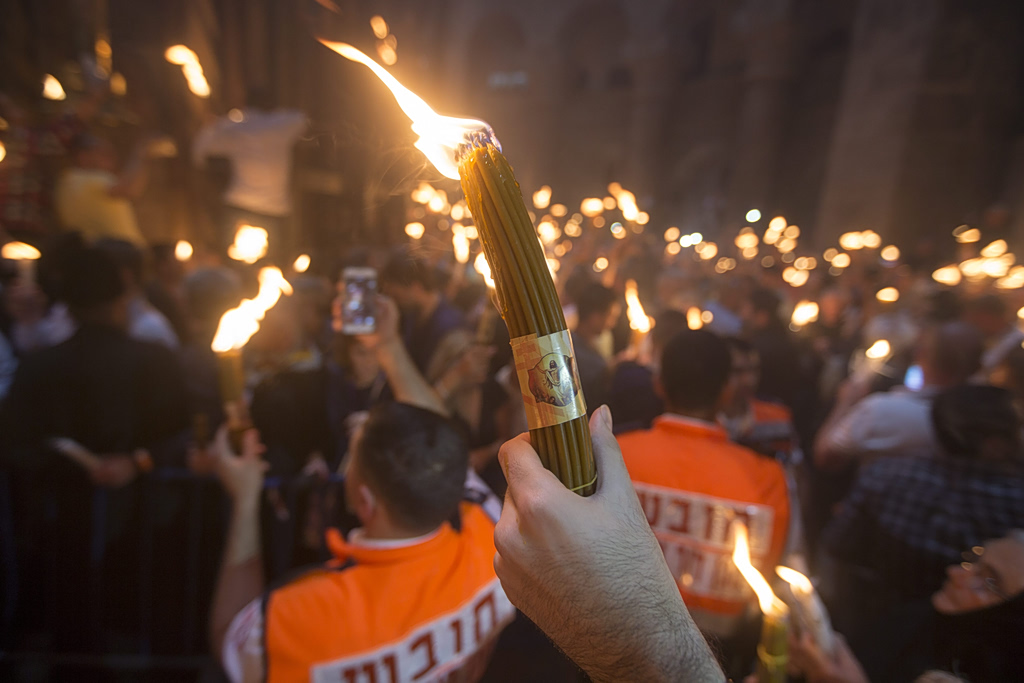
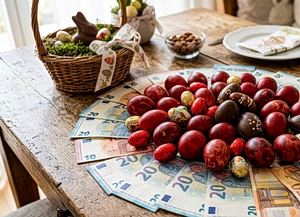
Today’s Easter Sunday for the Orthodox Church and its fold around the world concludes, in a celebratory and triumphant manner, the Holy or Passion Week with the recounting of the Resurrection of Christ, the quintessence of the Christian faith.
As expected, the Holy Week and the Crucifixion are some of the most reverential and enduring subjects of western art over the past centuries. Prior to the Greek Independence in the early 19th century most expressions of “Easter art” manifested in iconography.
Artists down through the past millennia created not only a religious narrative but projected the concerns of their times. From Leonardo da Vinci’s monumental fresco The Last Supper to the silent transcendence of the Resurrection, to the multiple and often non-conformist interpretations of the 20th and 21st centuries, artists have revisited this theme not to repeat it, but to transform it.
Below are some indicative examples of Easter art, as listed in an article in the Athens daily “Ta Nea” this past week:
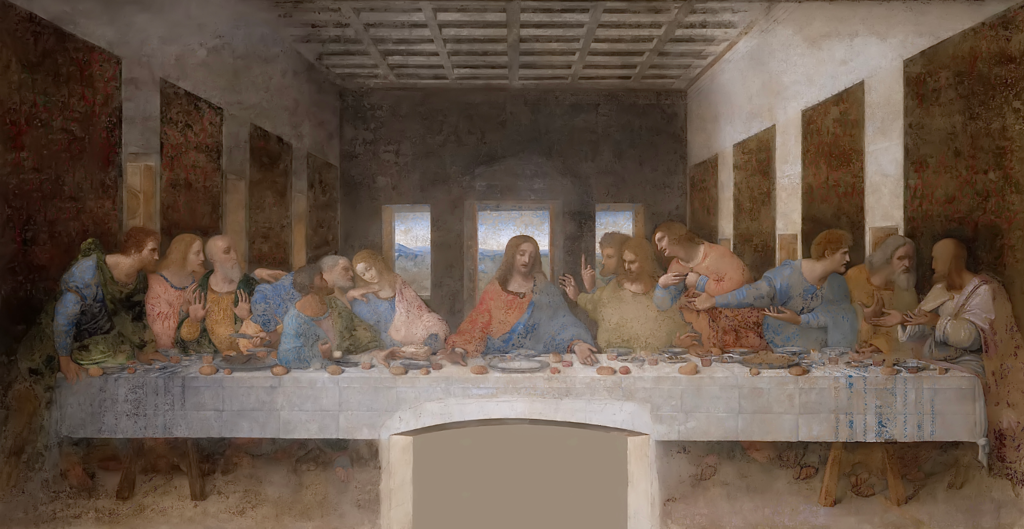
Leonardo da Vinci, The Last Supper (1495–1498)
The iconic fresco by the Italian renaissance master Leonardo da Vinci (1452–1519), Italian Renaissance master, painter, scientist, and polymath is displayed in Milan’s Santa Maria delle Grazie. It is the largest and only surviving fresco by da Vinci. It set the standard for depicting the Last Supper, combining human emotion and spiritual significance.
Leonardo cast local townspeople as the apostles to achieve realism.
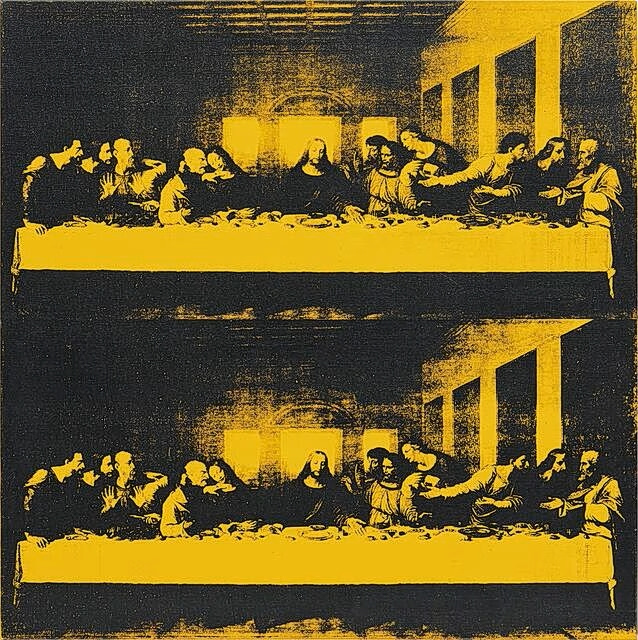
Andy Warhol, The Last Supper (1980s)
The pioneering and still influential American pop artist Andy Warhol (1928–1987) is known for his silk screens and commentary on mass media and consumer culture.
Warhol created more than 100 variations of Da Vinci’s Last Supper, exploring themes of reproduction, image saturation and secularization. His large-scale, camouflage-patterned works juxtapose religious imagery with contemporary realism.
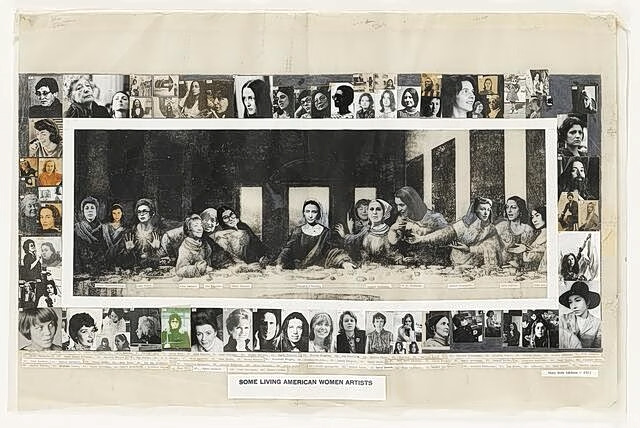
Mary Beth Edelson, Some Living American Women Artists (1972)
Mary Beth Edelson (1933–2021) was American feminist artist known for her collages, performances and conceptual art.
She reimagined the Last Supper as a tribute to “invisible” women artists, placing Georgia O’Keeffe as “Christ” and other women in the Apostles’ roles. The work criticizes, per the artist, what she claims is patriarchal exclusion from art history and celebrates female creativity.
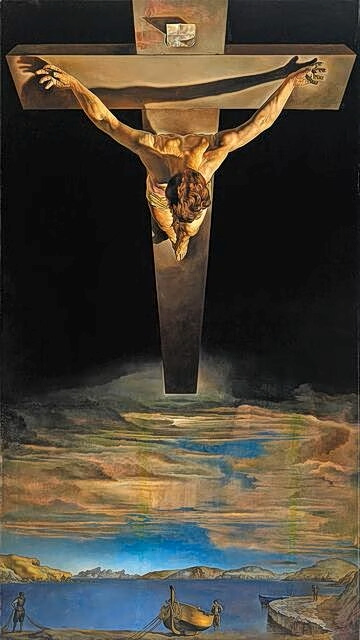
Salvador Dalí, Christ of Saint John of the Cross (1951)
The renowned Spanish surrealist painter Salvador Dalí (1904–1989) was known for his dreamlike imagery and meticulous technique.
Dalí depicts Christ suspended above the Spanish village of Port Lligat without nails or a crown of thorns, emphasizing transcendence. Inspired by a 16th-century sketch, the painting uses dramatic perspective and geometric symbolism (triangle and circle) to convey divine perfection and spiritual elevation.
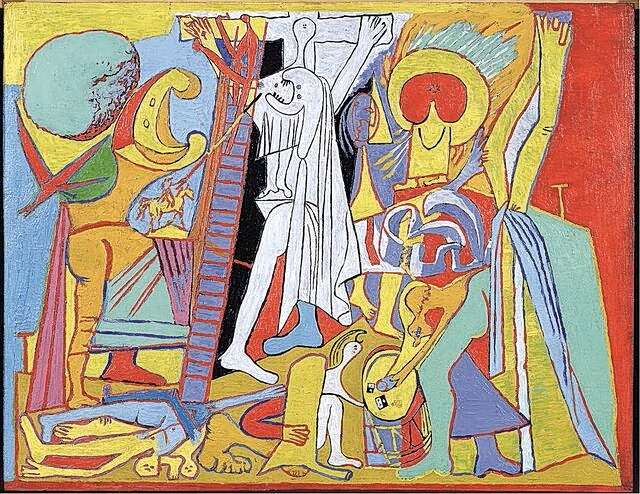
Pablo Picasso, The Crucifixion (1930)
The other renowned 20th century Spanish artist, Pablo Picasso (1881–1973) continued to be considered as the pioneer of Cubism and modernist experimentation.
This oil painting combines Christian iconography with surrealist and symbolic abstraction, using fragmented forms to comment on human suffering. It anticipates the themes of violence and despair that would later define his historic work Guernica.
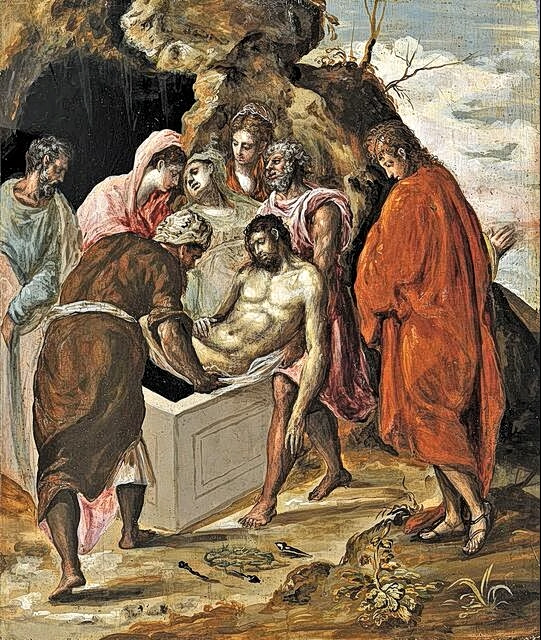
El Greco, The Burial of Christ (1568–1570)
El Greco (Doménikos Theotokópoulos, 1541–1614) is first “Grecian entry” onto this list, known for dramatic color, elongated figures and spiritual intensity.
A masterpiece painted during his Venetian period, the The Burial of Christ emphasizes depth and vivid color contrasts, moving away from Byzantine flatness as the late Renaissance transitioned into the early Baroque period. Warm oranges and reds contrast with cool blues and greens, conveying emotional and spiritual intensity in the burial of Christ.
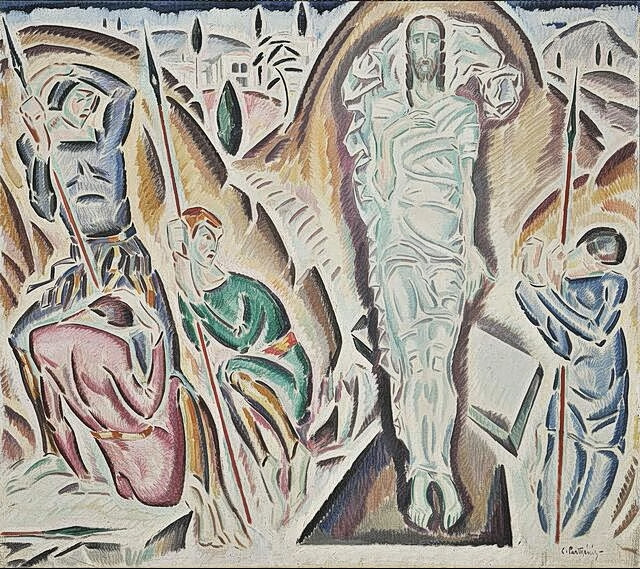
Konstantinos Parthenis, Resurrection (1917)
Konstantinos Parthenis (1878–1967) was a modernist painter who mostly created in the modern Greek state, blending symbolism, Art Nouveau, and Greek tradition.
Parthenis depicts Christ’s Resurrection as luminous and almost ethereal, using clear lines and flat color. He modernizes religious painting by blending Byzantine heritage with Western modernism, emphasizing spiritual transcendence over narrative, making faith a luminous, abstract experience.
Easter art