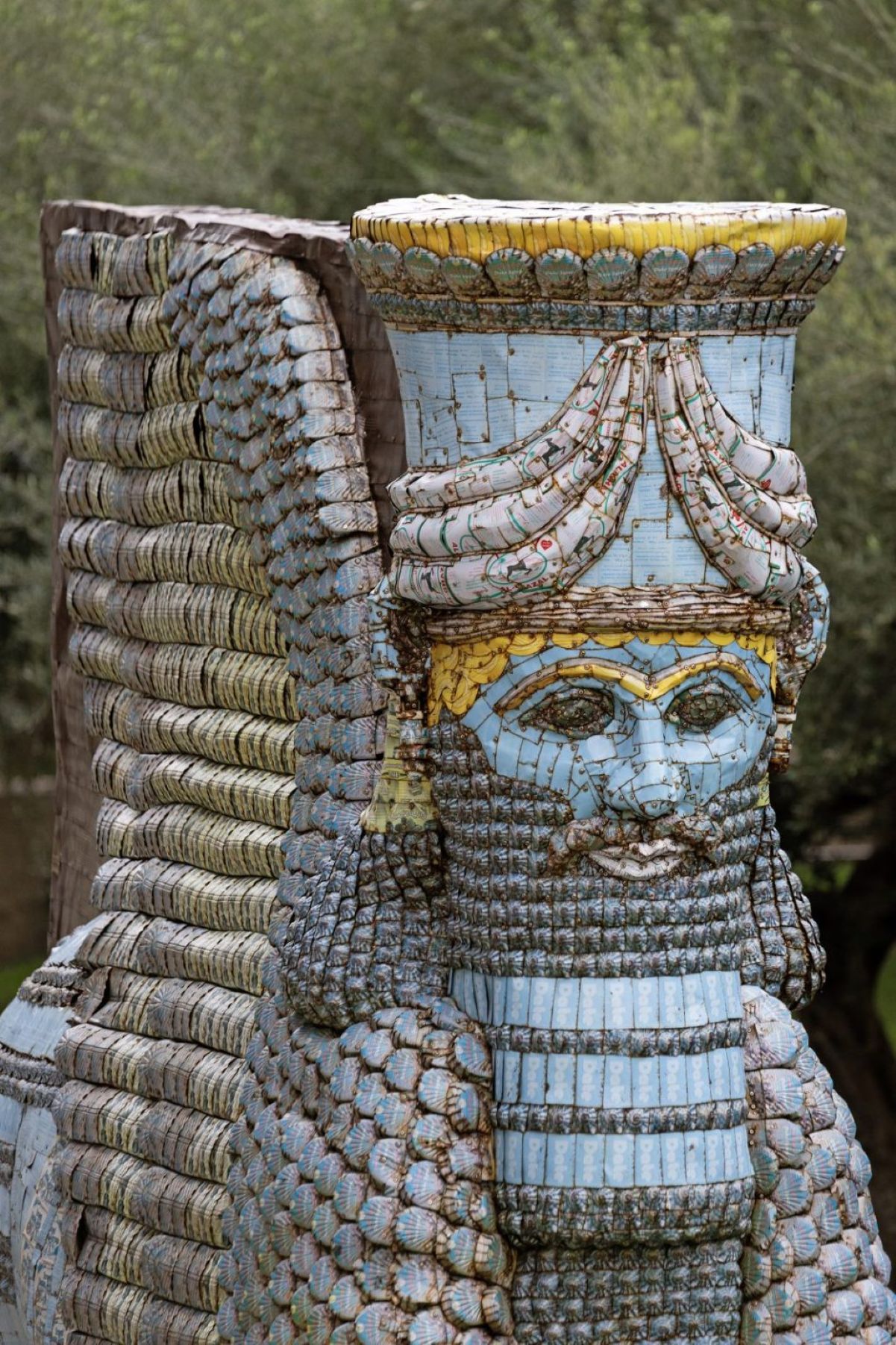
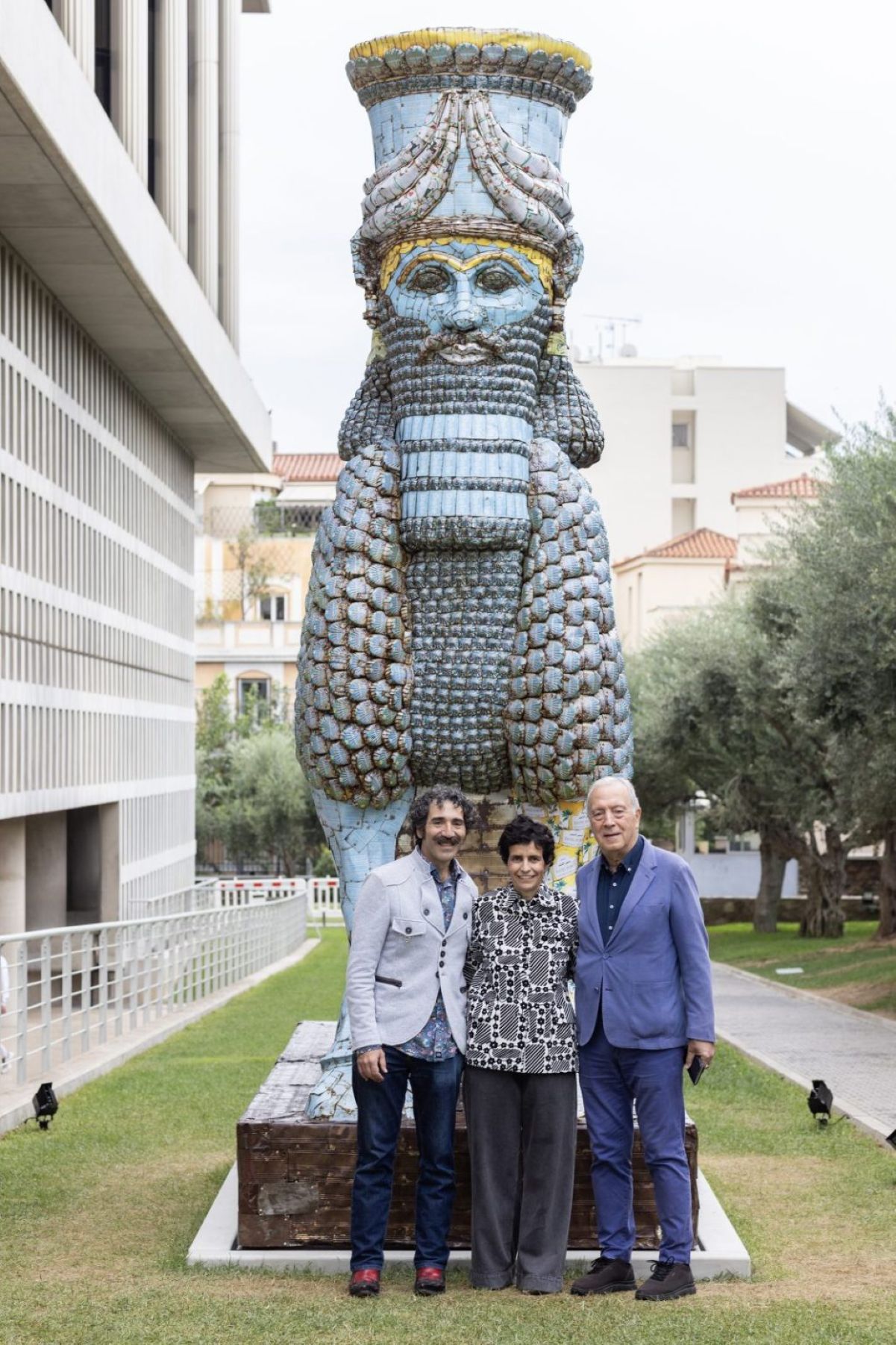
Visitors to the Acropolis Museum are now greeted, on its western side facing Mitsaeon Street, by an imposing Assyrian lamassu—a hybrid deity with the body of a bull, wings of an eagle, and human head. In Mesopotamian culture, lamassu figures were placed at palace gates as symbols of power, protection, wisdom, and freedom.
The work on display is not an ancient relic but a powerful reimagining: Michael Rakowitz’s Lamassu of Nineveh (2018), part of the artist’s long-running project The Invisible Enemy Should Not Exist. It commemorates one of the monumental statues destroyed by ISIS in 2015 during the group’s advance through Mosul, Iraq.
From London to Athens
Commissioned originally for the famous “Fourth Plinth” in Trafalgar Square, Rakowitz’s lamassu now takes on new life in Athens. “I had the chance to make a lamassu that stood not inside a museum, but outside, with its back to the museum, as if it were walking away with wings raised, looking southeast toward Nineveh, hoping to return,” the artist told reporters before the work’s unveiling.
Speaking of the Acropolis Museum, Rakowitz added: “This museum, for me, is one of the most important in the world. It is a beacon for all those countries striving to reconnect their people with their heritage. It is truly a lighthouse.”
Built from memory and loss
Unlike the original, Rakowitz’s lamassu is made from 10,500 empty date-syrup cans imported from Iraq. The choice is deliberate. The cans speak to the once-thriving Iraqi date industry, decimated by decades of war, sanctions, and ecological devastation. The artist first encountered the brand in a North Carolina grocery store owned by his grandparents, Iraqi and Indian immigrants who settled in the U.S. in 1947.
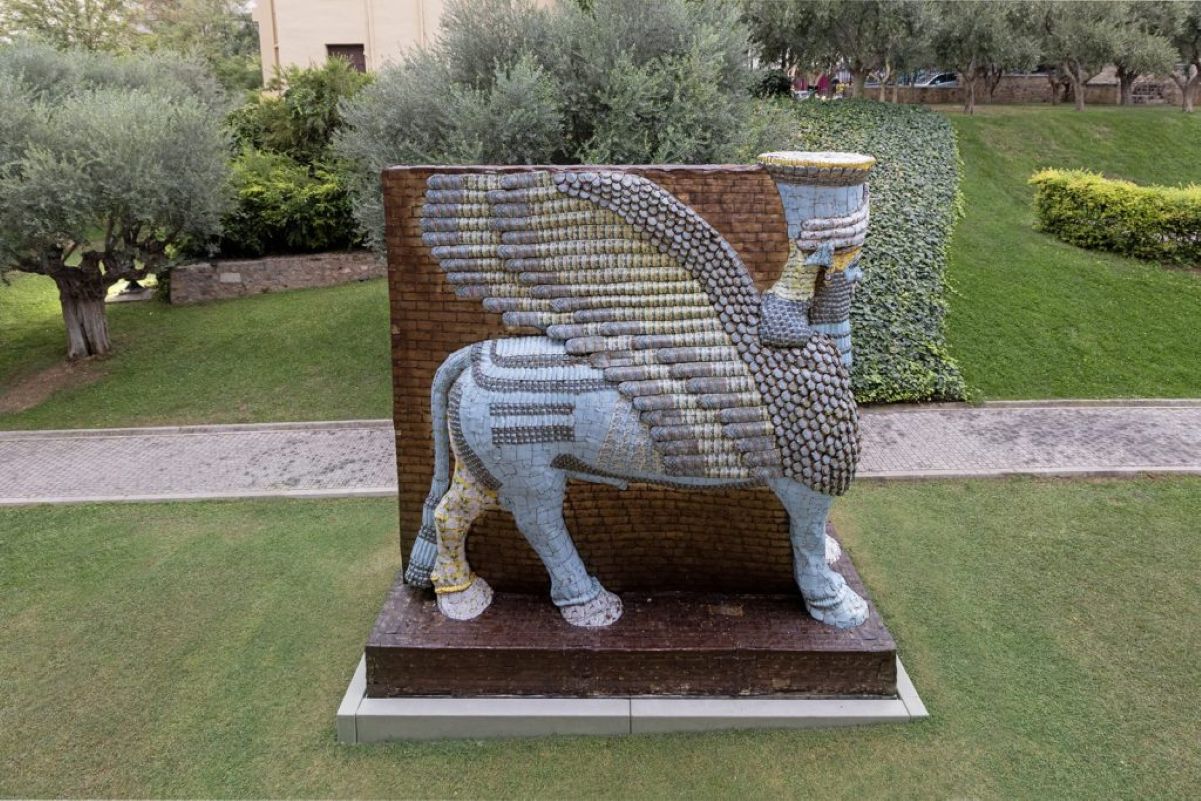
Through these everyday materials, Rakowitz connects cultural destruction to personal memory, weaving the story of displaced people, broken economies, and fragile legacies into the very fabric of the sculpture.
Dialogue with Athens
Standing 4.3 meters long, the lamassu occupies a striking position in the museum’s outdoor space. It engages not only with the modern architecture and the ancient ruins beneath, but also with the Acropolis rock and monuments looming above. In this layered dialogue, the Assyrian guardian resumes its ancient role—watching over the past, present, and future.