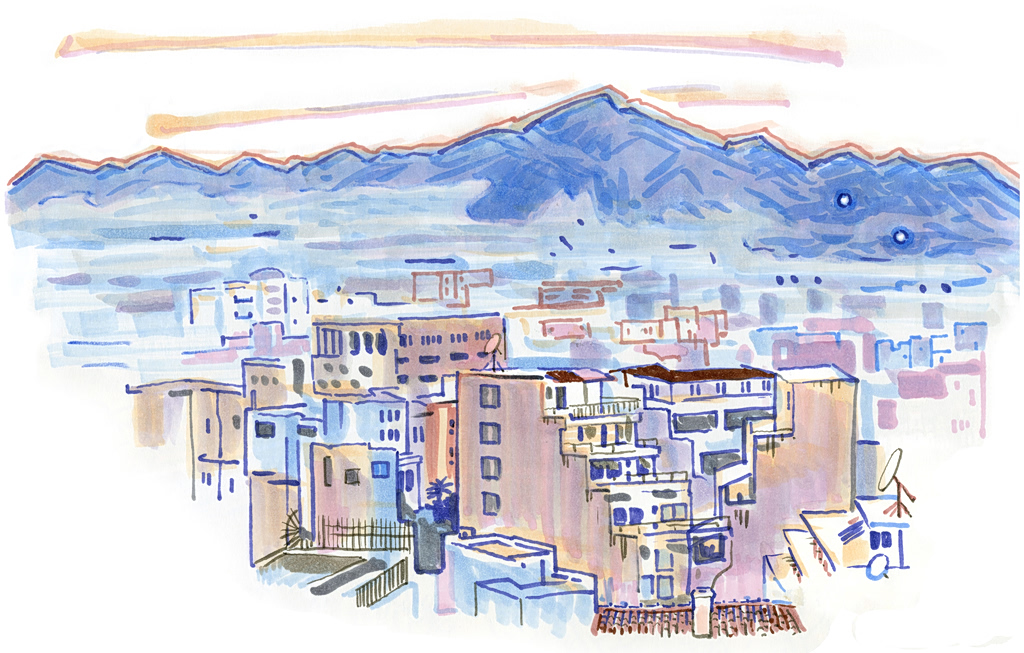
Greece’s culture ministry this week announced a major restoration and conservation project involving the remains of an 18th century Ottoma-era madrasa in the capital – the Athens medrese – located just off the north slope of the Acropolis and in one of the most historic locations of the Plaka old quater district.
What remains of the long-neglected site today is its central gate and a few areas of its exterior, originally formed around a rectangular courtyard with plane tree in the middle that reportedly doubled as a “hangman’s tree” for decades before being struck by lightning during WWI.
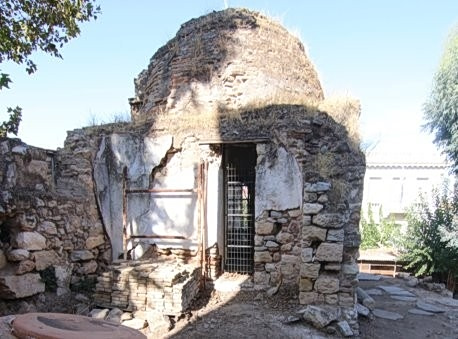
Photo credit: Culture Ministry of Greece
The project, in collaboration with the city of Athens’ antiquities department, aims to preserve and showcase the remains of the madrasa complex—a listed historical monument—as well as sections of a late Roman wall and ruins of previous historical periods located at the same site.
A madrasa (medrese in Ottoman Turkish) is a type of Islamic theological school. The specific institution was built in the 1720s, when a then sleepy village of Athens was under Ottoman rule.
The Athens medrese project has a total budget of 1.2 million euros.
Located at the intersection of Aiolou and Pelopida in Plaka, and within a short walking distance from the Roman Agora, the original building dates back to 1721, when it was built by a Muslim known as Mehmet Fahri.
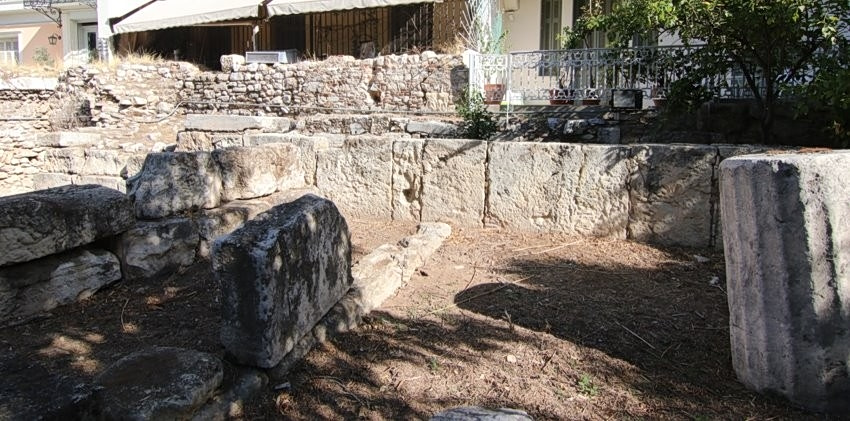
Photo credit: Culture Ministry of Greece
According to a culture ministry press release, the building was a characteristic example of early 18th-century Ottoman architecture and operated as a religious school until the outbreak of the Greek War of Independence in 1821.
Following the liberation of a rump of Greece, the complex underwent significant alterations. Between 1837 and 1850 it was reconverted into a prison, with additional structures and an extra floor added to its eastern wing. The site continued to function as a prison until around 1896.
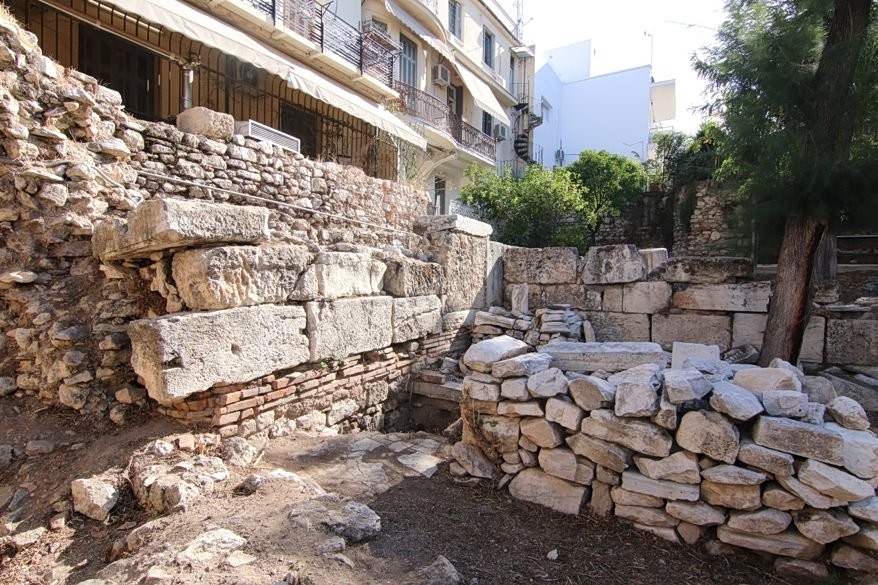
Photo credit: Culture Ministry of Greece
In the early 20th century, part of the complex was sold off, and the Lasanis House—now home to the Museum of Greek Folk Musical Instruments—was constructed on the east section. Excavations in 1914 led to the partial demolition of the remaining structures, revealing sections of the later Roman fortification wall, including a north–south axis segment crossing the property.
Today, only fragments of the medrese survive, and the site is used primarily for storage of inscriptions and architectural finds from the Roman Agora excavations.
Despite its historical significance, the monument is currently in a state of abandonment, with serious structural issues and extensive damage. Moreover, its original architectural layout is difficult to discern due to past demolitions, while makeshift shelters and scattered materials further obscure the site.
Authorities note that, in its current condition, the site cannot be opened to the public due to safety concerns.
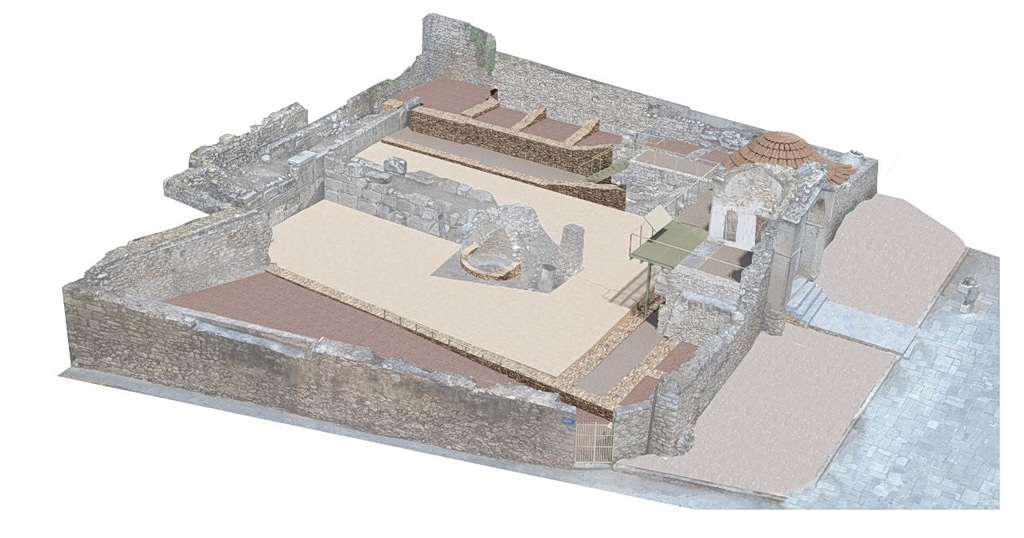
Photo credit: Culture Ministry of Greece
In a statement, Culture Minister Lina Mendoni noted that “…the medrese of Athens is a monument with a complex and multi-layered history. Despite its significance, it presents extensive structural and construction problems, material deterioration and difficulties regarding its presentation and accessibility. Its current state of abandonment, combined with safety and accessibility issues, makes the immediate implementation of protection and restoration measures necessary.

File photo: Greek Culture Minister Lina Mendoni reiterates Greece’s call for the return of the Parthenon Sculptures to their birthplace of Athens, during the 43rd session of the UNESCO General Conference. Photo: Greek Culture Ministry
“Its later use as a prison, in the early decades of the modern Greek state, was accompanied by significant interventions that altered its original architectural form, without, however, diminishing its importance and potential. Our goal is to highlight the remains of the building complex so that its original layout and function become understandable and legible. Particular emphasis is placed on creating a comprehensive visitor experience that showcases the medrese’s historical evolution, as well as its coexistence with earlier archaeological remains, offering visitors a complete understanding of the site’s history over a long period…”