Twenty years after the passing of George Zongolopoulos, one of Greece’s most influential sculptors and painters, Sianti Gallery pays tribute to his artistic legacy with a major exhibition titled “George Zongolopoulos – Unity and Multiplicity.” Organized in collaboration with the George Zongolopoulos Foundation, the exhibition opens tonight, October 10, at Sianti Gallery in Athens.
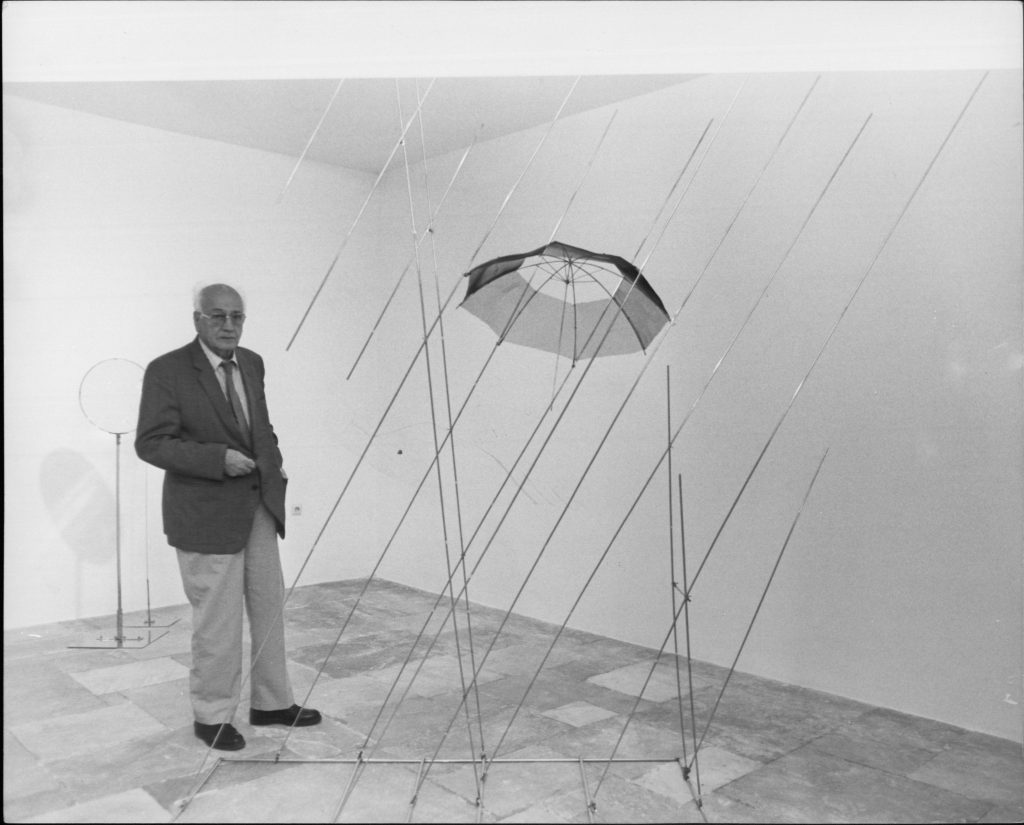
Zongolopoulos (1903–2004) was a defining figure in 20th-century Greek art — an artist who believed that sculpture belonged not only in museums, but in the rhythm of everyday life. From his monumental interventions in Omonia and Syntagma Squares to The Dance of Zalongo and the now-iconic Umbrellas in Thessaloniki, his work transformed public spaces into sites of reflection, movement, and poetry.
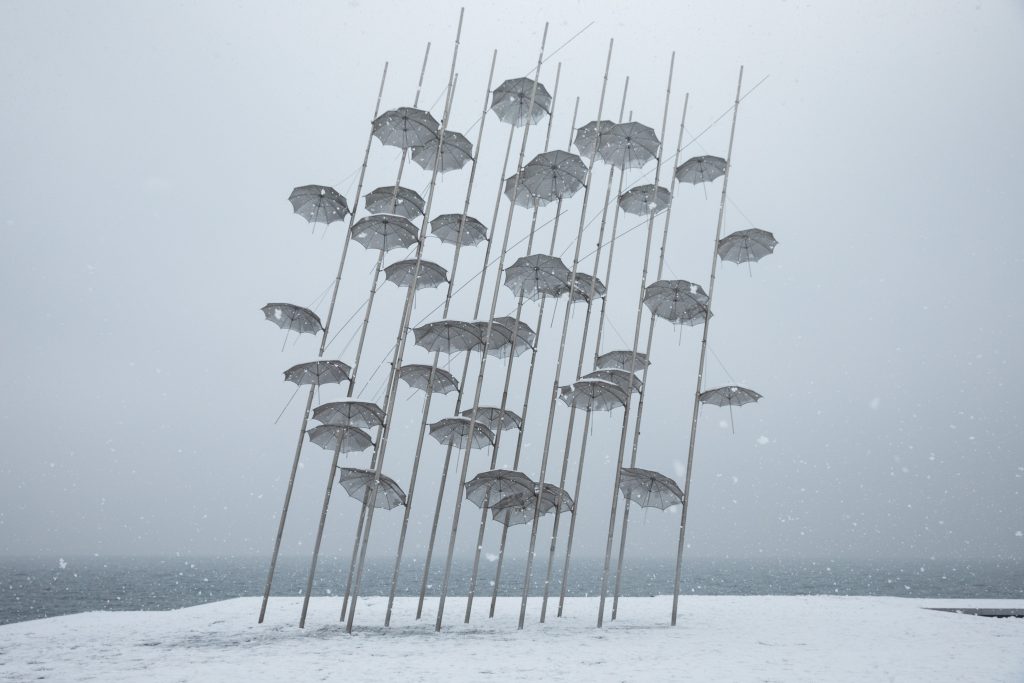
Zongolopoulos “Umbrellas’ at the Thessaloniki waterfront during snowfall on January 9, 2019.
As curator Thanassis Moutsopoulos notes, “Zongolopoulos played a pivotal role in establishing abstraction in Greece.” A member of the Generation of the ’30s, he continuously renewed his visual language over eight decades — a restless spirit that earned him the nickname “the eternal adolescent.” His art often drew upon historical and social themes, while always seeking the balance between freedom, structure, and innovation.
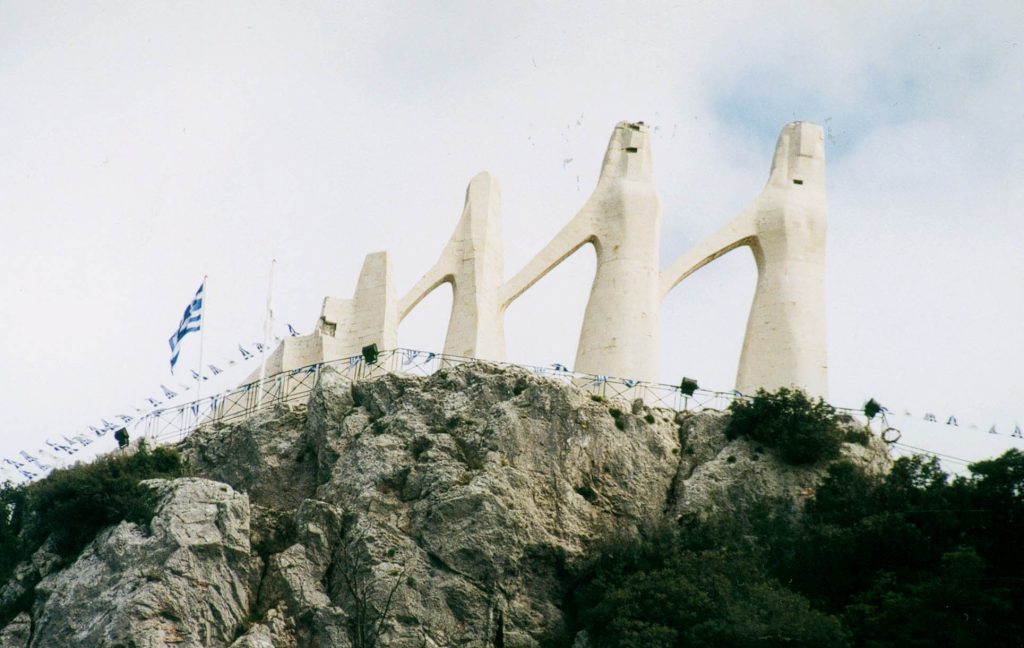
The Zalongo Monument, north of Preveza honors the dozens of women from Souli, Epirus, who, chose death over capture during Ottoman rule in 1803. Trapped in the Zalongo region, they bravely linked hands and began a dance at the cliff’s edge, leaping one by one with their children in a profound act of self-sacrifice. The monument was completed in 1960 and unveiled on June 10, 1961, in the presence of King Paul and Queen Frederica.
A Journey Through Form and Motion
The exhibition “Unity and Multiplicity” traces Zongolopoulos’ artistic evolution — from the strict geometric compositions of the 1960s to the luminous, water-driven kinetic sculptures of the ’70s and ’80s. Alongside large-scale works, the show features lesser-known paintings, small-scale sculptures, and multiples that reveal the breadth of his creative universe.
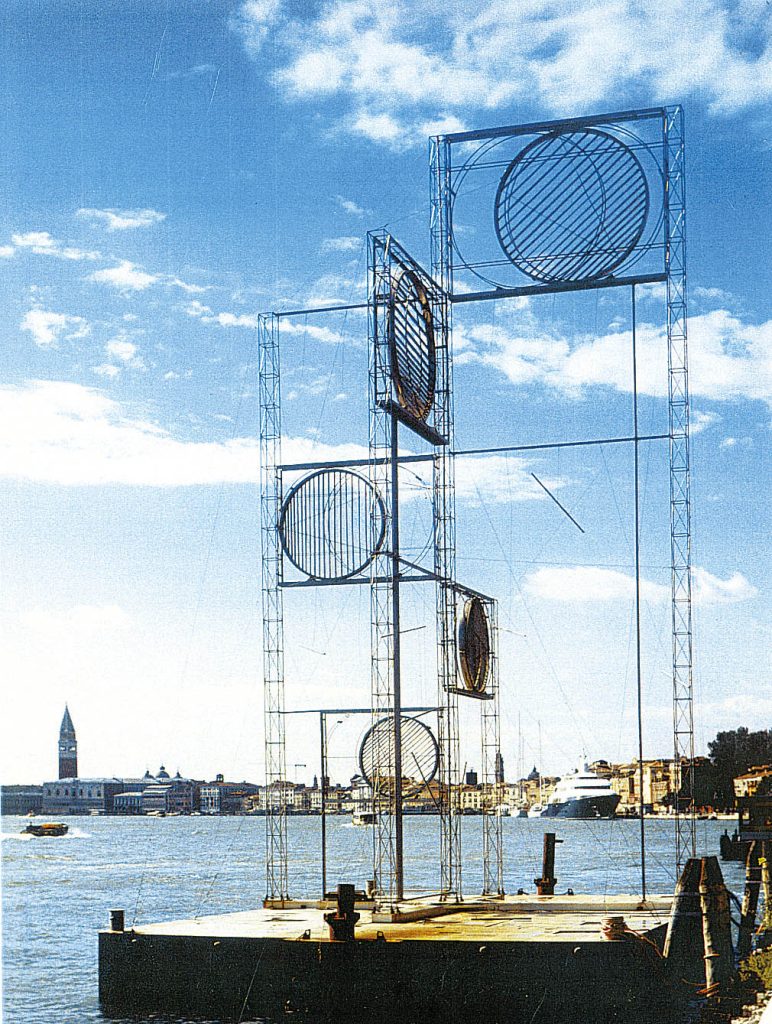
In 2001, Zongolopoulos created the kinetic water sculpture “Pentacycle”, marking his final participation in the Venice Biennale. The work is now on display at Omonia Square in central Athens.
For Sianti Gallery, this exhibition is both a tribute and an invitation — to reconsider Zongolopoulos’ relevance today and to reflect on the enduring dialogue between art and the urban environment. “He was a creator who transformed freedom, courage, and perpetual inquiry into form,” the gallery notes.
An Artist Without Borders
Zongolopoulos’ works can be found in public and private collections across Greece, Europe, and the Americas. He represented Greece eleven times at the Biennale (1940–2001) and participated in numerous international exhibitions. Among his most recognizable public works are The Umbrellas — awarded first prize in a pan-European competition and permanently installed at the EU Council building in Brussels and on the Thessaloniki waterfront — Tel-Néant at the OTE building and the Presidential Mansion gardens, the Olympic Circles at the National Glyptotheque, Atrium at Syntagma Square, and the hydrokinetic Pentacycle at Omonia Square.

Zongolopoulos “Atrium” at Syntagma square.

1995, George Zongolopoulos, Council of Europe, Brussels/ Zongolopoulos Foundation via Wikimedia Commons.
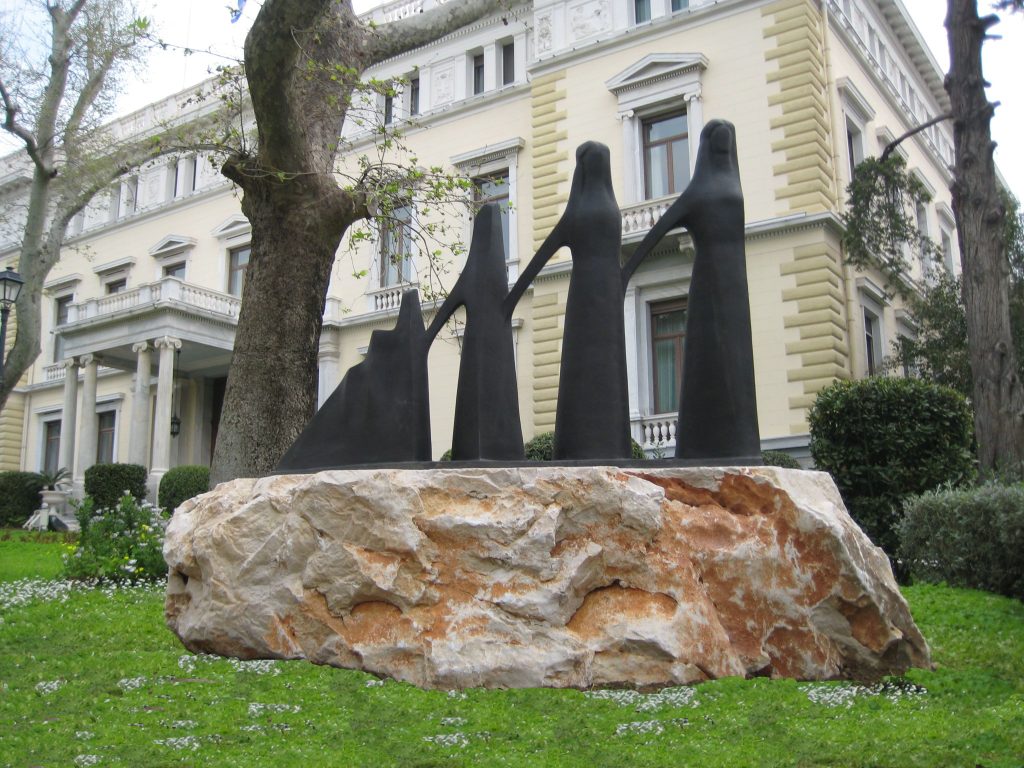
The “Dance of Zalongo” monument, also featured at the Presidential Mansion.
The Legacy Lives On
In 2004, shortly before his passing, Zongolopoulos founded the non-profit George Zongolopoulos Foundation, donating the entire body of his and his wife, Eleni Paschalidou-Zongolopoulou’s artistic work, as well as his personal archive of sketches, writings, and audiovisual materials. Today, their home and studio in Psychiko — where they lived and created for over 60 years — serves as the Foundation’s headquarters and an open space for the public to engage with his legacy.
Exhibition Information
Opening: Friday, October 10, 2025, 7 p.m.
Sianti Gallery, 2 Vass. Alexandrou, Athens (Hilton area, behind the National Gallery)
Visiting hours:
- Tue, Thu, Fri: 10:00–20:00
- Wed: 10:00–15:00
- Sat: 10:00–16:00
- Sun & Mon: Closed
For more info please visit the gallery’s official website here: www.siantigallery.com