Greece’s economy faces a significant test today, Friday, September 18, as Moody’s and Scope Ratings prepare to release their latest assessments of the country’s creditworthiness. The focus this time has shifted: rather than whether Greece can reclaim investment-grade status—already achieved—the question now is whether the country can climb still higher on the ratings ladder, a prospect that looks increasingly challenging amid severe geopolitical turbulence and sharply rising energy costs.
The two reviews carry different stakes, reflecting each agency’s distinct starting point.
For Moody’s, attention centers on whether the agency will signal its next move, either through an upgrade or a shift in outlook. Moody’s remains more cautious than its peers, still holding Greece at Baa3. The agency recently trimmed its growth forecast for the Greek economy to 1.7% for both 2026 and 2027, down from a previous estimate of 2.1%. Despite that downward revision, Moody’s has flagged several positives: strong fiscal performance, low debt-servicing costs, limited borrowing needs, and sustained primary surpluses.
Scope Ratings presents a different picture. Its positive outlook implies that, over the next 12 to 18 months, the risks to Greece’s rating are seen as tilted more toward the upside than the downside. Scope has made clear that a sustained and substantial decline in the debt-to-GDP ratio, combined with continued primary surpluses, could pave the way for a higher rating.
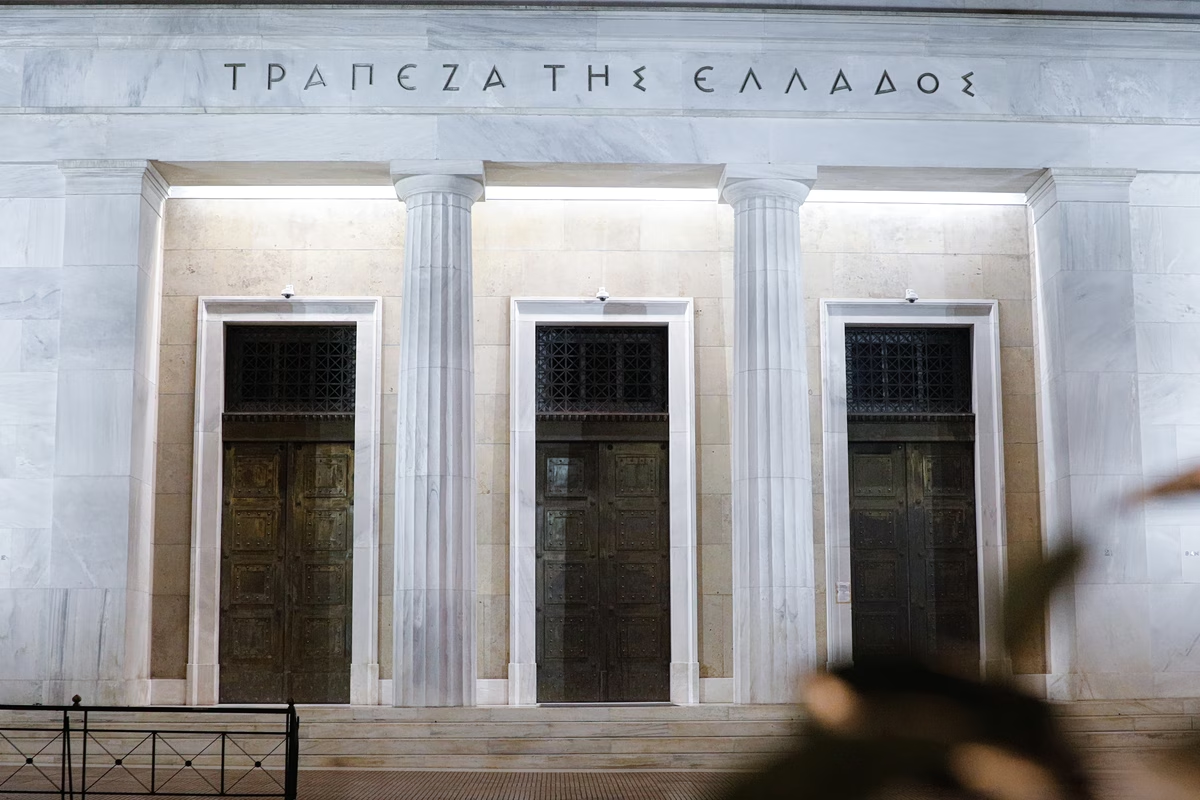
Greece’s core argument rests on rapid debt reduction: the Bank of Greece reports debt-to-GDP fell to 146.1% in 2025 from 154.2% in 2024, the largest drop in the EU, with a primary surplus of around 3.2% of GDP expected to hold in 2026. Early debt repayments further ease future obligations, while growth is projected at 1.9% in 2026-2027 and 2% in 2028, outpacing the eurozone, alongside a strengthening banking sector.
Still, agencies flag persistent weaknesses: debt remains very high despite the decline, alongside low productivity, demographic pressure, a current account deficit, and uncertain medium-term growth. This year adds a new external risk—Middle East geopolitical tension and its impact on energy prices.