The International Monetary Fund has lowered expectations for Greece’s economic growth below the government’s targets while sharply raising its inflation forecast. The energy turmoil is now leaving a clear mark on the outlook, with the IMF expecting higher energy costs, pressure on consumption and weaker momentum for gross domestic product.
In its World Economic Outlook, the IMF forecasts growth of 1.8% for Greece in both 2026 and 2027. The government’s draft budget, by comparison, projects the economy will expand by 2% this year and 2.3% in 2027.
Inflation
The biggest warning comes on the inflation front. The IMF expects inflation in Greece to rise to 4.2% in 2026 from 2.9% in 2025, reflecting the spread of higher energy costs across an increasingly broad section of the economy.
For 2027, the Fund forecasts inflation will ease to 3.6%, a level that would still leave significant pressure on household incomes and purchasing power.
The government is more optimistic. Its draft budget estimates that the consumer price index will rise by 3.8% this year before slowing to 2.6% in 2027. For the harmonized index of consumer prices, the corresponding forecasts are 3.6% and 2.4%.
In any case, the duration and intensity of the energy turmoil will determine both the trajectory of prices and the scale of any additional support measures that may be required in the coming period.
Government Measures
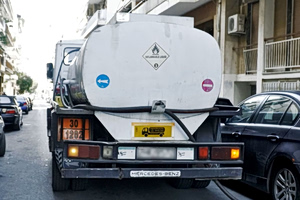
The first package of measures aimed at addressing high energy costs is set to be announced on Wednesday, with measures covering heating oil and diesel fuel in an effort to limit the burden on households and businesses.
Brent crude traded above $106 a barrel on Monday, intensifying concerns about another round of fuel price increases and knock-on pressures on transportation, goods and services.
Labor Market
The IMF offers a more positive outlook for Greece’s labor market. The Fund forecasts unemployment will fall to 8% in 2026 and 7.6% in 2027, compared with government estimates of 8.4% and 7.9%, respectively.
The faster decline in unemployment is the positive side of the IMF’s projections, although it would not be enough on its own to offset the loss of real income caused by higher prices.
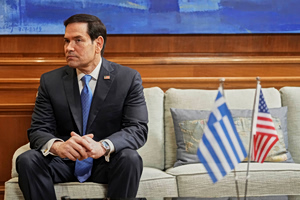
The new forecasts are being presented during the annual meetings of the IMF and World Bank in Bangkok. Greece is represented by Minister of National Economy and Finance and Eurogroup President Kyriakos Pierrakakis, with energy security, fiscal resilience and the outlook for the global economy at the top of the agenda.