Global energy markets are bracing for a major shock after QatarEnergy’s chief executive warned that Iranian attacks have significantly disrupted the country’s liquefied natural gas (LNG) production, putting critical supplies to Europe and Asia at risk for years.
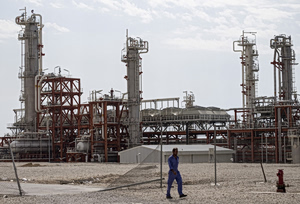
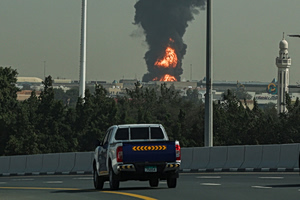
In an interview with Reuters, QatarEnergy CEO Saad al-Kaabi said the strikes on Ras Laffan have knocked out 17% of Qatar’s LNG export capacity, sidelining 12.8 million tons per year for an estimated three to five years. The damage includes two of the country’s 14 LNG production trains and one gas-to-liquids facility.
The financial impact is substantial. Al-Kaabi estimated annual revenue losses could reach $20 billion, underscoring the scale of the disruption to one of the world’s most important energy exporters.
“State-owned QatarEnergy may have to declare force majeure on long-term contracts for up to five years for LNG supplies bound for Italy, Belgium, South Korea and China due to the two damaged trains,” al-Kaabi told Reuters.
Such a move would mark a rare and serious disruption from a supplier widely regarded as one of the most reliable in global gas markets, raising serious concerns about how quickly importing countries can secure alternative supplies. Europe, still trying to wean itself off Russian gas wiil face renewed competition for cargoes and will experience difficulties when trying to refill its gas storage tanks this summer.
Ripple Effects Across Energy Products
The fallout extends well beyond LNG. QatarEnergy expects condensate exports to fall by about 24%, while liquefied petroleum gas (LPG) output will decline by 13%. Helium production is set to drop by 14%, with smaller decreases in naphtha and sulphur output.
The damaged infrastructure, which cost approximately $26 billion to build, represents a critical part of Qatar’s broader energy system.
U.S. oil major ExxonMobil, a partner in the affected facilities, also faces exposure. The company holds stakes of 34% and 30% in the two damaged LNG trains, highlighting the international reach of the disruption.
A Strategic Hub Under Threat
The Iranian attacks on Wednesday night and Thursday morning targeted infrastructure linked to Ras Laffan, the world’s largest LNG production hub.
In normal conditions, roughly one-fifth of global LNG supply flows from the site, according to the Financial Times. Built over decades at a cost of hundreds of billions of dollars, Ras Laffan is central to Qatar’s role as a cornerstone of global energy security.
Analysts note that Qatar’s annual gas production — about 110 billion cubic meters — is comparable to the volume Europe lost following the sharp decline in Russian pipeline supplies. The comparison has intensified concerns about a renewed global energy crunch.
Some analysts have described the situation in stark terms, warning of an “Armageddon” scenario for LNG markets if disruptions persist, according to the Financial Times.