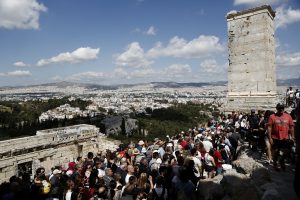
The “The Café Economy” is the title of the latest study by the Hellenic Observatory at the London School of Economics (LSE), referring to the dominant role of the accommodation and food service activities (AFSA) sector in Greece’s post-bailout era.
The study details how the sector, which all tourism, travel and entertainment-related business activity (including short-term rentals) has expanded and dominated the economy.
The study highlights the point that oft-repeated pledges of major investments and a change in the “development model” have not panned out in the country over the past few decades, leaving a growth model based on “feet of clay” since the first bailout.
Greece: Uneven tourism growth and collapsing productivity
The “Café Economy” study purports that promised productivity hikes through the memorandum-mandated reforms did not materialize, instead the economy experienced a decrease in labor productivity and a redistribution of employment toward low-productivity sectors, particularly AFSA.
The study was authored by Michalis Nikiforos, Vlassis Missos, Christos Pierros and Nikolaos Rodousakis.