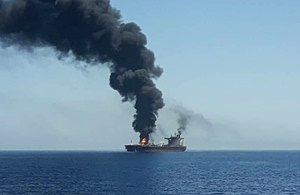
Strong pressures are hitting maritime transport due to the explosive rise in shipping fuel prices, a direct consequence of the war in the Middle East.
In just one week, the primary fuel for ships (MGO) jumped over 36%, raising serious concerns in the market and reopening discussions about potential increases in ferry ticket prices if the upward trend continues.
Since the beginning of the year, MGO has risen from $676 per ton (on December 31, 2025) to $1,089 per ton last Friday, marking a 62% increase.
Maritime Transport and Rising Fuel Costs
Fuel costs have also risen sharply compared to last May, when Shipping Minister Vassilis Kikilias managed to keep ferry ticket prices stable by cutting port fees by 50%. At that time, MGO fuel stood at $684 per ton, meaning it has since risen approximately 60%.
For now, ferry companies have not raised ticket prices, with the Shipping Minister acknowledging that companies face significant cost pressures.
As Mr. Kikilias stated on Saturday on the show Mega Weekend, responding to speculation about summer ticket price increases: “So far, there have been eight days of conflict, and no one can predict how long this war will last. There is pressure, and already—as you correctly mentioned—the price of a barrel of oil has risen to $91.”
Experts estimate that if the Strait of Hormuz remains closed for a month, the price could reach $100 per barrel. We will see how quickly it might ease.
“The Greek government, as it has done in all crises from the pandemic until today, is here to assist and support. But this will be done carefully and systematically. It is a critical and difficult moment. De facto, oil prices have increased. The Greek state and the government of K. Mitsotakis, across all major sectors of the economy affecting Greeks, have proven in the past that they support citizens, and I believe the same will happen now.”
Ferry Tickets and Potential Price Increases
He also noted that “maritime transport is a top priority for the government and the Ministry of Shipping.”
Mr. Kikilias reminded the public of last year’s policy regarding ticket prices, emphasizing: “Last year, for the first time after seven consecutive years of increases—totaling +48%—the market announced a planned increase of +15%, which never happened because we reduced port fees, negotiated with the market, offered discounts of up to 32%, and tourism thrived.”
Scenarios for a Fuel Surcharge
Ticket price increases or the imposition of a fuel surcharge are now being considered as potential solutions by ferry company management if the upward fuel trend continues.
A fuel surcharge, which is removed once fuel prices fall below a certain level, is a practice widely used by international shipping and ferry companies during periods of sharp fuel price increases, as it is a transparent process.
In Greece, a fuel surcharge has been applied in extreme conditions on Adriatic routes. However, in domestic ferry transport, there is currently no appropriate legal framework for its imposition, as freight rates and ticket prices are linked to all third-party levies.
A surcharge would be applied “clean,” without additional levies, which under current rules is not possible. However, according to ferry industry sources, it could serve as a fair solution if fuel prices continue to rise.