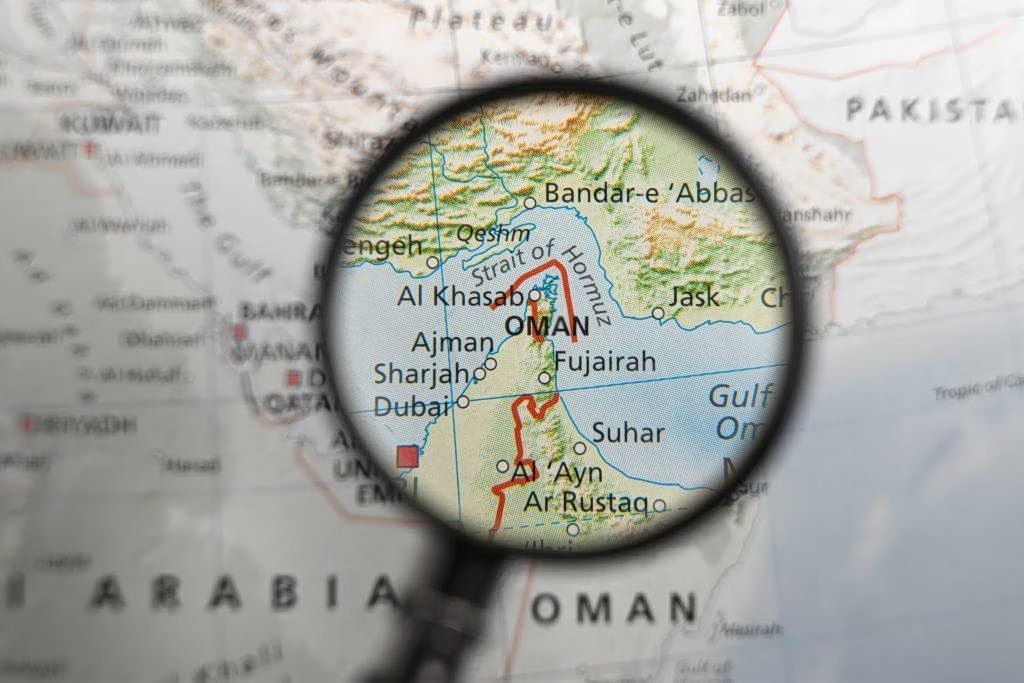
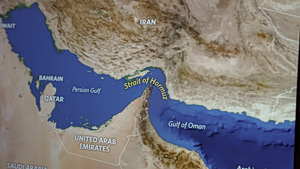
When US and Israeli strikes on Iran shut traffic through the Strait of Hormuz, Brent crude surged above $100 per barrel and LNG spot prices in Asia and Europe more than doubled following force majeure at Qatar’s Ras Laffan. Greek tanker owners, controlling 30 percent of the world’s oil tanker fleet and 25 percent of LNG carrier capacity, were directly exposed. The lesson of the past two weeks is not subtle: an industry structurally dependent on fossil fuel chokepoints is an industry with a chronic vulnerability.
Into this context steps the IMO Net-Zero Framework (NZF), scheduled for delayed adoption in October 2026: the first proposed binding global carbon price for any industrial sector. Greece has an outsized influence in the maritime world, controlling 16.4 percent of global deadweight tonnage. And yet at the extraordinary MEPC session in October 2025, Greece was not among the 49 states that voted to proceed. Its break with the EU, along with Cyprus, was unprecedented for the country. Despite its early support in April 2025, it backtracked on its commitment after United States resistance to the deal. There is a clear economic case for now reversing course, back to four years ago when the Greek Prime Minister had declared his intention for Greece to be the global leader in maritime decarbonization.
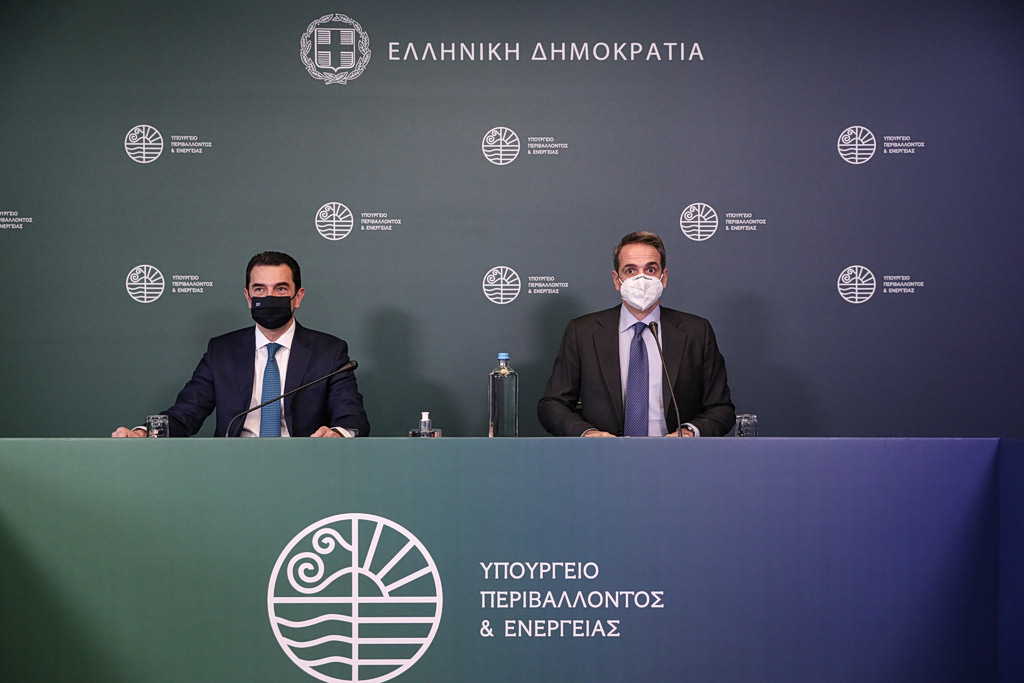
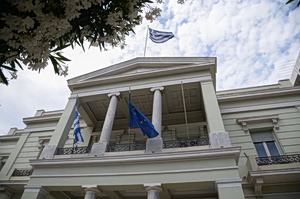
Meeting chaired by Prime Minister Kyriakos Mitsotakis at the Ministry of Environment and Energy, Athens, January 25, 2021.
Global shipping burns around five million barrels of oil a day and produces annual emissions roughly the size of Japan’s. Since the war in Iran, bunker prices in key hubs have nearly doubled. Owners are already paying a premium for volatile fossil fuels with no certainty about where prices go next. The single most effective way to bring alternative fuels- green ammonia and methanol- down the cost curve is a clear, binding regulatory signal that mobilizes capital at scale and ensures demand. Without the NZF, few commercial lenders would finance a green bunkering terminal on a viable timeline, and few producers would commit capacity to a demand signal that may never come. Importantly, the revenue generated by its carbon pricing mechanism would be recycled to fund alternative fuel development, directly working to bring costs down.
In this month’s IMO’s MEPC meeting, Greece has a chance to demonstrate its leadership on the issue. This comes from not only it’s large influence in the maritime world, but also because of its geopolitical and diplomatic standing. There is an opportunity for the country to serve as a bridge between the EU and the US, where it shares an unusually good transatlantic relationship from energy to defense. Relations with Saudi Arabia, the other leader in the petrostate camp, are also remarkably productive, for example agreeing to recent energy projects such as the intercontinental electricity cable. Playing that bridging role would give Greece more influence over the final shape of the framework than digging in against it. Most importantly, it would re-align itself with the rest of EU.
The concerns of the framework’s potential costs are real, yet misplaced. The EU Emissions Trading System has applied to maritime shipping since January 2024, and from this year the obligation reaches 100 percent of covered emissions. US International Trade Commission modelling puts average annual ETS exposure per tanker around $1 million by 2026. Comparing this to the potential $2 million toll in the Strait of Hormuz, not including higher insurance premiums, shows how a long-term reliance on fossil fuels proving to be more costly. Opposing the IMO Net-Zero Framework does not remove current economic obligations. It ensures they remain unilateral, borne by European-port-exposed owners without any corresponding burden on the rest of the world fleet. It becomes a competitiveness issue.
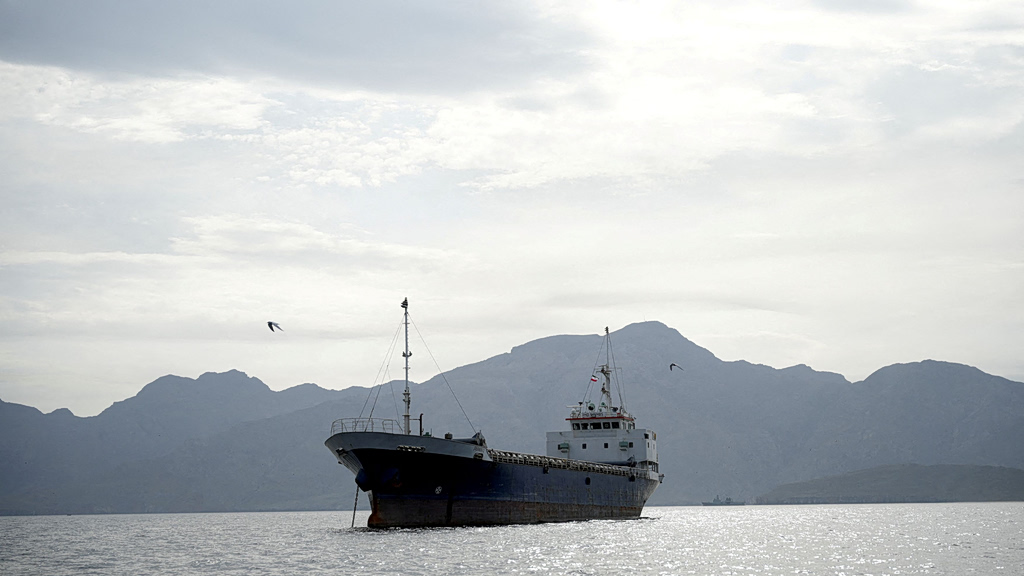
A vessel in the Strait of Hormuz, off the coast of Oman’s Musandam province, April 12, 2026. REUTERS/File Photo
Greece’s objection that the framework treats LNG unfairly in its well-to-wake lifecycle accounting should be addressed. At present, LNG can be used as a bridge fuel until alternative fuels are more affordable but should have a clear end date. The well-to-wake GHG conversion factors, including methane, that determine LNG’s compliance value are not yet finalized and should be grounded in science with a clear decarbonization path.
Global regulation provides stability that has inherent value. A fragmented landscape of regional obligations with uncertain policies across the years creates incentives for carbon leakage and port substitution that increases compliance complexity without reducing emissions. Mediterranean ports are most prone to substitution, for example calling in Algeria instead of Greece or Spain. Last month, 87 firms across the maritime value chain called for the global policy to be adopted, for the precise reason of predictability and stability.
Greece has the renewable resources, port infrastructure, and geography to become a primary bunkering hub for a decarbonizing fleet, while plugging directly into the green corridor now being built between Rotterdam and Singapore. This would diversify the Greek economy, create high-skilled jobs and innovate the country’s shipping sector for generations. With affordable alternative fuels, local air quality would dramatically improve from cleaner ferries that are ubiquitously used around the country.
The MEPC meeting on 27 April is not the last word. But it is the moment for Greece to reverse course, back the Net-Zero Framework, and use its weight to bring others with it. The energy transition is happening; it is better to act earlier and ensure the regulation is in place to allow for the most cost-effective transition. Otherwise, Greek shipping will spend the next two decades defending an old business model rather than building the next one.
Dr. Zissis Marmarelis is a Stavros Niarchos Foundation Academy Fellow at Chatham House. He completed his PhD in Energy Policy & Economics in 2025 at the University of Southern California, where he also obtained his B.S. in Engineering. His work has been published in Nature Sustainability & Nature Communications, as well as Chatham House Expert Comments. His research interests lie in geopolitics, energy markets, and environmental policy.