The architects of the European vision did not have in the back of their minds that the Union might one day be called upon to fight a war. On the contrary, the driving force behind the project was the safeguarding of long-term peace. Almost eight decades later, and as the first large-scale armed conflict on European soil since 1945 rages on, the “27” are compelled to answer the most critical—indeed, for many existential—questions in their history: Is the European Union (EU) capable of standing its ground in the new world that is emerging? Can it become defensively autonomous without the support of the United States? What will happen if Russia’s next target is one of its members?
The Military Schengen and the Undeclared War
Last Wednesday, the European Parliament took a first tangible step toward common defense. It approved the report on “military mobility” within the framework of the EU strategy aptly titled “Readiness 2030.” This constitutes one of the three pillars of the European project for defense autonomy. The other two are the well-known SAFE program and the massive ReArm initiative, amounting to €650 billion. Both concern the rearmament of member states through their own resources as well as borrowing.
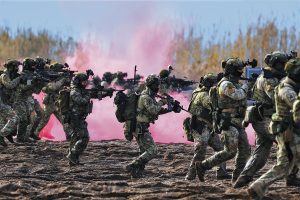
“Readiness” refers to the creation of a military Schengen area, within which European forces could move to the eastern borders within a few days, without bureaucratic obstacles. Implementing Readiness requires upgrading infrastructure (roads, railways, airports, ports). Through this route, defense spending is cloaked in the guise of development projects, so that at least some skeptics might consent to increased defense budgets.
“Today, it takes 45 days for a tank to travel from Paris to Budapest,” an MEP joked on the sidelines of the plenary session. In short, the EU is currently unable to respond effectively to a threat against its territory. But the problems do not stop there. Europeans lag behind in cybersecurity and technology, while under current conditions interoperability—and thus joint action—among the armed forces of the “27” is impossible.
“We are in the midst of an undeclared war—not on the battlefield, but through cyberattacks, drone flights over airports, and public disinformation campaigns,” an official of the European People’s Party (EPP) tells To Vima. “We lack a common command structure, an intelligence network, and an arsenal to confront hybrid threats. Will the Union ever be able to appoint a Chief of Defense?” he asks.
The Stakes of Unity
Most crucially, however, amid this multifaceted crisis, Europeans are not united. They respond slowly and ineffectively to challenges. “Can we find the necessary unity? For example, contributions to NATO defense targets still differ significantly between eastern countries and Mediterranean ones, such as Spain,” notes Riho Terras, Estonian vice-chair of the European Parliament’s Committee on Security and Defense. “Democracy is painfully slow in its decision-making. It may require titanic diplomatic efforts for member states to act in the same direction. Look at the example of the ‘frozen’ Russian assets,” he adds.
“Do we have a common enemy?” asks New Democracy MEP Fredis Beleris, highlighting the differing wavelengths within the European Parliament—and thus among voters—not only between political groups but also across states. “Former Eastern Bloc countries are pushing hard for a more active response to the Russian threat. But not everyone shares this logic. It is roughly the same with Turkey. Not everyone sees it as a dangerous neighbor,” he adds. As a member of the Left group explains, “on foreign and defense policy issues, we are now divided along a North–South axis.”
According to PASOK MEP and Committee member Yannis Maniatis, major crises drive the EU toward structural change. “The dangerous shift in US foreign policy, the war in Ukraine, and the rise of revisionist forces in the Eastern Mediterranean are the wake-up call that will mobilize us. The sooner we grasp the new geopolitical reality, the faster Europe will adapt,” he says.
SYRIZA MEP Nikolas Farantouris, also a Committee member, identifies a strategic deficit. “Europe must first clarify which threats each member faces and establish operational mechanisms to safeguard territorial integrity and sovereignty—first and foremost for Greece and Cyprus,” he argues. “Inertia and strategic reliance on third parties relegate the EU to a secondary power. What are we defending, what are the national interests of each state, and how do they connect to a common strategy? If these questions are answered, the EU can become a strong pole on the international stage,” he adds.
Internal Divisions
When Russia invaded Ukraine, Europeans awoke (perhaps) from two major illusions: cheap energy and the certainty that the United States would always stand by them. This was stated by German Chancellor Friedrich Merz a few days ago before the EPP presidium. Germany’s return to a rearmament policy is indeed striking. While ReArm, conceived and implemented by Commission President Ursula von der Leyen, may have found its potential locomotive, not all Europeans are on the same page. Many find the notion of an “existential threat” exaggerated. They do not believe they are living under an illusion, and they consider the €650 billion earmarked for defense (armaments, strengthening the European defense industry, technology, intelligence networks) unrealistically high.
“This is preparation for war against Russia,” was an argument repeatedly heard from the benches of the Left, a few Greens, very few Social Democrats, and isolated far-right figures. The EU must remain a “peace project,” Maniatis stresses. “It is pointless to increase defense spending while simultaneously reducing the resilience of our societies,” he argues, proposing the creation of a new European Sovereignty Fund through joint borrowing.
“Escalating arms races increase tension and the risk of ‘accidents.’ Before transforming into a war machine against potential enemies, the EU should remember that there is an occupying army on European soil—in Cyprus—and demand its withdrawal,” Farantouris argues. A Left group interlocutor warns of the risk that the initiative may simply become a mechanism for transferring resources to purchase American arms and deploy forces only to the eastern borders. “Today, 80% of our armaments come from third countries, mainly the US,” Maniatis reminds us. “The challenge—and the opportunity—is to reverse these percentages by increasing European industrial participation,” he notes. “We have the resources to become a global superpower. With the war in Ukraine, we are discovering our true capabilities,” adds Terras.
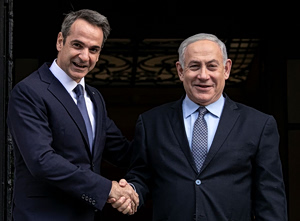
The one-sided focus on guarding the eastern borders has been repeatedly highlighted by Athens, with Kyriakos Mitsotakis regularly stressing the need to prioritize actions such as advancing the project of a European anti-missile shield. But the discussion cannot be limited to these issues. The central question concerns the philosophy of the member states: Are Europeans willing to cede a greater share of their sovereignty to Brussels? Because ultimately, that is what this is about. If the answer is “no,” then the vision of common defense is the next great illusion. In any case, tangible results should not be expected before 2030. By then, the situation may be different.