The Thessaloniki International Fair (TIF) wound to a close for another year without mishaps or surprises. The polls conducted since have simply confirmed that nothing changed over the summer with regard to the relative support for the main parties.
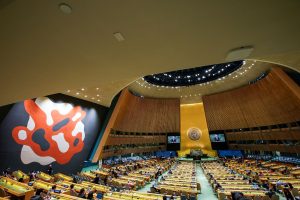
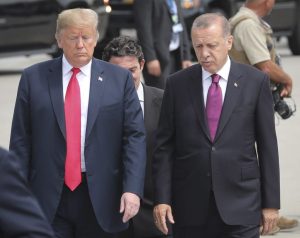
And so the Prime Minister will be in New York from tomorrow for the UN General Assembly—at which, it’s been announced, he will also be meeting with President Erdogan.
One thing is certain: their meeting won’t be accompanied by the smiles we’ve grown accustomed to in the recent past.
From the Turkish side, it isn’t obvious why this should be so. Why would Ankara want to ratchet up the tension with Greece (if that is its goal…) when it already has international tensions aplenty to deal with from a range of sources? And when it is still seeking inclusion in the European defense system and the relevant deals?
Some analysts consider the tension a ‘formality’ which remains entirely under Ankara’s control. So there’s no risk of it being taken too far.
Another interpretation sees it is primarily an attempt to escape the domestic deadlocks in which the Turkish regime now finds itself. Though it isn’t clear what the regime perceives as impasses, and how it plans to escape them.
But no matter what the Turkish side is thinking right now, and what it hopes to achieve, it is Athens’ planning that matters most. The unwavering focus on the armaments program combined with a consistently low profile confirm that the government has adopted more of a “hope for the best, prepare for the worst” approach (Government Council for National Security meeting on September 17).
On the other hand, the Prime Minister has continued to raise the issue of the casus belli regularly, and linked Turkey’s SAFE participation its revocation. At their New York meeting, we’ll see how Erdogan assesses and responds to that linkage—which he has so far avoided referring to directly.
What is certain is that, meetings and navtex aside, Greece’s policy toward Turkey will need remapping. In fact, I’d say Greek-Turkish relations as a whole would benefit from a fresh start, but that’s up to the Turkish side, too.
The problem is this: things being as they are, any attempt to bring that about ends up giving rise to additional internal friction. After all, a simple tussle in the Aegean almost led to two Greek ministries coming to blows.
So I don’t know to what extent relations can be radically redrawn. What I do know is that the government is unlikely to try—not a year and a half before the elections and with the “nationalist component” of its support already up in arms.
The political balance of power seems steady, like we said. And it will surely stay that way… until it isn’t.