In 1988, the United States experienced one of the worst droughts of the 20th century. Prolonged periods of dryness and heat waves swept across the country, killing around 10,000 people and destroying corn and soybean crops, with the cost of damages reaching, in today’s terms, 160 billion dollars. In the midst of that stifling summer, climate scientist James Hansen testified before Congress that 1988 was the warmest year ever recorded, that the signal of global warming had now “emerged from the noise,” and that, with 99% certainty, it was caused by the greenhouse effect.
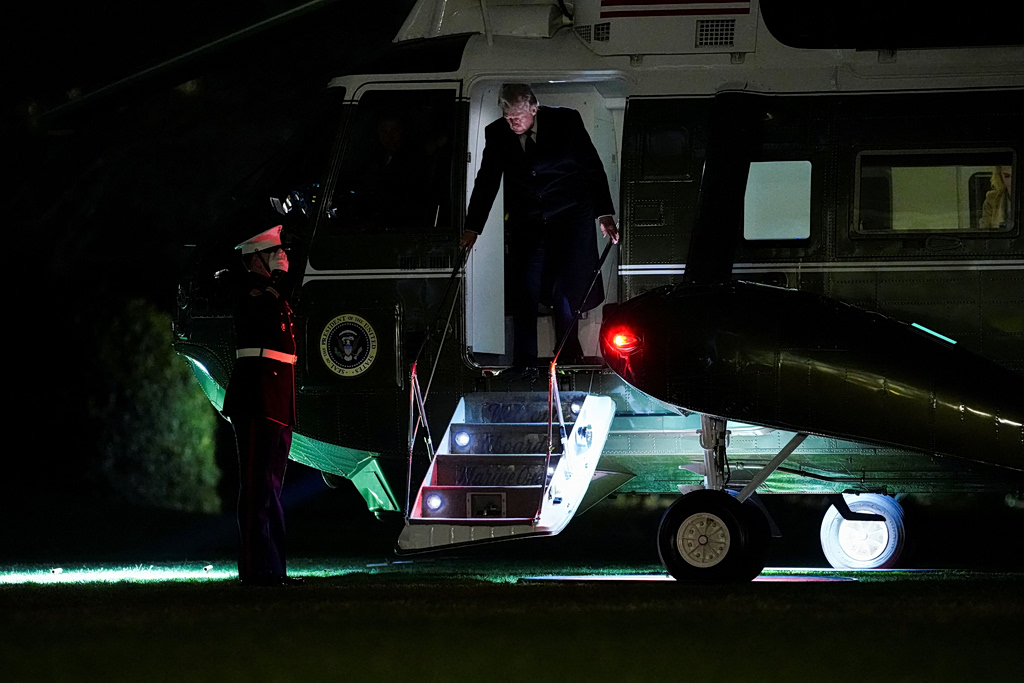
On November 8 of the same year, George H. W. Bush was elected president of the United States, having made a slogan out of a paraphrase of the greenhouse effect during his campaign, calling it the monumental “White House Effect,” with which he successfully sought to convince voters of the determination he would show as president in addressing climate change.
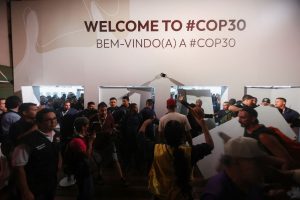
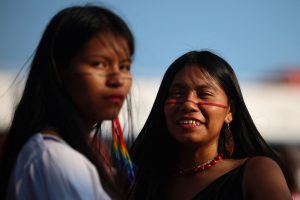
Four summers later, as recounted in the documentary of the same name, The White House Effect, the United States walked out of the Rio Summit after refusing to commit to specific, legally binding targets and timelines for reducing CO₂ emissions, leaving the UN Framework Convention on Climate Change with a vague long-term goal and generalized obligations. Nearly three decades later, the then-head of the U.S. Environmental Protection Agency (EPA), Bill Reilly, would speak of a “immeasurably important” missed opportunity which, if seized, might have prevented today’s toxic polarization surrounding U.S. climate policy. As the documentary’s director, Bonni Cohen, told The Guardian, unlike most films that attempt to “sugarcoat the pill,” The White House Effect aims—through undeniable archival material—to cultivate anger toward climate denial. Expressions of this anger appeared on the second day of COP30 in Belém, Brazil, where dozens of Indigenous protesters entered the conference center, clashing with security while shouting “our land is not for sale” and “we don’t eat money,” demanding meaningful action to protect the Amazon and their ancestral territories.
Lost Expectations
From Rio in 1992 and the birth of the UN climate framework until today, climate policy has unfolded as a palimpsest of alternating hopes and disappointments. In 1997, the Kyoto Protocol introduced legally binding targets for developed economies for the first time, but it entered into force only in 2005—and without the United States—leaving a major credibility gap. The failed attempt at a “grand bargain” in Copenhagen in 2009 eventually led to the 2015 Paris Agreement, with near-universal participation, which set a central objective of limiting global warming to 1.5°C, accompanied by national action plans (NDCs) that were supposedly meant to grow increasingly ambitious. However, the first global stocktake of the Agreement, held in Dubai (COP28), found that the planet remains off track for the 1.5°C target, even though, for the first time, the need to “transition away from fossil fuels” and to triple renewable energy capacity was acknowledged. In Baku (COP29), countries agreed on a new target for climate finance to developing nations, but left many difficult issues for “next time.”
Ten years after Paris, COP30 in Belém, on the edge of the Amazon, stands out as a pivotal conference. It is where delegates from 193 countries (plus the EU as a separate member) are expected to bring strengthened national plans, clear rules for adaptation and climate justice, and most importantly, concrete steps toward phasing out fossil fuels—unless they wish to admit that the 1.5°C goal has already been sacrificed on the altar of a “gentle” transition.
According to Nikos Petrou, president of the Hellenic Society for the Protection of Nature (EEPF) and the Foundation for Environmental Education (FEE), the crisis is not only climatic but primarily institutional. As he told Vima, the COP governance framework, especially as it has evolved over the last decade, has been overtaken by reality itself. Without binding mechanisms, the annual global conferences end in “hot air,” in promises that almost never materialize on the ground. Meanwhile, the growing presence of the oil industry—whose lobbyists at recent COPs outnumber entire country delegations—undermines the integrity of the process from within. “You don’t invite arms dealers to a peace conference,” he remarks.
Four Critical Issues
Even though it is still early to draw conclusions, as the conference ends on November 21, something seems to have begun to shift in Belém. Following pressure mainly from developing countries, four critical issues were added to the agenda beyond the original plan: financing for adaptation, trade measures such as the EU’s “carbon border tax,” the need to keep the world on a binding 1.5°C pathway, and transparency in national plans (NDCs). Yet today’s slightly updated NDCs remain inadequate, leading to a mere 5–6% reduction in emissions by 2030, when more than 40% would be required for any hope of meeting the 1.5°C target. “If what we are experiencing is happening at nearly 1.5°C, imagine a world at 2.5°C,” Petrou says. According to the EEPF president, the most recent positive milestone in global climate action may have been the Paris Agreement, but the real backsliding began with the war in Ukraine and the return to hydrocarbons in the name of energy autonomy and security.
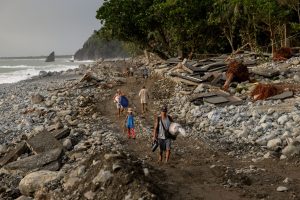
In this fluid geopolitical landscape, governments are rewriting green-transition policies on the palimpsest of climate ambiguity, this time invoking narratives centered on the energy challenges facing their citizens’ living standards and the competitiveness of their economies, against the backdrop of the World Meteorological Organization’s recent announcement of a new historic record for CO₂ concentrations in 2024. While negotiations in Belém focus on mutually acceptable mechanisms for safeguarding climate resilience, Typhoon Kalmaegi is killing hundreds in Southeast Asia, while Fung-wong forces over a million people to flee their homes—reminding us once again that each new natural disaster is inscribed atop the “immeasurably important” lost opportunity of that stifling summer of 1988 in the American Midwest.